
- Studio
- Play'n GO
- Based
- Sweden
- Role
- B2B game supplier
- Return builds
- Several certified per title
Studio, not casino: what Play'n GO actually sells
Play'n GO sells games to casino operators. It does not hold your account, process your deposit or decide your withdrawal limit. The company's roots are in Vaxjo in southern Sweden, where it built slot software for other brands through the late 1990s before releasing titles under its own name and becoming an independent studio in the mid-2000s. Everything carrying its logo on a lobby tile was designed and certified by that business, then integrated into the casino by somebody else entirely.
That division of labour decides who you raise a problem with. A game that misreads a cluster, freezes mid-feature or shows a payout table that contradicts its own help text is a studio or integration fault. A withdrawal that never arrives, a bonus condition that swallowed a balance, or an account frozen pending verification has nothing to do with Play'n GO and the studio has no power over it. Writing to the wrong party costs people weeks.
It also decides what the logo proves, which is less than most readers assume. A Play'n GO tile means a supply agreement exists, or more often that the lobby pulls the catalogue through an aggregator. It is not a statement about the casino's licensing, its payment behaviour or its complaints handling. Offshore operators taking Australian sign-ups lean on recognisable studio branding for exactly this reason: the studio is far better known than the operator, and the logo borrows credibility the operator has not earned.
Keep the two layers separate in your head. The studio question is whether the game is built and tested the way its documentation says. The operator question is whether the business running the lobby will pay you. They have different answers and different evidence, and online casino services cannot lawfully be provided to people in Australia regardless of how either question turns out.


18+ · Bonus conditions
Offer information supplied: 2026-10-05.

18+ · Bonus conditions
Offer information supplied: 2026-10-05.
Reading the certification trail, and where it stops
The studio publishes its regulatory credentials on its own corporate site rather than inside the game window. Expect B2B supplier licensing from the Malta Gaming Authority, the UK Gambling Commission and Gibraltar's licensing authority, alongside accreditation listings naming independent test houses such as Gaming Laboratories International and BMM Testlabs. When you read any of it, read three things: who issued it, what type of authorisation it is, and what it covers.
A B2B supplier licence authorises a studio to supply games to licensed operators in that jurisdiction. It is not a casino licence, it does not extend to the operators who buy the games, and it certainly does not travel with a game into a market the licence does not cover. None of Play'n GO's credentials are Australian and none could be, because the relevant Australian framework does not license the online casino services these games are supplied into.
There is a second, narrower trail that matters more and is harder to see. A test house certifies a specific build: one title, one maths configuration, one version number. That document, not the studio's corporate licensing, is what establishes that the game in front of you behaves as described. You will almost never be shown it. What you can see is the game's own information panel, which is where the studio's documented figures for the loaded build are surfaced.
The working rule: treat the studio's credentials as evidence about how the game was constructed, and treat the operator's licensing as an entirely separate question about whether your money is safe. A footer full of test-house badges on a casino page answers the first question and tells you nothing at all about the second.
Several builds of one title, and why this catalogue makes it worse
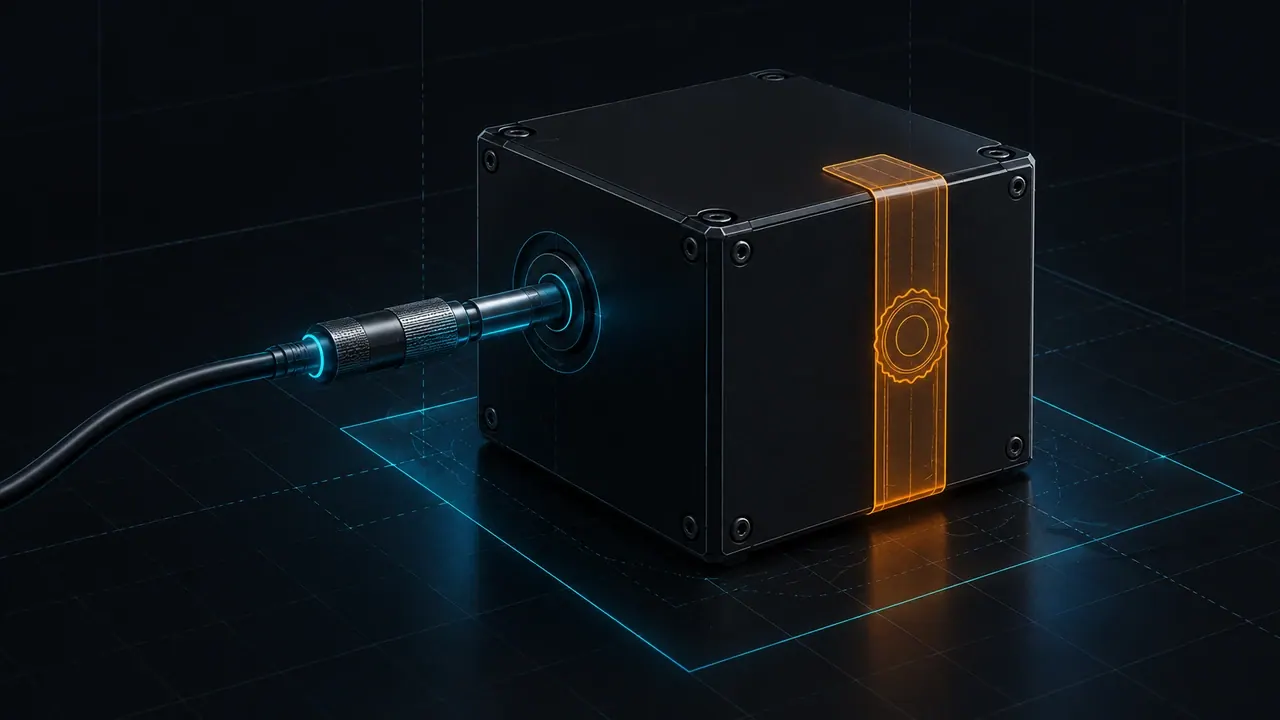
Play'n GO certifies more than one return configuration for many of its titles, and the operator selects one when it integrates the game. Stated plainly: the studio supplies a set of builds, the casino picks from that set as a commercial decision, and nothing on the lobby tile, the casino's game page or any review site records which pick was made. The one place it appears is the information panel inside the loaded game.
This hits a Play'n GO title harder than a brand-new release from a small studio, and the reason is catalogue age and reach. The back catalogue is large and old, and individual titles have been ported into regulated European lobbies, grey markets and offshore lobbies over many years under different commercial terms each time. Whatever article you found by searching a game's name was most likely written against the flagship build in a regulated market by a writer who never saw the lobby you are using.
The procedure takes under two minutes and belongs before the first spin, not after it. Open the game, open the information panel from the control inside the game frame rather than the casino furniture around it, and find the stated return for the loaded build. Then open the studio's own page for that exact title and compare. If the two disagree, the lobby is running something other than the flagship, and the review you read does not describe your game.
This is why there is no table of Play'n GO return percentages anywhere on this page. Any such table would be correct for a minority of readers, wrong for the majority, and stale within a release cycle. A figure that depends on a private commercial decision cannot be published usefully by a third party; it can only be located by the person sitting in front of the game.
// sponsored · Safe Casino · 18+
+500% + 120 free spins
Safe Casino welcome offer. Check the qualifying deposit and wagering conditions before you claim.
Navigate by series, not by title
The studio organises its own catalogue into series, and its game browser is grouped that way rather than alphabetically. The groupings you will meet include the Wilde series, Reactoonz, Rise of Olympus, Sweet Alchemy, the Joker series, Music Slots, Legion Gold, Grid Slots, the 100 games, Blitzways and a small table-game set. Learning the series names is the fastest way to navigate several hundred titles without reading several hundred pages.
Series membership is mechanically informative, which is what makes it a navigation tool rather than marketing. A series usually shares a win type, a feature structure and a family resemblance in its maths, so reading one title properly teaches you the shape of the others. The Wilde titles are payline adventure games whose designed return sits in a free-spin round built around a special expanding symbol. Reactoonz is a large cluster grid with charge meters. Sweet Alchemy and the Rise of Olympus line are grid games with feature-releasing meters of their own.
The practical difference shows up in how you search. A lobby's provider filter hands you an undifferentiated wall of tiles ordered by whatever the operator wants promoted that week, with truncated names and no indication of which title is which edition. The studio's own browser gives you full, correct titles grouped by series. Decide what you are looking for on the studio site, then search the lobby by the exact string you found.
One more habit worth forming: search the lobby by series keyword rather than by a single full title. Searching a series name surfaces the numbered and mechanic-suffixed editions sitting beside the original, which is precisely the set you need to see before choosing.
Figures differ between builds and lobbies. Read the live game's information panel before you rely on any of them.
Play here →The suffix is the specification: numbers, Blitzways and guarantees
Play'n GO marks its variants with suffixes rather than sequel numbering, and the suffix is a specification rather than decoration. A number appended to a familiar title indicates the studio's re-engineered edition of that game: across the 100 games, the number in the name refers to raised ceilings on the feature multiplier and the free-spin count compared with the original release. The artwork is familiar, the headline feature is recognisable, and the distribution and limits underneath are not the same.
Blitzways is a mechanic suffix. The studio describes it as dynamic payways combined with cluster-style connected wins: reel heights change from spin to spin, qualifying clusters must connect across a minimum number of reels, cascades follow a win, and multiplier wilds build during the feature. With two to seven symbols landing on each of five reels, the advertised ceiling is 16,807 ways. Read that figure the way you read any ways-count headline on this site. It is the maximum, available only when every reel simultaneously shows its tallest configuration, and it describes nothing about an ordinary spin.
The failure mode is specific and expensive. A reader searches a well-known title, finds an article about the original, opens a suffixed edition in a lobby because that is the tile the operator promoted, and plays a game with a different help panel, a different return configuration and a different maximum-win rule to the one described in the article. Lobby tiles frequently truncate long names and drop the suffix altogether. The game header inside the frame does not.
Named guarantees and mechanic badges attached to recent titles follow the same rule. Whatever a named feature promises, the condition that triggers it, the stake it applies to and any cap on it live in the game's rules, not in the badge.
Three mechanical families, and the trade-off between them
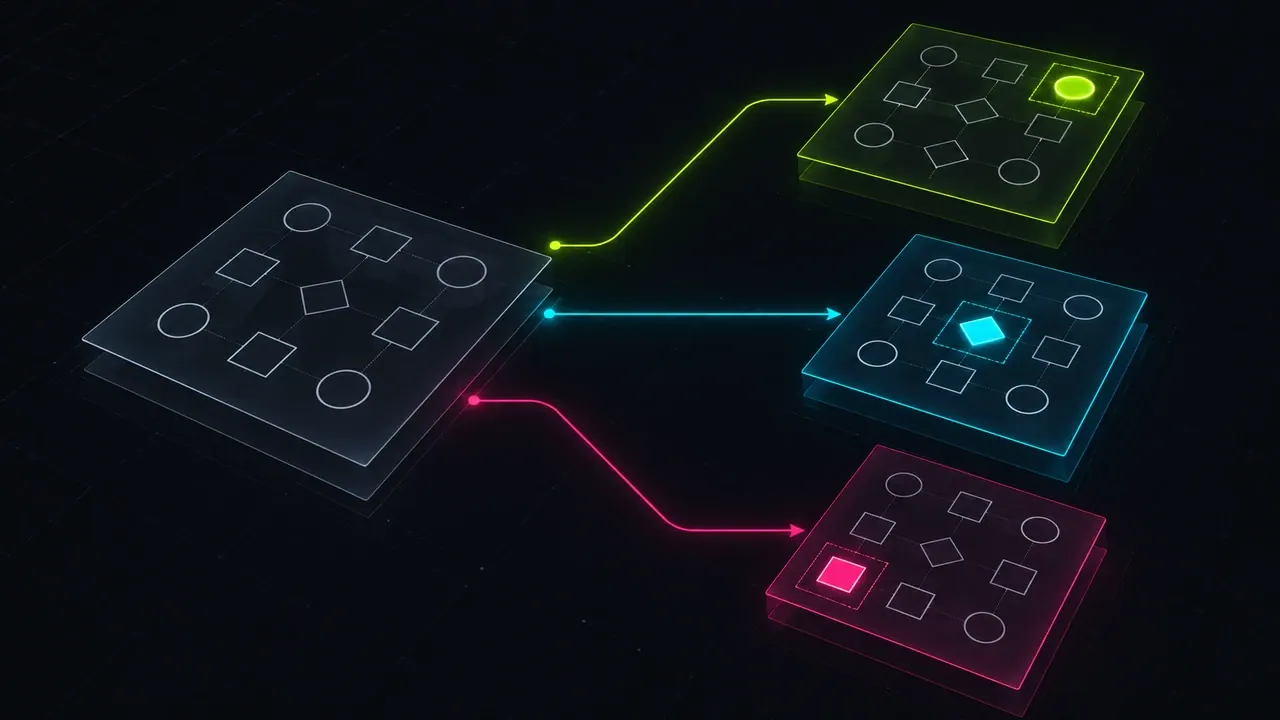
Three mechanical families account for most of what this studio ships, and choosing between them is a real trade-off rather than a matter of taste. The payline adventure titles, of which the Wilde series is the obvious example, pay along defined lines and concentrate their designed return in a scatter-triggered free-spin round built around one special symbol that expands or locks. The advantage is auditability. You can watch a spin, identify the line that paid, check it against the payout table and reconcile the amount by eye. The cost is that you have no influence over when the feature arrives and nothing to read in the meantime.
The charge-meter grid games work the opposite way. Wins form from connected groups, winning symbols clear and the grid cascades, and each cascade charges one or more meters that release a named feature when full. Reactoonz runs this on a large grid where a filled set of meters releases its headline feature; the Moon Princess line uses a meter that releases one of three character features. The trade-off is legibility. One paid round can contain several cascades, two or three meter-driven features and a symbol transformation, so the figure on the win counter is the sum of events already swept off the screen. When an amount looks unrelated to the final board, the round history is the document that explains it, not the board.
Blitzways splits the difference and inherits both problems. Reel heights vary per spin like a ways game, cascades run like a cluster game, and multiplier wilds accumulate inside the feature. You get the variability of one family and the opacity of the other, plus a ways figure on the tile that is mathematically true and practically useless as a guide to a typical spin.
The decision rule follows from that. If understanding your own session matters to you, the payline titles are the only family you can reliably audit without opening round history. If you would rather the mechanic did the work and are content to read a total rather than reconstruct it, the meter games are built for exactly that. And volatility labels, from this studio as from any other, sit on the studio's own internal scale. A high rating here and a high rating from another developer are not statements about the same distribution.
// sponsored · WinCrown · 18+
+500% + 120 free spins
WinCrown welcome offer. Read the current promotion terms, eligibility and withdrawal conditions.
Finding these games from Australia
Availability is an operator decision, not a studio one. A title can be withdrawn from a lobby, withheld from particular jurisdictions, offered with its feature-buy control disabled, or loaded at a different return build to the one next door. The studio's game page is authoritative on whether a title exists, what it is correctly called and what its mechanic does. It cannot tell you whether that title is in a given lobby today, and no third party can.
Both Safe Casino and WinCrown expose provider filters in their lobbies, so check the current filter list and the full game header on the live page rather than assuming a studio's whole catalogue is loaded behind the logo. That check also tells you which edition of a title you have been handed, which the tile often will not.
Demo builds of this studio's titles circulate widely on third-party pages, and they are genuinely useful for one purpose: learning how a charge meter fills, when a multiplier resets and what the feature sequence looks like, without money attached. They cannot establish which configuration a lobby runs, and a freely hosted demo is commonly the flagship build rather than the one integrated offshore. Where a page hosts a demo of a suffixed edition, confirm the full title in the game header before drawing any conclusion about that edition.
Availability and lawfulness are separate questions, and the second one does not improve with the first. ACMA's position is that online casino services cannot lawfully be provided to people in Australia. A Swedish studio holding European supplier licences, appearing in an offshore lobby that displays Australian dollars, creates no Australian authorisation and no Australian consumer protection. Reachability is not permission.
What this page could not verify
What this page takes from the studio is structural: the series grouping of its catalogue, the described behaviour of its house mechanics, its supplier licensing in Malta, the United Kingdom and Gibraltar, its testing accreditations, and the advertised ways ceiling on its dynamic-payways mechanic. Those facts are stable across builds, which is why they are worth writing down.
What this page does not assert is anything build-specific. No return percentage, no maximum-win figure, no feature-buy price, no count of titles shipped, and no claim that any named operator carries any named game. Loaded return, purchase availability and pricing, win caps and demo access are set per integration and change without notice, and the information panel inside the live game is the only source that is current for your lobby.
A studio profile is a navigation aid. It helps you find the right game page and ask the right questions in a lobby; it is not a recommendation to open an account or a judgement that any catalogue is worth your money. Set a spending and time limit before you open a lobby, never stake money needed for essentials, and read sponsored placement on this site as paid placement rather than an independent ranking. Free confidential Australian support is available from Gambling Help Online on 1800 858 858.
Questions people actually ask
Is Play'n GO licensed in Australia?
No, and no supplier could be. Play'n GO holds B2B supplier licences in markets such as Malta, the United Kingdom and Gibraltar, which authorise it to supply games to licensed operators there. Online casino services cannot lawfully be provided to people in Australia, so an Australian licence for this kind of play does not exist to hold.
What is the RTP of Play'n GO pokies?
There is no single figure, because the studio certifies more than one return configuration for many titles and the operator chooses which one to run when it integrates the game. The only number that applies to you is the one in the information panel inside the loaded game, in the lobby you are using, on the day you play.
What does the number in a title like Moon Princess 100 mean?
It marks a separate re-engineered edition rather than a re-skin. Across the 100 games, the number in the name refers to raised ceilings on the feature multiplier and the free-spin count relative to the original. It has its own help panel, its own return configuration and its own limits.
What is Blitzways?
A Play'n GO mechanic combining dynamic payways with cluster-style connected wins: reel heights change per spin, cascades follow a win, and multiplier wilds build inside the feature. With two to seven symbols on each of five reels the advertised ceiling is 16,807 ways, which is the maximum when every reel is at full height, not a typical spin.
Which Play'n GO series should I start with?
If you want to follow exactly why a spin paid, start with a payline title from the Wilde series, where a win can be reconciled against the payout table by eye. If you prefer the mechanic to carry the round, start with a charge-meter grid game such as Reactoonz and expect to use round history to understand totals.
Does a Play'n GO logo mean a casino is trustworthy?
No. It means a supply agreement exists, or that the lobby pulls the catalogue through an aggregator. The studio does not vet the operator's payment behaviour, bonus terms or complaints handling, and it has no power over your account. Judge the operator on its own licensing and terms.
// next step
A paytable makes more sense with the game open in front of you.
View current offer