- Outcome
- Physical wheel, streamed
- Wheel
- Single or double zero
- Baseline payout
- 36 ÷ n − 1, to one
- Zero rule
- Lose, half back or imprisoned
The whole game happens before the ball drops
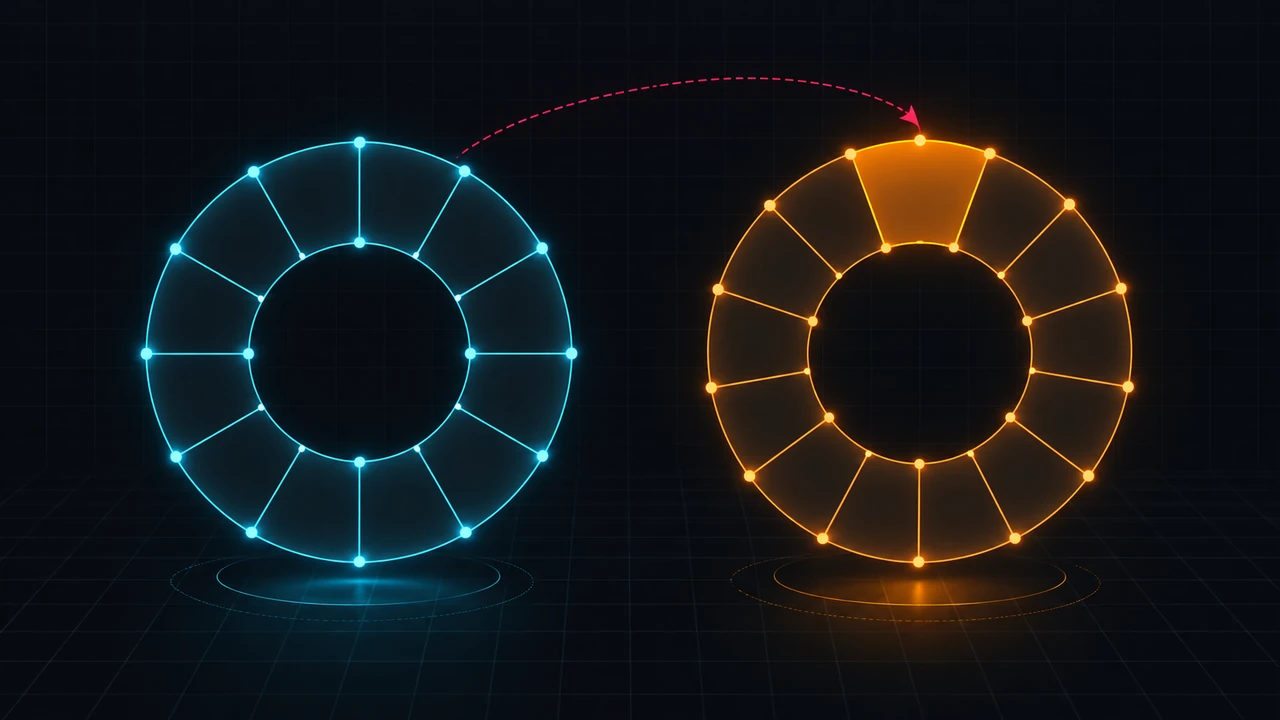
A live table is not a simulation of roulette. It is roulette, filmed: a croupier spins a real wheel, a sensor reads the pocket the ball settles in, and software settles every bet on the layout from that one number. Nothing in the outcome is generated, which matters less than people expect, because a sound generator and a sound wheel produce the same distribution. What matters is that a single physical event resolves the entire table at once.
That is what separates the wheel from everything else in a live lobby. At a card table you keep deciding after the money is down, and the dealer waits for you. Here there is no second decision. The round is a chip placement followed by a spin you watch, so every scrap of skill available to you is spent inside the betting window. Where the chips land is the only part of this game you author.
The same fact explains why the table has no seats: nobody has a turn, so one wheel takes any number of players at once. A busy table never makes you queue, and a quiet one is not a better table. What does vary is when the croupier calls no more bets — on some setups while the ball is travelling, on others before the spin. Read which, because it decides whether you can still move a chip once the wheel is turning.
Having no second decision also makes the disconnection question clean. Your bets register on the game server, not in your browser, and once the window has shut there is nothing left for you to do: the result stands whether your connection survives or not, and nothing is defaulted on your behalf. The exposure sits in the betting window, where a dropout can leave a bet unplaced, or placed unseen. Check the clause on unresolved rounds, and whether the interface marks a bet as confirmed.


18+ · Bonus conditions
Offer information supplied: 2026-10-05.


18+ · Bonus conditions
Offer information supplied: 2026-10-05.
Inside, outside, and the racetrack that costs more than it looks
The felt holds two families of bet. Inside bets sit on the numbers: a single number, two adjacent numbers, a row of three, a block of four, a line of six. Outside bets cover groups defined by position or colour: a dozen, a column, red or black, odd or even, the low or high half. Every one states how many of the wheel's pockets you have bought, and that count alone should determine what the bet pays.
Then there is the racetrack, the oval overlay that mirrors the order of numbers on the wheel rather than on the felt. Call bets placed there — the sector around zero, the sector opposite it, the orphans between them, the neighbours of a chosen number — are not special wagers. Each is a bundle of ordinary straight-up and split bets that the interface places in one gesture, because they are scattered across the layout. They carry no edge advantage. What they carry is a chip count.
This is where people lose money by accident. Your selected chip value is the value of one chip, and a racetrack bet spends one for each number or split in the bundle. A neighbours setting covering a number plus two either side spends five chips per click. Read the total-staked figure the interface shows before the window closes, not the chip value you selected.

Why every standard bet costs exactly the same
Here is the most useful fact in roulette, and it takes one line of arithmetic to see. A single-zero wheel has thirty-seven pockets. A bet covering n of them pays, in almost every case, 36 divided by n, minus 1, to one. One number pays thirty-five to one, two pays seventeen, three pays eleven, four pays eight, six pays five, a dozen or a column pays two, and an even-money bet covering eighteen pays one.
Now test it. Stake one unit on a single number and imagine the thirty-seven outcomes occurring once each. You win thirty-five units once and lose one unit thirty-six times: thirty-five minus thirty-six is minus one, across thirty-seven staked. Do the same with an even-money bet. Eighteen wins of one unit against nineteen losses of one is minus one again, across the same thirty-seven. Every standard bet on the wheel returns an identical shortfall of one unit per thirty-seven staked, a little over two and a half per cent.
The reason is visible in the formula. A bet covering n pockets out of thirty-seven would break even if it paid 37 divided by n, minus 1. It pays 36 divided by n, minus 1. The missing pocket is the zero, and it is missing from every payout on the table in the same proportion. Choosing between a straight-up number and red-or-black is therefore a choice about variance alone, not about cost.
The rule this gives you is worth more than any betting system. Count the pockets a bet covers, work out 36 divided by n minus 1, and compare it with the payout in the game's help panel. If they match, the bet carries the table's baseline cost. If the printed payout is lower, something else in the game is being funded with the difference. The test catches every bad bet in the category, including the ones dressed up as features.
// sponsored · Safe Casino · 18+
+500% + 120 free spins
Safe Casino welcome offer. Check the qualifying deposit and wagering conditions before you claim.
The only two things that move the house edge
Two things, and only two, move that baseline. The first is how many zeros the wheel has. Add a second zero and there are thirty-eight pockets while the payouts stay at 36 divided by n, minus 1. Repeat the straight-up calculation and the shortfall doubles: minus two units across thirty-eight staked, a bit over five per cent. Same felt, same bet names, every wager roughly twice as expensive. So count the green pockets in the stream, or read the pocket count in the rules. A variant name is not reliable evidence; the wheel is.
The double-zero wheel also carries the worst bet in roulette, and it exists nowhere else: the five-number bet across zero, double zero, one, two and three. Five pockets means a baseline payout of 36 divided by 5 minus 1, six point two to one. It pays six. The shortfall comes to three units per thirty-eight staked, close to eight per cent, half again as expensive as everything else on the same felt. It is on the layout because it is profitable, not because it is a good idea.
The second thing that moves the baseline is what happens to an even-money bet when the ball lands in zero. Under the ordinary rule it loses. Under la partage, half the stake comes back: eighteen wins, eighteen losses, and on the zero you lose half a unit rather than a whole one. Minus half a unit across thirty-seven staked is one in seventy-four, exactly half the baseline. It is the largest single improvement in roulette, and it reaches even-money bets only — the straight-up number beside it still costs one in thirty-seven.
The imprisonment rule, en prison, is the one to read rather than assume. A bet frozen by a zero and resolved by the next spin returns the stake on a win and pays nothing extra. Implementations vary in how often a bet can be imprisoned and which bets qualify, and some tables use French bet names while offering neither rule. Which rule applies is on the rules screen behind the information button, and it is the only clause there that can halve what the table costs you.
Figures differ between builds and lobbies. Read the live game's information panel before you rely on any of them.
Play here →Multipliers and extra balls are paid for out of the payout table
The studios compete on format: tables with multipliers, extra balls, several wheels at once, or a stripped-down automatic wheel and no dealer. The arithmetic above reads all of them, because a feature has to be paid for and the payout table is the only available source of funds.
Multiplier formats are the clearest case. A table that occasionally applies a large multiplier to a few randomly selected straight-up numbers funds them by cutting the ordinary straight-up payout below 36 divided by 1, minus 1. Apply the test: count the pockets, work out the baseline, read the actual payout in the help panel, and the gap is the price of the feature. Whether the multipliers hand that gap back is a question about the format's stated return, answered in its own information panel and not here. And if outside bets still pay the baseline, a red-or-black player cannot win a multiplier and does not fund one.
Extra-ball and multi-wheel formats shift the cost elsewhere. A second ball, or one bet run across several wheels, generally multiplies the stake rather than cutting the payout, so the cost per round rises with the number of outcomes. Check what the interface charges per round, and whether a win on one wheel or ball pays against the full stake or only its share.
Speed and auto formats change nothing in the payout table and a great deal in your account. The cost per unit staked is whatever the wheel and the zero rule make it; the cost per hour is that figure multiplied by how much you stake in an hour, and these tables exist because the second number is larger.
The history panel is real data and a bad inference
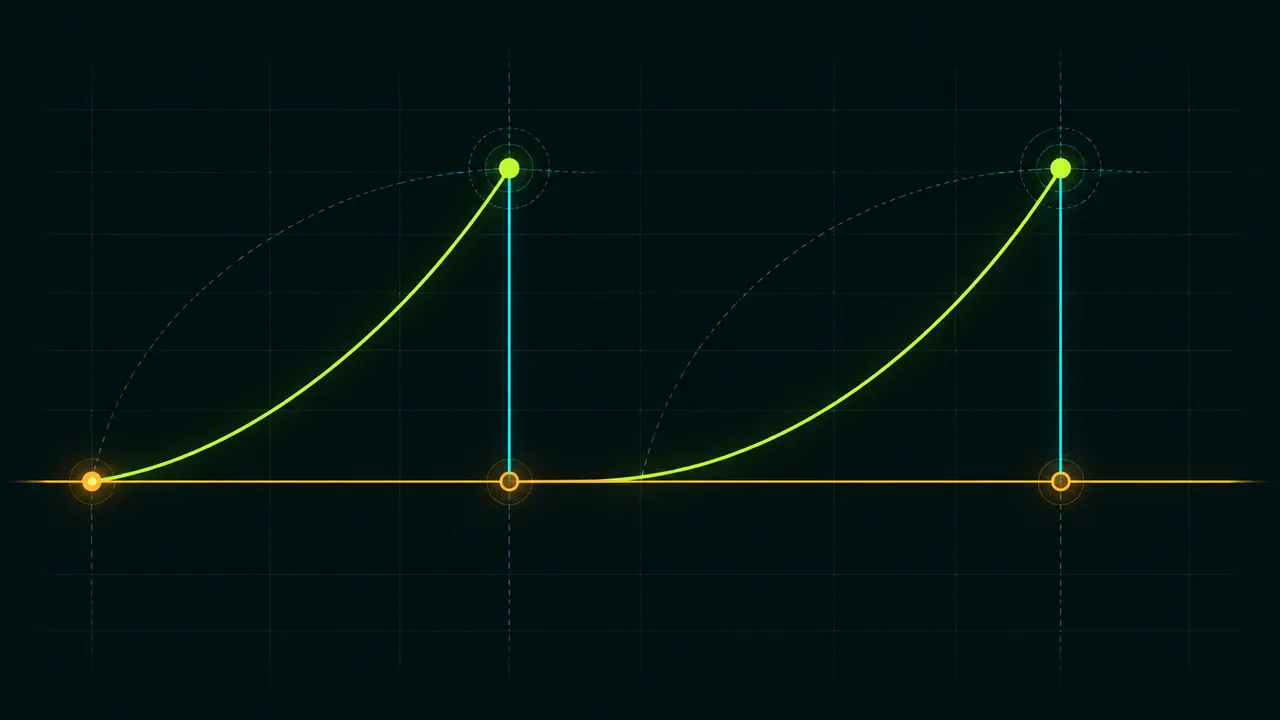
Every live table displays a history: recent results, hot and cold numbers, percentages for red and black, splits by dozen and column. The data is genuine. The two inferences people draw from it are not, and they fail for different reasons.
The first is that a number or colour missing from the list is owed one. Nothing in the apparatus can hold a debt: the ball's resting place is decided by the physics of a single throw, and the wheel keeps no record of the throw before it, so a cold number describes twelve past spins rather than a property of the next one. The second inference is more sophisticated: that a number appearing unusually often reveals a biased wheel worth betting into. Physical wheels can genuinely develop bias. The obstacle is sample size.
Work out the scale required. Over three hundred and seventy spins each of the thirty-seven numbers appears ten times on average, and the spread around that average is the square root of three hundred and seventy times one thirty-seventh times thirty-six thirty-sevenths, a bit over three. A number landing sixteen or seventeen times is two standard deviations out, which with thirty-seven on display happens constantly on a sound wheel. Separating a bias big enough to beat a cost of one in thirty-seven from noise takes far more spins than any panel shows, all from one wheel left unserviced and unrotated throughout — and a studio that services its wheels removes that history.
// sponsored · WinCrown · 18+
+500% + 120 free spins
WinCrown welcome offer. Read the current promotion terms, eligibility and withdrawal conditions.
What a staking plan can and cannot do
Progressions are the most written-about subject in roulette and the easiest to settle. Doubling after a loss, adding a unit after a loss and removing one after a win, climbing a Fibonacci ladder: none touches the expected cost of a bet, because expectation adds. Each spin returns minus one unit per thirty-seven staked regardless of the last, so a sequence of such bets returns that fraction of whatever it stakes. A staking plan changes the total staked and the order in which it is risked, not the fraction.
What a plan does change is the shape of the result, and the doubling plan is deceptive precisely there. It wins a small amount very often and loses an enormous amount rarely, which feels like a working system for exactly as long as the rare branch has not happened. It is also the one plan the table is built to stop: the maximum bet exists, your balance is finite, and a doubling sequence reaches both sooner than intuition suggests, at which point the plan cannot recover the losses it produced.
The coverage illusion is the same error in reverse. Blanketing most of the wheel is not a different kind of bet; it is many ordinary bets at once, each carrying the baseline shortfall. Thirty-five of thirty-seven numbers buys a high chance of a small loss and a small chance of a large one, at the same price as the single number it mirrors.
That leaves a short list of decisions that genuinely change what a session costs, and none resembles a system. Prefer a single-zero wheel. If you bet even money, prefer a table whose zero rule returns half the stake. Check each payout against 36 divided by n minus 1 and skip the bets that fail. Decide how many rounds you will play, because rounds multiplied by stake is what the cost acts on. And keep the stake low enough that the total cannot matter.
Where the format sits, and what this page did not verify
Live roulette reaches Australian screens from offshore studios, and nothing in that arrangement is authorised locally. The ACMA's position is that online casino services cannot lawfully be provided to people in Australia, so these tables are run by operators licensed elsewhere. If a round is disputed, the escalation path runs to the operator and then to its offshore licensor, and stops.
In lobby terms the format sits apart from the pokies, in a live-dealer area usually divided into roulette, blackjack, baccarat and game-show tables. If you are hunting for a wheel in a lobby such as Safe Casino or WinCrown, open that area on the day and judge a table by the wheel in the stream rather than the tile: this page does not assert which tables, variants or zero rules any operator has integrated.
Which brings this page to what it does not claim. No table limits, stated returns or variant payouts appear above: those are set per table and per integration, and a figure printed here would be wrong for some table on the day it was read. The arithmetic follows from pocket counts and payout ratios, and every line can be reproduced in your head. Its inputs cannot. The zero count, each printed payout, the zero rule and the limits have to be read off the wheel in the stream and the rules screen.
One last line follows from the arithmetic rather than from good intentions. The cost above is a fraction of turnover, so what a session takes is decided by the stake and the round count, and a wheel is built to supply rounds faster than you would choose them. Fix both before a table is open. Commission can be earned on the sponsored links here, which changes none of the arithmetic. If the reason for the next spin has become the last one, read the support guide instead.
Questions people actually ask
What is the house edge on live roulette?
On a single-zero wheel, every standard bet carries the same shortfall: one unit per thirty-seven staked, a little over two and a half per cent. Each payout is 36 divided by the pockets covered, minus 1, where breaking even would require 37. A second zero roughly doubles that cost, and a half-back rule on zero halves it for even-money bets only.
Which roulette bet has the best odds?
On a single-zero wheel, none of them. Every standard bet costs the same per unit staked, so the choice between a straight number and red-or-black is only about variance. The exception runs the other way: on a double-zero wheel, the five-number bet across zero, double zero, one, two and three pays below the baseline and is the most expensive wager in the game.
Is live roulette random, or can the studio control it?
The outcome comes from a croupier spinning a physical wheel in front of a camera rather than from software, so the real question is whether the wheel is maintained and the result read correctly. A stream and a footer badge do not establish that by themselves, and a bias small enough to survive servicing would be far too small to read off the table's results panel.
Does the Martingale work on live roulette?
No, and the reason is arithmetic rather than luck. Expectation adds, so a sequence of losing-expectation bets keeps that expectation however the stakes are ordered. Doubling converts frequent small wins into rare enormous losses, and the table maximum combined with a finite balance guarantees the sequence can be cut off before it recovers.
What are la partage and en prison?
Two rules for even-money bets when the ball lands in zero. La partage returns half the stake, which works out at exactly half the usual cost per unit staked. En prison freezes the bet for the next spin and returns the stake on a win with nothing extra; in its simplest form the cost is similar, but implementations differ enough that you should read which version the table's rules screen describes.
Why do racetrack and neighbours bets take so much money?
Because a call bet is a bundle of straight-ups and splits, not a single wager. Your selected chip value is per chip, so one click on a wheel sector or a neighbours setting stakes a chip on every number in it. Watch the total-staked figure the interface displays rather than the chip you picked.
// next step
A paytable makes more sense with the game open in front of you.
View current offer