
- Provider
- Relax Gaming
- Grid
- 6 × 6
- Win type
- Scatter pays
- Bonus
- Money Cart respins
Two games in one cabinet
Relax Gaming publishes Money Train 4, and the fastest way to understand it is to stop treating it as a single game. The base game pays for matching symbols landing anywhere in view rather than along lines, with the paytable setting separate minimum match counts for the low-value and high-value sets. Sitting on top of that is the Money Cart bonus: a hold-and-respin round with its own spin counter, its own symbol glossary, persistent symbols and a layout that grows while the round runs. The two halves share artwork and a stake and almost nothing else.
That split is the reason most writing about the series is confusing. Nearly every description of Money Train is a description of the bonus round, because that is where the design effort and the headline ceiling live. Carrying those expectations into base spins produces a reader who is waiting for a Collector to appear on an ordinary spin, where it does not exist.
A practical reading order, whether you are on a page like this one or in the game's own help panel: establish the base game's win rule and its symbol thresholds first, then read the bonus round as a separate document. Anything mentioning a Collector, a Payer, a persistent symbol or a spin counter belongs to the second one. If you cannot tell which half a rule applies to, you have not finished reading it.


18+ · Bonus conditions
Offer information supplied: 2026-10-05.


18+ · Bonus conditions
Offer information supplied: 2026-10-05.
The base-game respin is not the bonus round
The base-game respin is the newest element in the fourth release and the one most often mistaken for the main feature. The rules describe it activating at the end of a spin rather than from a combination you can watch assembling: the symbol appearing most often on that board is made sticky, and a respin is awarded. There is no symbol to hope for and nothing to count.
What happens inside that respin is unusually restrictive and worth stating plainly. Only more of that same symbol, or blanks, can land. For the duration of the sequence the board is a one-symbol board. Landing more of the sticky symbol extends the sequence; a board that adds nothing ends it. Multiplier symbols that appear in this state have their values added together and applied to the final win amount rather than each paying on its own — two multiplier symbols sum, they do not compound, and the total lands once at the end.
The decision rule that follows is simple and saves a lot of misreading: a respin sequence is not a Money Cart in progress. It pays from the base game's paytable, under the base game's scatter-pays rule, and it does not graduate into the bonus round however well it goes. If the win counter is climbing and no bonus spin counter has appeared, you are still in the base game. The two features also cannot be confused in the help panel, because they are documented separately — which is the quickest way to settle an argument about which one you just watched.
Read the Money Cart as inventory, not as spins
Three or more bonus scatters in the base game open the Money Cart. The round begins with a spin counter and a layout smaller than the base game's grid, and it then runs on one rule that decides nearly everything that follows: when a new symbol lands it becomes sticky, and the spin counter resets to its starting value. Nothing new, no reset — the counter ticks down, and the round ends at zero.
Treat the round as inventory rather than as a number of spins. What you are holding on the board at the end is what pays: how many value symbols, how many feature symbols, how many of them are persistent. Every landing does two jobs at once, adding to that inventory and buying back time to add more. This is why a Money Cart can end abruptly on a board that still looks healthy. Nothing went wrong; nothing new simply landed for the length of the counter, and the counter is the only clock in the round.
One thing is worth confirming in the round's own rules before you form expectations, because it changes how you read everything on screen: when feature symbols resolve. Whether a symbol acts the moment it lands, on every subsequent spin, or only when the round finishes determines whether a symbol arriving on the last spin can still do anything. The round history breakdown, not the final board, is where a total that looks wrong gets explained — the same habit that works on tumbling-reel games, applied to a board where symbols accumulate instead of clearing.
// sponsored · Safe Casino · 18+
+500% + 120 free spins
Safe Casino welcome offer. Check the qualifying deposit and wagering conditions before you claim.
The symbols act on each other, and the order decides the round
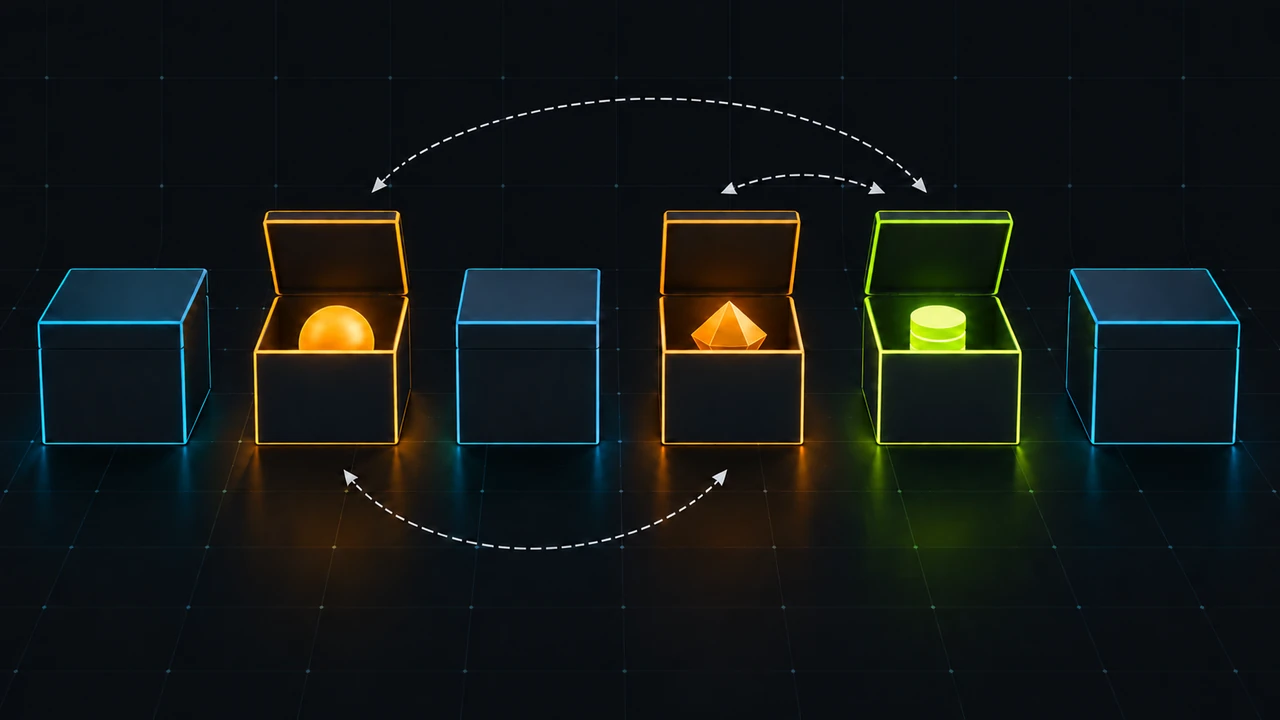
The bonus symbols divide cleanly into two classes, and keeping them apart is most of the skill in reading this round. Some symbols hold a value. Others do something to the values that are already on the board. The second class is where the fourth release puts its complexity, and not one of those symbols is a prize by itself.
Relax documents several that only make sense as modifiers. The Arms Dealer converts plain bonus symbols into feature symbols. The Upgrader turns ordinary feature symbols into persistent versions of themselves. The Necromancer brings a used non-persistent symbol back into play. The Sniper acts on bonus symbol values, and the Collector and Payer variants gather and distribute value across positions. Each of these is worth precisely as much as the board it lands on. An Upgrader arriving on a board with two feature symbols has two things to upgrade; the same symbol on a crowded board is a different event with the same picture.
Persistence is the word to read most carefully. The rules distinguish a symbol that acts once from the persistent variant that acts on the spin it lands and on every spin after it. A Collector and a persistent Collector look alike in a thumbnail and behave very differently across a round, and the glossary inside the round's help screen is where that line is drawn — not in a clip, where the version you are watching is usually the one that made the clip worth posting.
The question to ask, then, is not "what did that symbol pay?" but "what did that symbol act on?" A modifier landing with nothing to modify has done nothing, and the win counter will reflect that accurately even though the animation does not. Most complaints that a bonus round "did nothing" after several good-looking symbols are describing modifiers that arrived in the wrong order.
Figures differ between builds and lobbies. Read the live game's information panel before you rely on any of them.
Play here →Row unlocking, and the trade-off nobody mentions
The Money Cart starts narrower than the base game's grid and can grow. Filling a row entirely with symbols opens another row, up to a stated maximum, and one of the feature symbols exists specifically to open a row directly. Unlocking is therefore partly something the round does to itself and partly something a symbol hands you.
The upside is obvious: more positions means more places for a symbol to land, and a round with more landings is a round that resets its counter more often. The cost is rarely stated. Those positions are also places for nothing to land, and a row that opens late has fewer remaining spins in which to be filled. The unlock is worth more early than late — not because the game behaves differently, but because the counter does. Nothing about the layout extends the round on its own.
Each unlock also moves the next one further away, since a wider board takes more symbols to fill a row. Read whether the rules cap the number of unlockable rows and whether reaching the full layout triggers anything else, because a maximum layout is not a prize and should not be treated as a milestone. Some players chase the full board as though it were the objective; the objective is the resolution at the end, and the board height is one input to it.
An unlock is not a signal about what comes next. The size of what a filling board is building towards depends on values and modifiers rather than on height: a tall board holding low values and no modifiers resolves to very little, and looks impressive the whole way.

Which figures are yours, and where they sit
This page publishes no return figure for Money Train 4, for a reason specific to this title rather than as a general policy: Relax ships it in more than one return configuration, and which one you are playing was decided by the operator at integration. Two lobbies can run the same name, the same artwork and the same symbol set at different returns, and neither is misrepresenting it. A percentage quoted on a review page is therefore a fact about somebody else's build.
The figures you need sit in the game frame's own information panel, and on this title each attaches to a different part of what you have just read. The base game return covers scatter pays and the sticky respin together, because the respin is base-game maths however much it looks like a feature. Each purchase tier is stated separately, since opening the Money Cart with a persistent symbol already placed is a different product from opening it empty. The ceiling belongs to the Money Cart alone. The volatility rating mostly describes how long the gap between bonus rounds may run. And the paytable's minimum match counts let you read a scatter-pays board at a glance rather than waiting for a line that is never drawn.
The maximum win needs its own sentence on this title, because the whole design points at it. A round that stacks persistent collectors and multiplying modifiers is exactly the shape that can run into a ceiling, so read what the rules say happens when it is reached: whether the round terminates, whether remaining spins are forfeited, and how the capped amount is paid. That figure is the one most often quoted in promotional copy about this game and the least useful for deciding whether to play it. It describes the best case the maths permits, not a result anyone should plan around.
The Money Cart adds a second reading problem on top of the figures, and it is the glossary rather than the panel. A modifier roster this long cannot be learned while a counter is ticking down, and the round's own help screen is the only place the persistent variants are set apart from the ordinary ones. Work through it with nothing at stake — in demo mode, where a lobby offers one — so that the first Arms Dealer you meet in a paid round is a symbol you recognise rather than one you look up afterwards from the round history.
// sponsored · WinCrown · 18+
+500% + 120 free spins
WinCrown welcome offer. Read the current promotion terms, eligibility and withdrawal conditions.
Ways in, including the one that depends on where you are
Spinning for the scatters is the default route. It costs the base stake, it uses the base game's published return, and it is the only route that exists everywhere.
The purchase menu on this title is tiered rather than single, which is the detail worth understanding. One price buys the Money Cart as it normally starts. A higher price buys it with a persistent symbol already in place. The second is not simply a dearer version of the first — it changes the round's opening state, which is why it carries its own separately stated return figure. Buyers should be clear about which tier's figure they are reading, because the two prices do not share a return number and the base game's describes a route they are not taking. Read both prices in your account currency and both return figures before choosing between them, and note that a persistent symbol included at the start is subject to the same question as any other modifier: it acts on whatever the round subsequently produces.
Whether the tiers appear at all is settled outside the game. Several jurisdictions prohibit feature purchases, and the same build ships into those markets with the menu stripped out. A missing buy button is a condition of supply rather than a fault with your client, and the sensible response is to spin for the scatters — not to go hunting for a lobby that still shows the tiers.
Account conditions are a separate document again, and the tiered pricing creates a trap worth naming: the dearer tier is a single charge large enough to trip a maximum-stake clause that the cheaper tier clears, so one promotion can treat the two tiers differently on the same game. Whether either counts towards wagering, and whether this title sits on the eligible list at all, is in the offer terms and nowhere in the game. Safe Casino and WinCrown are the sponsored lobbies on this site; if you find this release in either, read its information panel there rather than the lobby tile, because catalogue, configuration and whether a purchase menu is shown vary by operator and are not things this page can assert for you.
How it differs from the earlier Money Trains, and what is unverified
The constant across the series is the Money Cart: hold-and-respin, sticky symbols, a counter that resets on a new landing, and a resolution at the end. What changes between releases is the symbol roster, how the layout behaves and where the ceiling sits. The fourth release adds the base-game respin described above and names modifier symbols — the Arms Dealer, the Unlocker, the Upgrader — that earlier entries did not have, which is why the rounds play differently even though they look like relatives.
The consequence is procedural. A help screen, written guide or clip for an earlier Money Train cannot establish the rules for this one, and the only thing distinguishing them in a lobby is a numeral. Record the exact title from the loaded game's header before you reason about anything, and treat a truncated tile as a reason to check rather than to assume. Reading about one and playing another is the single most common way to arrive at the wrong expectations in this family.
What this page relies on the provider for: the grid and scatter-pays win rule, the base-game respin and its sticky-symbol behaviour, scatter entry to the bonus, the counter reset on a new landing, row unlocking by filling a row, the names and roles of the feature symbols, the persistent variants, the tiered purchase structure and the existence of more than one return configuration. What it cannot verify for you: the return your build runs, the purchase prices, the maximum win, whether purchases are offered where you are, and availability at any operator.
Two closing points. Australia does not license online casino services, so every operator this page could lead you to sits offshore under a foreign licensor, and Australian consumer protection does not follow you in. And the better you understand the Money Cart, the easier it is to mistake understanding for an advantage: the round is built to be legible and still resolves against the player on average. Set the money and the time before the first spin, and read any urge to buy a tier to get back to even as the signal to stop.

Questions people actually ask
What is the RTP of Money Train 4?
There is no single answer for this title. Relax supplies it in more than one return configuration and the operator picks one at integration, and each purchase tier is then documented at its own figure on top of that. The question therefore has several answers in any given lobby, and all of them are printed in the information panel of the build you have actually loaded.
How does the Money Cart bonus round work?
Three or more bonus scatters open it. The round starts with a spin counter and a reduced layout; when a new symbol lands it becomes sticky and the counter resets to its starting value. No new symbol means the counter ticks down, and the round ends at zero and resolves from whatever is held on the board.
What is the respin feature in the base game?
It activates at the end of a base spin rather than from a visible combination. The symbol that appeared most often is made sticky and a respin is awarded, and during the sequence only that symbol or blanks can land. It pays from the base game's paytable and does not turn into the Money Cart.
What does a persistent symbol mean in Money Train 4?
A persistent variant acts on the spin it lands and on every spin after it, where an ordinary feature symbol acts once. The Upgrader exists to convert ordinary feature symbols into persistent ones. The round's own help glossary draws the distinction; the two look nearly identical on screen.
Should I buy the Money Cart or spin for it?
The purchase menu is tiered — one price for the round as it normally starts, a higher one with a persistent symbol already in place — and each tier has its own stated return. Buying is faster, not better value, and it compresses a long session into a few expensive rounds. Check both prices in your account currency first.
Why is the bonus buy button missing in my lobby?
Several jurisdictions prohibit feature purchases, and the same build is supplied there with the menu removed. That is a licensing condition rather than a fault with the game, and it does not mean a different version of the title is available elsewhere to you.
// next step
A paytable makes more sense with the game open in front of you.
View current offer