
- Format
- Live money wheel
- Studio
- Evolution
- Segments
- 54
- Bet positions
- 8
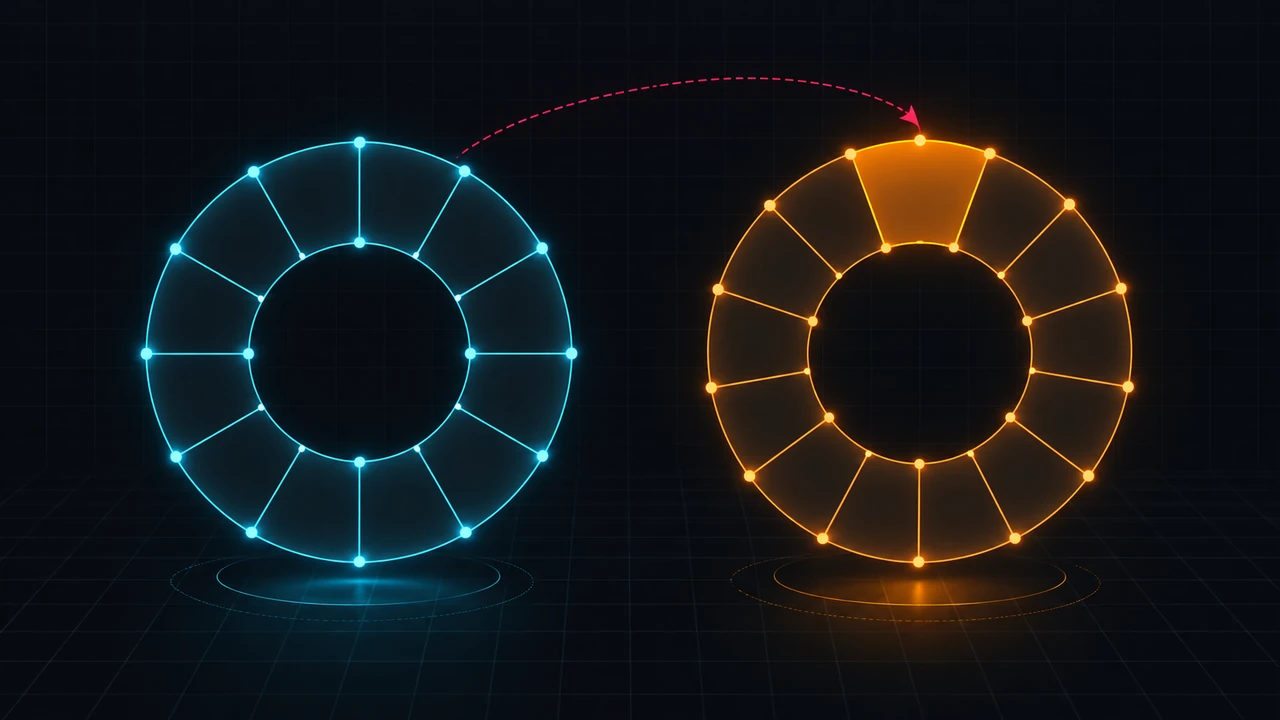
Fifty-four segments, eight bet positions
The game is a vertically mounted wheel the presenter spins by hand, divided into fifty-four segments. Forty-five of them carry a number — 1, 2, 5 or 10 — and nine of them start a bonus game. The published layout puts 1 on twenty-one segments, 2 on thirteen, 5 on seven and 10 on four, with Coin Flip on four, Cash Hunt on two, Pachinko on two and Crazy Time on one.
That distribution is the whole game. Nothing else about the wheel matters as much, because the segment counts are not symmetrical and the payouts are not adjusted to compensate in the way a roulette table nominally is. The numbers pay their face value: a winning 1 pays one to one, a winning 10 pays ten to one. The counts fall in roughly the same order as the payouts, which is what makes the numbers feel intuitive, but the fit is deliberately imperfect and the nine bonus segments sit outside the scheme entirely.
You can stake any combination of the eight positions in the same round, and the amounts are independent. Backing 1 and Pachinko is two separate bets, settled separately, with no interaction between them. There is no single-bet way to back "a bonus" — the four bonus games are four distinct positions, and landing Pachinko does nothing for a stake sitting on Cash Hunt.
Confirm the segment layout in the game's own information panel in the lobby you are playing in. It is reached from inside the game frame, and it is the version of the layout that governs your round.


18+ · Bonus conditions
Offer information supplied: 2026-10-05.


18+ · Bonus conditions
Offer information supplied: 2026-10-05.
The top slot is a condition, not a prize
Above the wheel sits the automated two-reel top slot, spinning at the same time. One reel selects a segment — a number or a bonus game — and the other selects a multiplier. When both reels show a result and the wheel then stops on the segment the top slot named, that multiplier is applied.
Three conditions have to hold at once, and most rounds fail at least one of them. The top slot has to produce a segment and a multiplier rather than a blank. The wheel has to land on that exact segment. And you have to have backed that segment before betting closed. A multiplier attached to a 10 is worth nothing to you if your money is on 2, and it is worth nothing to anyone if the wheel stops on 5.
When the named segment is a bonus game, the multiplier does not pay out immediately. It is carried into the bonus round and applied there, on top of whatever that round generates. This is the only mechanism in the game that stacks two sources of multiplication, and it is where the game's biggest results come from.
The useful way to think about the top slot is as a conditional modifier on a bet you have already decided to place, not as a reason to place one. Chasing the segment the top slot has just named is backwards: the reels and the wheel resolve in the same round, so by the time you can read the top slot, betting is shut.
Four bonus games that resolve in four different shapes
The four bonus games resolve in structurally different ways, and the difference is not cosmetic: it changes how much of the outcome one event settles.
Coin Flip is the narrowest. Two multipliers are generated, one on each face of a coin, and the coin is flipped. You get the face that lands. There is no choice to make and no sequence to run, so the spread of outcomes is the spread between two generated values. It is the bonus that behaves most like a number bet with a larger range.
Cash Hunt presents a grid of targets — a hundred and eight of them in the standard layout — each concealing a multiplier. The targets are shuffled in front of you, you aim at one, and it is revealed. Every player in the round picks independently, so two people in the same Cash Hunt walk away with different multipliers. Your pick is a selection from a distribution you cannot see; watching the shuffle does not inform it.
Pachinko drops a puck down a pegged board into a row of pockets at the bottom. Some of those pockets are not multipliers at all but a DOUBLE marker, which doubles every value on the board and drops the puck again. A Pachinko round can therefore run for several drops, with the board escalating each time, until the puck lands in a paying pocket or the round hits the game's payout ceiling. Crazy Time, the segment the game is named after, opens a separate large wheel with three coloured flappers: you choose a colour before the spin and are paid the multiplier under your flapper. It too contains DOUBLE and TRIPLE segments that re-spin with every value raised. One segment on the main wheel leads to it, which is why it is both the rarest entry and the one with the widest range of results.
// sponsored · Safe Casino · 18+
+500% + 120 free spins
Safe Casino welcome offer. Check the qualifying deposit and wagering conditions before you claim.
Where the edge lives, and why covering the wheel fails
Every one of the eight positions carries a house edge, and they are not the same size. The published figures sit in the game's information panel, per bet type. What follows is where the edge comes from, which is the part that does not change between operators.
For the number bets, the edge is the gap between the segment counts and the payouts. Twenty-one of fifty-four segments are a 1, which is fewer than the 1 bet would need to break even at one-to-one odds. The same shortfall applies to 2, 5 and 10 in their own proportions. Add the nine bonus segments, on which every number bet loses outright, and the shortfall is structural rather than incidental.
This produces a result worth doing the arithmetic on, because it kills the most common instinct new players have. Suppose you cover the entire wheel: one unit on each of the eight positions, eight units staked. If the wheel lands on 1, that bet returns two units and the other seven are gone — a net loss of six. On 2, you get three back and lose five. On 5, six back for a net loss of two. Only on 10 does the round show a profit, and 10 is the rarest number on the wheel. If a bonus lands, the one unit sitting on it has to return more than all eight units staked before the round breaks even, which demands a multiplier well above anything the number bets can produce.
Covering the wheel does not reduce variance in a useful way. It converts most rounds into a small guaranteed loss and leaves you dependent on exactly the rare outcomes you were trying to insure against. The arithmetic uses one unit per position to keep the ratios legible; scale it as you like and the signs do not change.
Figures differ between builds and lobbies. Read the live game's information panel before you rely on any of them.
Play here →Three ways a round goes wrong while you are watching it
Three things go wrong often enough to be worth naming, and all three share a source: the round is a live event on a fixed clock, and you are not in it unless you were in it before the clock ran out.
The betting window closes before the spin. A bonus game you are watching play out is a bonus game you either backed or did not, and there is no entry once the wheel is in motion. This sounds obvious written down, and it still catches people, because the bonus rounds are long and visually involved while the window that mattered was short and uneventful. If you intend to be in Crazy Time rounds, the stake has to be sitting on that segment every round, not placed in the moment of recognising one.
The second is partial coverage read as full coverage. A player with money on three bonus games and not the fourth has not backed "the bonuses"; they have four separate positions and have declined one. When the declined one lands, the round pays them nothing at all, which feels like a different kind of loss than it is.
The third is a top slot multiplier mistaken for a round-wide one. The multiplier belongs to one named segment. A round where the top slot shows a large number and the wheel stops somewhere else is an ordinary round, settled at base odds. The display has already shown you a big figure by then, and the mismatch is easy to misread as a payout that failed to arrive.
A multiplier pays your position, not your round
A multiplier in Crazy Time applies to the stake on that position, not to what you put into the round. It is the single most common source of disappointed arithmetic, and worth working through once.
If you spread money across all eight positions and Pachinko lands, your Pachinko stake is what gets multiplied. The money on the numbers and the other three bonuses is lost in that round and does not participate. A large multiplier on a small position is a small payout, and the screen will have been showing you the multiplier rather than the amount for the whole of the bonus round.
There is also a ceiling. The game caps what a single round can pay, and the published figure is quoted inconsistently across third-party pages, which is reason enough not to repeat one here. Read it in the information panel alongside the table and bet limits, and read it on the day, in the lobby you are using. The cap is a limit on the round, not an estimate of anything, and it is the reason a DOUBLE chain in Pachinko or Crazy Time does not escalate indefinitely.
The round history is more useful than the final screen for understanding a settled amount. It separates the segment result, the top slot condition, the bonus multiplier and your stake on each position — four things the live presentation compresses into one animated total.
// sponsored · WinCrown · 18+
+500% + 120 free spins
WinCrown welcome offer. Read the current promotion terms, eligibility and withdrawal conditions.
The strategy that holds up, and the kind that does not
The wheel has no memory. Each spin is a physical event on a wheel whose segment counts have not changed since the last one, so a run of 1s does not make a bonus more likely, and a Crazy Time segment that has not appeared for a long stretch is not accumulating anything. Statistics pages publishing recent results and segment frequencies describe what has already happened; they carry no information about the next spin, and reading them otherwise is the most widespread mistake in this game.
What is defensible is narrower than most pages selling strategy admit. You can choose which variance you want: the number positions resolve in one event with a known payout, the bonus positions hand the round to a second game with a range you cannot see in advance. Backing mostly numbers produces frequent small results and a steady drain. Backing mostly bonuses produces long stretches of nothing punctuated by rounds you cannot predict the size of. Neither is better value — both carry a house edge — but they feel entirely different to sit through, and knowing which one you are choosing is a real decision.
You can also size positions deliberately rather than by habit. If the reason you are in the game is the bonus rounds, then a large number stake and a token bonus stake is the wrong shape: the rounds you are there for will pay you almost nothing. The position that will carry your result should be the position carrying your money.
What does not work is specific to this wheel. Staking up after a run of numbers does not bring the nine bonus segments forward, because the counts the stake is chasing have not moved since the spin before. Taking on an extra position mid-session to cover a gap you have noticed only raises the number of units a round must beat before it returns anything. And no arrangement of the eight positions produces a round the wheel cannot win, because every single position loses on at least thirty-three of the fifty-four segments. The format tells you what the game is if you let it: a short betting window, a spin, then a long piece of television that either involves your money or does not. Decide what that is worth per round before the first spin; nothing later in the session will offer you the figure.
Where it sits in a lobby, and what this page could not verify
Crazy Time is an Evolution title, which means it reaches players through operators that have integrated Evolution's live studio feed rather than through the studio directly. That has a practical consequence for finding it. It is filed under a lobby's live or game show heading rather than among the pokies, so the terms you would use for a reel game will not surface it, and the rules governing your round sit in the game's own information panel, not the summary on whatever page linked you there. If you are looking for the title on the two sponsored operators on this site, [Safe Casino](/go/live/gold.php?o=safe-casino&p=crazy-time) and [WinCrown](/go/live/gold.php?o=wincrown&p=crazy-time), open the live lobby through the link and use its own search — this page makes no claim about what either of them carries today.
Online casino services cannot lawfully be provided to people in Australia, and every operator reachable from this site is offshore. The live game show format makes that unusually easy to forget in a way a reel game does not. There is a person on camera, a studio floor, a clock counting down and a chat window with other players in it, and the production is built to feel like a venue you walked into. None of it is evidence of Australian authorisation. A presenter greeting the room in an Australian accent is a staffing decision. The protections a locally regulated venue owes you — a complaint path that leads somewhere, enforceable deposit controls, a self-exclusion register other venues honour — do not travel with the feed.
Four figures are deliberately missing from this page, and all four sit in the same place. The house edge per bet position, the cap on a single round, the table's minimum and maximum, and the multiplier range inside each of the four bonus games: those sit in the loaded game's rules, differ between builds, and a number lifted from a page like this one is already wrong for somebody's session. What is structural, and what this page stands behind, is the shape — fifty-four segments, eight bet positions, a conditional top slot, four bonus games that resolve in different ways, and multipliers that apply per position rather than per round. That is the part worth knowing before you sit down. It is a description of a wheel, not a recommendation to bet on one.

Questions people actually ask
How does Crazy Time actually work?
A presenter spins a fifty-four-segment money wheel. Forty-five segments are numbers (1, 2, 5, 10) that pay their face value, and nine start one of four bonus games. You stake any combination of those eight positions before the betting window closes. An automated top slot above the wheel may name a segment and a multiplier at the same time; if the wheel stops on that exact segment, the multiplier applies to bets on it.
Is betting on all eight positions a safe way to play?
No, and the arithmetic is easy to check. One unit on each position is eight units staked. A 1 returns two, a 2 returns three, a 5 returns six — all losses. Only a 10 or a sufficiently large bonus multiplier shows a profit. Covering the wheel converts most rounds into a guaranteed small loss and leaves you dependent on the rare results you were trying to insure against.
Can I join a bonus round I am watching?
No. Betting closes before the wheel is spun, so a bonus round is one you already backed or one you are only watching. The bonus games are long and visually involved, which is why this catches people — the window that decided it was short and uneventful. To be in Crazy Time rounds you have to hold a stake on that segment every round.
What does the top slot multiplier apply to?
One named segment only. The top slot picks a segment and a multiplier; the multiplier applies only if the wheel lands on that segment and you backed it. If the top slot names 10 and the wheel stops on 2, the round is settled at base odds. When the named segment is a bonus game, the multiplier is carried into that round instead of paying out directly.
Which bonus game has the best odds?
Each bet position has its own house edge, stated per bet type in the game's information panel — read it there rather than from a page like this one. Structurally, Coin Flip resolves between two generated values and has the narrowest spread, while Pachinko and Crazy Time can chain through DOUBLE and TRIPLE markers and have the widest. A wider range is not better value, only more volatile.
Do Crazy Time statistics or tracker sites help?
No. The segment counts do not change between spins, so a long gap since the last Crazy Time segment does not make the next one more likely. Published result histories describe spins that have already settled and carry no information about the next one. Treating them as a signal is the most common error made in this game.
// next step
A paytable makes more sense with the game open in front of you.
View current offer