
- Grid
- 6 × 5
- Win type
- Cluster pays
- Engine
- Super Cascades + Golden Squares
- Feature
- Three bonus tiers
The shape of the game, and the one thing that is unusual
Le Bandit plays on six reels and five rows, and the provider describes it as a cluster-pays title running on Super Cascades. There are no paylines. A qualifying group of matching symbols pays according to its count, the contributing symbols vanish, replacements tumble down into the vacated cells, and if the new arrangement qualifies it pays and cascades again. That much will be familiar if you have read about any cascade pokie.
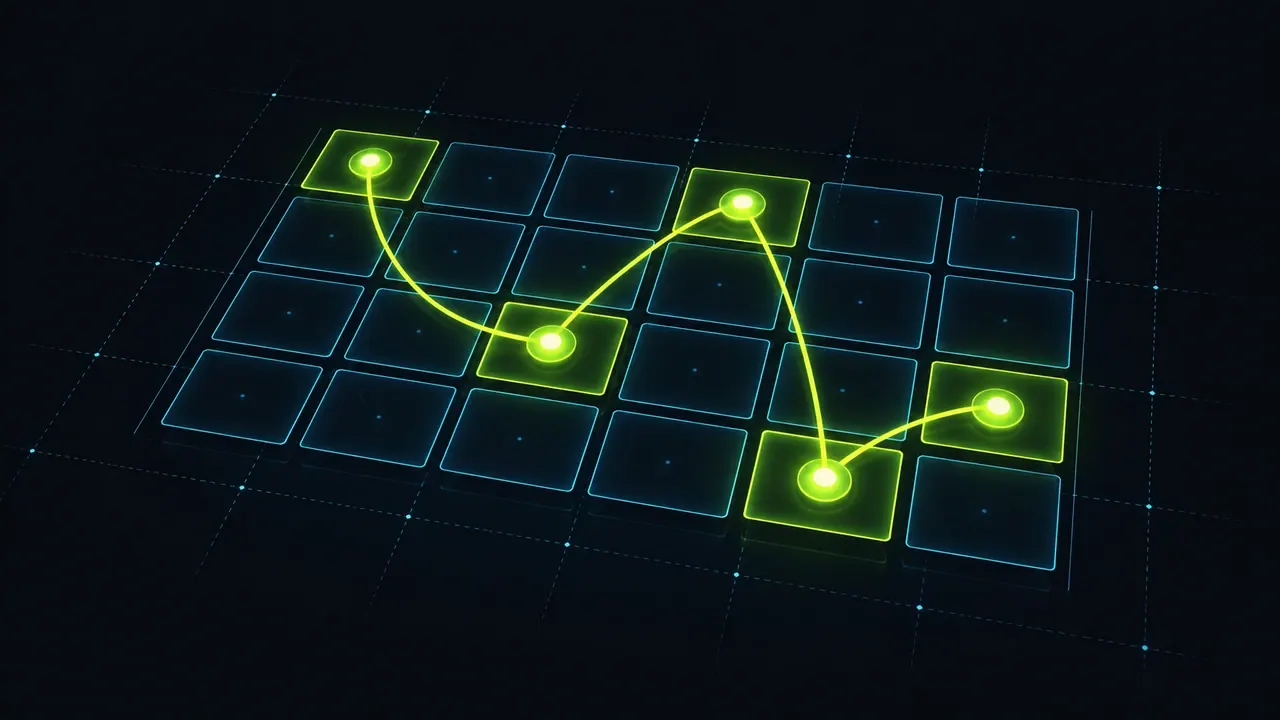
The part that is not familiar: every position that formed part of a win is highlighted with a Golden Square once that symbol disappears from the grid. The squares accumulate through the cascades of a single paid spin. The board you finish a spin on therefore carries a map of where it paid, and that map is the game's real currency.
So a spin here has two things running at once. One is an ordinary cluster payout, which is cash in your balance. The other is a growing field of Golden Squares, which is stored potential and is worth nothing yet. Those two things are settled by different events, and treating them as one is the most common misreading of this game.


18+ · Bonus conditions
Offer information supplied: 2026-10-05.


18+ · Bonus conditions
Offer information supplied: 2026-10-05.
Golden Squares pay nothing until a Rainbow lands
Golden Squares do not pay. They are marked positions, not prizes. The provider's description is explicit about what resolves them: a Rainbow symbol landing while squares are on the grid is the event that converts them, revealing values in the cells that were marked.
Read a single spin in that order and it stops being confusing. The first cluster pays and clears, leaving squares. The cascade may pay again, leaving more. Somewhere in that sequence a Rainbow either arrives or it does not. If the spin ends without one, every square you watched accumulate is discarded with the rest of the spin state. Check your loaded rules for whether any base-game persistence exists in your build, but do not assume it.
The failure mode follows directly. Players who learn to read the square count start treating a heavily gilded board as an almost-win, and that sense of "almost" is the trap. There was no partial progress toward a payout, because the Rainbow is not the final step of a sequence you were working through. It is an independent event that happens to be worth more when more cells are marked. A board three-quarters covered is not three-quarters of the way to anything.
This also inverts the usual advice about cascade pokies. On most of them a string of small clusters is consolation, the game handing back fragments of your stake. Here those small clusters are infrastructure: a cluster returning less than the stake still marks cells, and marked cells are what a Rainbow would convert. That does not turn a losing spin into a winning one. It does mean the cheap wins do structural work, which is worth knowing before you decide what a dead spin looks like on this particular game.
Coins, clovers and pots: what the squares turn into
When squares convert they reveal things, and the provider names three kinds: coins in bronze, silver and gold tiers, four-leaf clovers, and pots of gold. Each does a different job, and the order in which the game resolves them is where the expensive misunderstandings live.
Coins carry a value expressed as a multiple of total bet, and the tier tells you which band a cell landed in. The specific values attached to each tier belong in the game's own information panel, in the lobby you are playing in, for the same reason the return figure does: they are a property of the build, not of the title.
Clovers apply a multiplier. The question a help panel answers and a review usually does not is: a multiplier on what, and applied at which point. A multiplier acting on the collected coin total behaves very differently from one acting on a single cell or on the spin as a whole, and whether several clovers add to each other or multiply each other is a separate question again. Settle both before you try to reason about any large result you have seen on video.
The pot of gold collects revealed wins and, per the provider's description, reactivates the Golden Squares so the cycle can run again inside the same spin. That loop is why a single spin on this game can go on for an uncomfortably long time. Collect, reactivate, keep cascading, possibly convert again. Read whether a reactivation clears the previous squares or restores them, and whether anything limits how many times the loop can repeat. That mechanism, far more than the coin bands, governs what the top end of this game looks like.
// sponsored · Safe Casino · 18+
+500% + 120 free spins
Safe Casino welcome offer. Check the qualifying deposit and wagering conditions before you claim.
Three bonus rounds, not one
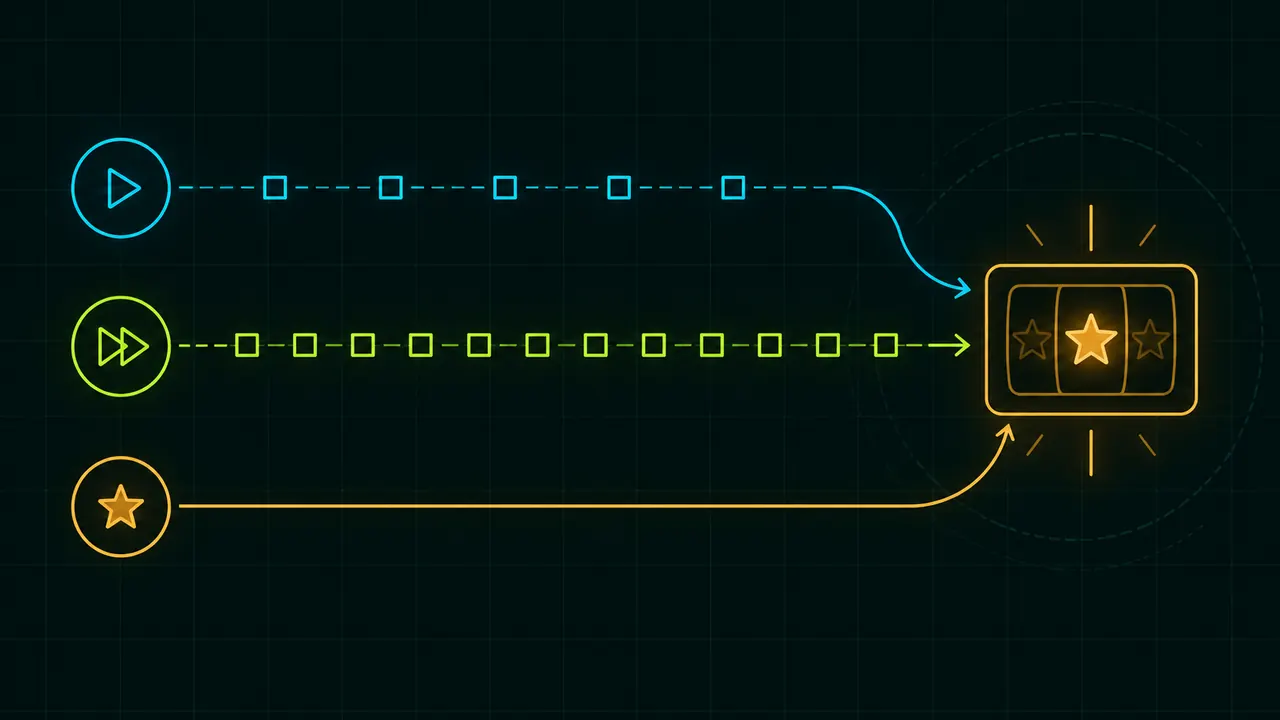
Writing about "the Le Bandit bonus round" in the singular is wrong. The provider describes three separate free-spins features, entered on different counts of the FS symbol: Luck of the Bandit on three, All That Glitters Is Gold on four, and Treasure at the End of the Rainbow on five.
What separates them is not just how many spins you get. The structural change is persistence: in the bonus rounds the Golden Squares are described as remaining across spins rather than clearing at the end of each one, which converts the base game's single-spin load-then-fire cycle into something that builds across the whole round. The top tier goes further and guarantees a Rainbow every spin, so whatever has accumulated is converted each time instead of waiting on chance.
That gives you a usable decision rule for everything you will read about this game. Before taking any claim about the bonus seriously, work out which of the three it describes. A clip of an enormous round is almost certainly the top tier with squares persisting and a guaranteed conversion each spin. A complaint that the bonus paid nothing is more likely the entry tier. Neither says anything about the other, and they are reached by different trigger conditions, so they are not interchangeable experiences of one feature.
Then check two things in the help panel that summaries routinely blur: the spin count for each tier, and what happens when further FS symbols land inside a round. Whether that promotes the round to a higher tier or merely adds spins reads almost identically in a paragraph and is very different at the cashier.
Figures differ between builds and lobbies. Read the live game's information panel before you rely on any of them.
Play here →Buying in: the bonus buy and FeatureSpins are different products
Beyond waiting for FS symbols, the provider lists both a bonus buy and a BonusHunt FeatureSpins mode for this title. They are not the same product and the difference costs real money. A buy pays a stated price to start a feature immediately. FeatureSpins are ordinary spins purchased at a raised price with improved odds of triggering one, which means you can pay the premium and trigger nothing.
Establish three things before touching either, in your account currency rather than in stake multiples. First, the total charge the confirmation screen actually shows. Second, which tier you are buying into, because on a game with three graded features a button promising "the bonus" has to specify which one, and an entry-tier purchase is a different product at a different price from a top-tier purchase. Third, whether the mode carries its own separately stated return figure, as these modes commonly do. The second question is the one people skip, and it is the one unique to a tiered game like this.
Keep the account terms separate from the game rules while you do it. A feature purchase counted at its full charge can breach a maximum-bet condition, and purchases are frequently excluded from wagering contribution altogether. If you are playing through a welcome offer, read the excluded-features clause and the eligible-games list before you press anything, not after a withdrawal is refused. A correct understanding of the clover multiplier will not help you there; those answers are in a different document.
The RTP question, and why the cap matters more here
If you arrived here searching for the return figure, the honest answer is a procedure rather than a percentage. Studio output of this kind can ship in more than one return configuration, and which build you play is the operator's integration decision rather than a property of the game's name. Any single number printed next to "Le Bandit RTP" on a review page is a snapshot of one build in one lobby on one day, and this site does not publish those.
The procedure takes about two minutes and produces a figure that is actually true for you. Open the game in the lobby you intend to play in. Find the information icon inside the game frame, not on the casino page around it. Write down four values: the base-game return, any separate return stated for the FeatureSpins mode, any separate return stated for the bonus buy, and the maximum win expressed as a multiple of stake. Then read the volatility rating, which on a game structured around a rare conversion event is carrying more information about your evening than the percentage is.
The cap deserves its own attention on this game specifically, because of the collect-and-reactivate loop. Where a single spin can run several conversion cycles, the maximum-win rule is not a remote theoretical ceiling but a live termination condition for a round already in progress. Check what the rules say happens when it is reached mid-loop: whether pending reactivations are forfeited, whether remaining free spins are still played out, and whether the limit applies per spin, per round or per feature. Those three answers change what a long round is worth, and none of them can be inferred from the number itself.
// sponsored · WinCrown · 18+
+500% + 120 free spins
WinCrown welcome offer. Read the current promotion terms, eligibility and withdrawal conditions.
Le Bandit and the rest of the Le family
Le Bandit came first in what has grown into a sizeable family from the same studio built on the same Golden Squares engine. Le Pharaoh, Le Viking, Le King and others followed, with different themes and different mathematics. They are not versions of Le Bandit, and there is no Le Bandit sequel to confuse it with. They are separate releases that happen to reward the same reading habits.
The shared engine is a trap in one specific way. Because the mechanics look identical in summary, people carry specifics across the family: a coin band remembered from one title, a multiplier ceiling from another, a cap from a third. The engine is shared and the numbers are not, which is precisely why each release ships its own help panel. Record the full title from the game header rather than the lobby tile, because tiles truncate and these names differ by one word.
On availability, this page asserts nothing. Catalogues change without notice and no operator here is licensed in Australia, so if you want to know whether a title is present today, use a lobby's own provider filter rather than a third-party list: the sponsored lobbies on this site, Safe Casino and WinCrown, both have one, and the in-game help panel is the only thing that then tells you which build is loaded.
Worth stating plainly alongside that: online casino services cannot lawfully be provided to people in Australia, and a familiar studio's artwork in a footer is not authorisation. Offshore services may not carry Australian consumer protection.
On a phone, and what this page could not verify
Most Australian play happens on a phone, and this game is harder to read there than most, for a concrete reason. A six-by-five cluster board overlaid with accumulating Golden Squares is a great deal of visual state in a narrow frame, and the squares are simultaneously the information you need and the thing that gets smallest. Two habits help. Watch the square coverage rather than trying to track individual symbols, and find the information panel once per operator before the session rather than during it, because on a phone it sits behind a menu inside the game frame instead of beside it.
Orientation matters too. Control layout, the confirmation dialog for a purchase and the round-history view can all sit in different places in portrait and landscape. If you intend to use a buy or FeatureSpins button at all, locate its confirmation screen before you need it. On a game where a purchase price is a multiple of stake, a mis-tap is an expensive way to learn where a control lives.
What this page could not verify is worth stating. The structural description here comes from the provider's own game information and is stable across builds: the six-by-five grid, cluster pays with cascades, Golden Squares marking winning positions, Rainbow conversion, the bronze, silver and gold coin tiers, the clover multiplier, the pot-of-gold collect and reactivation, three free-spins tiers on three, four and five FS symbols, and the existence of both a buy and a FeatureSpins mode. Everything numeric is build-specific and deliberately absent: returns, coin values, multiplier ceilings, spin counts per tier, the maximum-win cap and the FeatureSpins price. Release status and availability at any particular operator are not asserted either.
This is a description of a machine, not a recommendation to play it. Understanding the conversion loop does not change what the loop is designed to do. Set a spending and time boundary before you open it, never use money needed for essentials, and stop if the point of continuing becomes recovering what you have already spent. Sponsored links on this site can earn this publisher a commission.

Questions people actually ask
What is the RTP of Le Bandit?
It depends on which build the operator integrated, and a title like this can ship at more than one return configuration. The FeatureSpins mode and the bonus buy also commonly carry their own separately stated figures. All of them are in the information panel inside the game frame, in the lobby you are playing in, and that is the only version of the number that applies to you.
What are Golden Squares and do they carry over between spins?
Every position that forms part of a win is highlighted with a Golden Square once the symbol clears, and the squares build up through the cascades of that spin. In the base game they belong to the spin. In the free-spins rounds the provider describes them as remaining across spins, which is the structural reason a bonus round behaves differently from a base-game spin.
Why did my spin fill the board with gold and pay nothing extra?
Because no Rainbow landed. Golden Squares are marked positions, not prizes, and the Rainbow is the event that converts them. A heavily covered board is not partial progress toward a payout; the conversion is an independent event that happens to be worth more when more cells are marked.
How many bonus rounds does Le Bandit have?
Three, entered on different counts of the FS symbol: Luck of the Bandit on three, All That Glitters Is Gold on four, and Treasure at the End of the Rainbow on five. They differ in internal rules, not only in length, so before you believe anything written about "the bonus" work out which tier it describes.
Is BonusHunt FeatureSpins the same as the bonus buy?
No. A buy pays a stated price to start a feature now. FeatureSpins are ordinary spins bought at a raised price with better odds of triggering one, so you can pay the premium and trigger nothing. Check the total charge on the confirmation screen, which tier a buy enters, and whether either mode states its own return figure.
Is Le Bandit the same game as Le Pharaoh or Le Viking?
No. They are separate releases from the same studio sharing the Golden Squares engine, with different themes and different mathematics. Carrying a coin band, a multiplier ceiling or a cap across the family is a common error — each release has its own help panel for exactly that reason.
// next step
A paytable makes more sense with the game open in front of you.
View current offer