- Studio
- Pragmatic Play
- Grid
- 5 × 3, fixed lines
- Wild
- Sticky, with multiplier
- Wild reels
- Middle three only
The kennel is a family, and only one of them is this game
Pragmatic Play has extended this name steadily since the original appeared, and the original is the game this page describes: a fixed-payline pokie with sticky multiplier wilds. The releases built on top of it — a Megaways build, a Multihold build, Dog or Alive, Muttley Crew, a dice-show format and a royal-hunt variant among them — share the kennel artwork and very little else. Separate engines, separate paytables, separate help panels. Nothing you read about one of them establishes a rule for another.
Age matters here. A title that has sat in lobbies for years has passed through far more operator integrations than a recent release, and the lobby tile records none of that. A help screen read on another site, or on this one a year ago, is not evidence about the build in front of you.
So the first step is identification rather than strategy. Read the full title in the game's own header inside the game frame, not the lobby tile. Tiles truncate, and at phone width "The Dog House" and "The Dog House Megaways" collapse into labels that look nearly the same — while the second has no fixed paylines at all and runs on a different engine. If the header carries a number, a subtitle or a second name, you are not on this page's game and the rules below do not describe what you are playing. The Megaways page covers what that engine swaps out.


18+ · Bonus conditions
Offer information supplied: 2026-10-05.


18+ · Bonus conditions
Offer information supplied: 2026-10-05.
A five-reel line game, and why that changes your reading
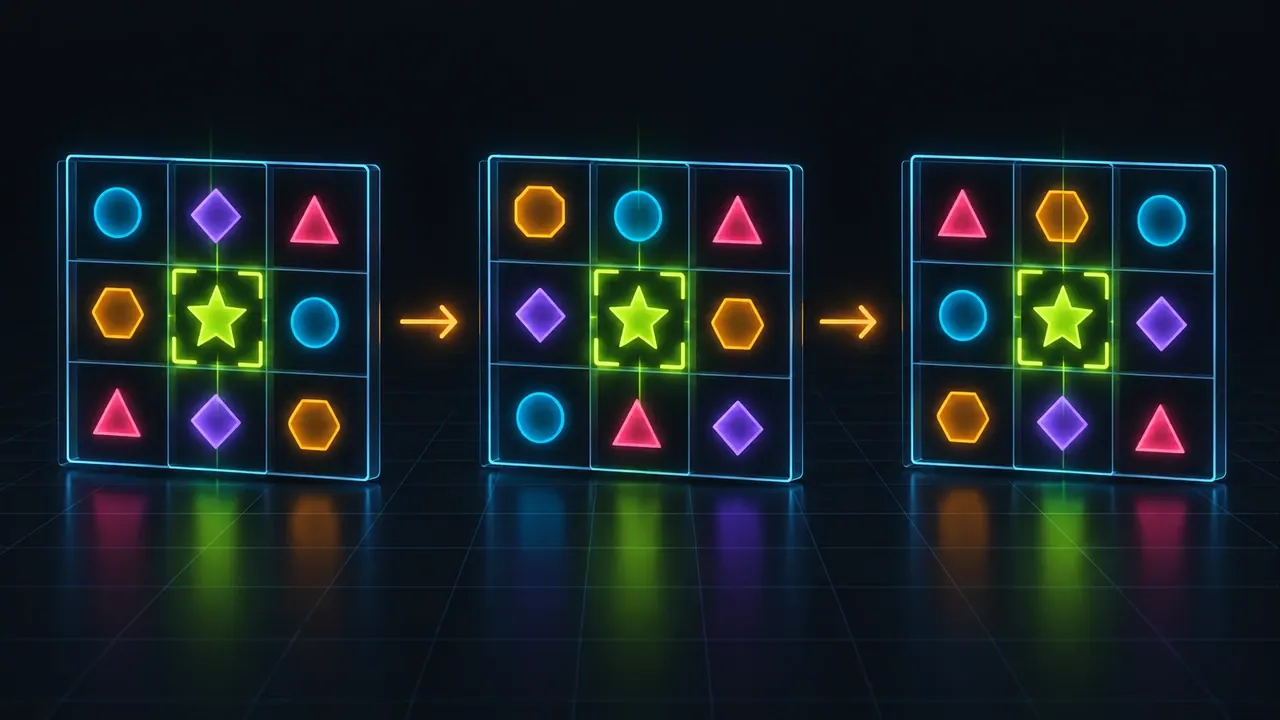
The original is a five-reel, three-row game whose lines are fixed rather than selectable, and write-ups disagree about its shape for a reason that is not mysterious: the relatives have different grids and writers mix the family up. Confirm the grid by looking at the board, and confirm the line count in the paytable of the build you have open.
Fixed paylines change how you read the screen. You cannot switch lines off to stretch a balance: stake per line and total stake move together, so every spin buys all of them.
Wins are evaluated left to right along those lines, beginning at reel one. That single rule is what makes the wild placement described next consequential, and it is also why a board crowded with matching dogs can pay nothing at all. The symbols have to sit on a defined line, in order, starting from the leftmost reel. Adjacency on the board is not adjacency on a line, and the win mechanics page sets out how line games differ from the ways and cluster formats this one gets shelved beside.
The wilds only live in the middle three reels
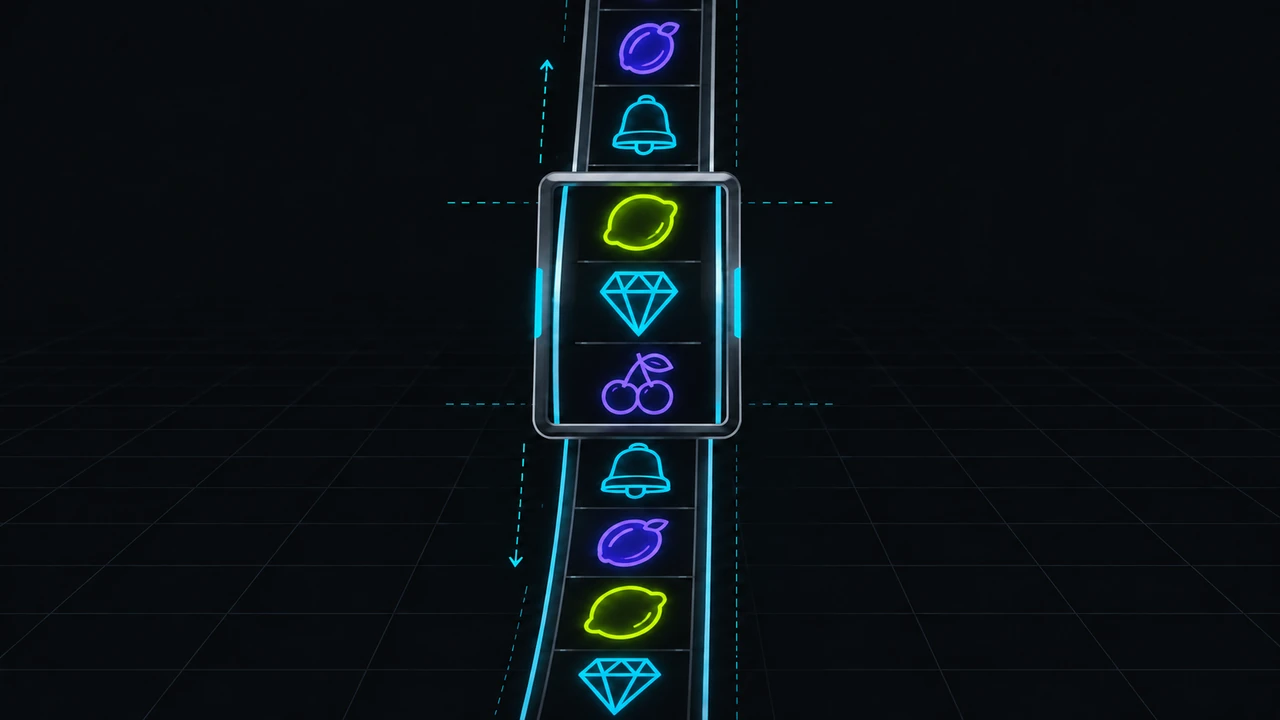
The wild in this game is a dog house, and the studio restricts it to the three middle reels — two, three and four. It substitutes for paying symbols and it does not substitute for the scatter.
Put that restriction next to left-to-right evaluation and a hard consequence falls out: a wild can never stand in for the symbol on reel one. The leftmost symbol of any winning line has to be genuine. A middle column stacked with wilds pays nothing by itself. It is a bridge, and a bridge needs real symbols at the far ends before it is worth anything.
That is the reading rule for the base game, and it explains the most common complaint about this title. When a spin lands two or three wilds and pays much less than it looked like it should, check reel one. The combination is defined by the symbol sitting there, so a set of wilds bridging towards a high symbol on reel five still pays at the rate of whatever cheap symbol opened the line. The wilds did their job; the line was simply a cheap line.
The restriction also fixes a ceiling on how much of the board the game can ever lock. Three reels is the maximum wild coverage, and reels one and five keep spinning ordinary symbols for the whole of any round. Every expectation you form about the feature has to live inside that limit — a useful corrective if you arrived from a game where wilds can cover the board.
// sponsored · Safe Casino · 18+
+500% + 120 free spins
Safe Casino welcome offer. Check the qualifying deposit and wagering conditions before you claim.
Multiply, not add: the rule the game turns on
Each wild can arrive carrying a multiplier. The question that decides this game is what happens when more than one of them lands on the same paying line, and this family answers it differently from the studio's better-known tumble titles: the values multiply each other rather than summing.
Written as arithmetic rather than as invented values: a line carrying two wilds whose badges read A and B pays at A × B, not at A + B. With one wild the two rules are indistinguishable. With two the gap opens. With three — the most the middle columns can hold — the gap is the whole reason this game has large outcomes at all. Its distribution lives in the small number of rounds where the middle column fills with high-value badges, not in the many where it fills with low ones.
The contrast with the add model is worth holding onto, because the same studio ships both. In Sweet Bonanza, multiplier symbols sum at the end of a tumble sequence and the slate is wiped at the start of every spin. Here they compound along a line and, in the feature, they stay. Two games from one developer giving opposite answers to the same design question — and a reading habit learned on one of them will misprice the other.
Read the actual badge values and the combination rule in the paytable rather than trusting the shape above. Values used at launch are not guaranteed to be the values in the build an operator integrated, and whether the rule is multiplicative is stated in the wild's own paytable entry — not something to infer from a win you happened to watch.
Figures differ between builds and lobbies. Read the live game's information panel before you rely on any of them.
Play here →Free spins: the board that only gets better
Free spins are entered on the scatter count stated in the paytable. The scatter is a paw print, the required count is a rules fact rather than a pattern you can feel coming, and a near miss is not information about the next spin. Inside the round the wilds change behaviour: they lock where they land and stay there for the spins that remain.
Stickiness makes this round structurally unlike a reset-each-spin feature. The board only improves. The first spin of the round is the worst board you will see, every wild that arrives makes all the remaining spins better, and nothing removes a locked wild once it is down.
The decision rule that follows is specific to sticky features and it is not obvious. The round's value is set mostly by how early the wilds arrive, not by how many arrive in total. Three wilds on the second spin are worth far more than the same three on the last, because the first set works on every subsequent board and the second works once. The same logic makes an extra spin worth more here than in a clean-start feature, since it plays on an accumulated board. If the rules describe extra spins or a retrigger, read them properly.
Two further things to check in the loaded rules, because the relatives answer them differently. First, whether the number of free spins is fixed or set by a step before the round begins. Second, whether the wild multiplier values available during the feature are drawn from the same set as the base game or a different one. Both answers are in the help panel of the game you have open, and neither can be carried across from another release in the family.

Two things have to happen at once
Most feature-driven pokies make the player wait on one condition. Here the round needs two to coincide, and they are independent of each other: wilds have to arrive in the middle columns, and the badges they arrive with have to be worth something. A round that fills all three middle reels with the lowest available badges and a round that lands one high badge are both flat, for opposite reasons, and neither is a malfunction.
Because the two requirements multiply rather than add, outcomes cluster at the bottom. Most rounds resolve near the floor the restriction imposes, and the designed return hides in the thin tail where coverage and badge value coincide. That is a volatility statement; the rating for your build sits in the information panel beside the return figure, and what such a rating does and does not tell you is covered on the return figures page.
The base game cannot teach you any of this. Wilds do not lock outside the feature, so a long run of paid spins shows you the restriction and the left-to-right rule but never the compounding that gives the game its character. Expectations formed over an hour of base game are expectations about a different machine from the one the free spins round runs.
Stake sizing then has one honest consequence on a fixed-line game. Lines cannot be reduced, so coin value is the only lever, and lowering it buys more spins at identical line coverage rather than a thinner version of the same spin. A budget that only survives a short run of paid spins is being spent entirely in the phase that cannot show you the feature.
// sponsored · WinCrown · 18+
+500% + 120 free spins
WinCrown welcome offer. Read the current promotion terms, eligibility and withdrawal conditions.
The ceiling is reached by multiplication, not accumulation
Pragmatic releases state a maximum win as a multiple of total stake, and that figure is in the information panel. This page does not print it, because the cap has differed between builds and between members of this family, and a number copied from a relative is worse than no number at all.
What the cap does here is more useful than its value, because the sticky round and the ceiling interact awkwardly. A locked board improves in one direction only, so the limit is approached by multiplication and arrives abruptly: a round sitting comfortably below it can reach it on a single line resolving through a filled middle column, with spins still on the counter. Those spins are then playing for nothing, or not playing at all, depending on a sentence in the rules worth reading before the round rather than during it. The payout is the same either way; the screen is not, and a player who does not know which rule applies will usually assume the game has broken.
The cap is also why clips of enormous Dog House rounds tell you nothing. A capped result is the defined limit of the machine, not a measurement of a likely outcome. A ceiling answers how much a round can stop at. It says nothing about tonight.
What "The Dog House RTP" actually refers to
The figure people search for is this game's return percentage, and the honest answer is that it belongs to the build an operator integrated rather than to the title. Pragmatic ships titles at more than one return configuration and the operator selects one at integration. For a game that has been in lobbies for years the spread of live builds is wide, so a single percentage printed on a review page describes somebody else's lobby on an unknown date. The high RTP page explains why one title ships at several.
Every mechanism described above has a quantity attached, and all of those quantities sit in the help panel rather than on this page: the badge values and the wording that confirms they multiply, the scatter count with its spin award, the return figure for this build, and the cap with its termination rule. Open the panel while the balance is still untouched — read afterwards, it only explains a round you have already paid for.
Then check whether your build exposes an alternative way into the feature at all. Some builds of some titles offer a feature purchase or a higher-stake mode and some do not, and where one exists it carries its own separately stated return figure in the same panel. If you intend to use it, that figure is the one that applies to you and the base game's figure is irrelevant.
Keep the game's rules and the account's terms in separate mental boxes. The bonus round inside The Dog House and a casino's welcome bonus are unrelated things that happen to share a word. A promotion can cap maximum stake, exclude feature purchases, or exclude a studio's whole catalogue from wagering contribution. None of that is written in the paytable.
Small badges, truncated tiles
At phone width this game loses precisely what you most need to see. The badge on a wild is small, and with two or three wilds on screen it is often impossible to tell at a glance which value sits on which reel — which matters here more than in most games, because those values compound. When a payout looks wrong, read the round history rather than the board. The line shapes are close to unreadable on a phone diagram too, so study that diagram once on a larger screen and carry it back to the phone.
Finding the right release in a lobby is a search problem rather than a browsing one. Filter by studio instead of typing "dog", because the family name returns a shelf of relatives whose tiles look alike, then open the header of whatever loads and read the full title before you stake anything. If you are running that check in a lobby such as Safe Casino or WinCrown, run it on the live page on the day: this page does not assert which releases any operator has loaded, and catalogues change without notice.
Treat this page as a description of a mechanism and nothing more. The mechanism is the stable part: fixed lines evaluated from reel one, wilds confined to the middle three reels, badge values that compound along a line, lock-in for the length of the free spins round. That survives reconfiguration, which is why it is worth writing down. Every quantity bolted onto it does not, which is why none of them appear above.
One account-level fact belongs here as well. Online casino services cannot lawfully be provided to people in Australia, so any operator offering this game to a reader here is offshore and answerable to a foreign licensor rather than an Australian regulator. That is a fact about the account you would open, not about the pokie. This page describes a machine, for adults only; it is not a recommendation to play it, and free Australian support is there if gambling has stopped feeling like a choice.
Questions people actually ask
What is the RTP of The Dog House?
It depends which build your operator integrated. Pragmatic ships titles at more than one return configuration and the operator picks one at integration, so a percentage quoted on a review page describes someone else's lobby. The figure that applies to you is in the game's information panel, inside the game frame, in the lobby you are playing in.
Do the sticky wild multipliers add together or multiply?
In this family they multiply each other along a paying line rather than summing: two wilds whose badges read A and B give that line A × B, not A + B. Confirm the actual values and the combination rule in the wild's own paytable entry for the build you have loaded.
Why do my wilds sometimes pay almost nothing?
Because wilds are restricted to the middle three reels and lines are evaluated left to right from reel one. The symbol on reel one defines the combination, so wilds bridging towards a high symbol on reel five still pay at the rate of whatever cheap symbol opened the line.
Do the wilds stay for the whole free spins round?
In the original they lock in place and remain for the spins that remain, which is why the board only improves as the round runs. How many spins you get, and whether feature multiplier values differ from the base game, are build-specific — read both in the loaded help panel.
Is The Dog House Megaways the same game?
No. It is a separate release with a different engine and no fixed paylines, and the same is true of Multihold, Dog or Alive, Muttley Crew and the other relatives. They share the artwork. Read the full title in the game header rather than the lobby tile before applying any rule you have read.
What is the maximum win on The Dog House?
It is stated as a multiple of total stake in the information panel, and it has differed between builds and between family members, so this page does not print a figure. More useful: check whether the rules end the round at the cap or pay it and let the remaining spins run.
// next step
A paytable makes more sense with the game open in front of you.
View current offer