
- Grid
- 5 × 3, fixed lines
- Key symbols
- Money value + fisherman wild
- Feature
- Collect round with multiplier ladder
- Return
- Configurable; read the loaded panel
The reel grid, and a base game that only qualifies you
Big Bass Splash runs on the five-reel, three-row cabinet the whole Big Bass family uses, paying along a short fixed set of lines rather than ways, clusters or a Megaways engine. Lines resolve left to right from reel one. The line count, the stake range and the per-line table are printed in the game's information panel, and that panel is the only place worth taking them from: a lobby tile does not state them, and a review page may be describing an earlier release.
The symbol set divides into four jobs, and keeping them apart is most of what there is to learn. Ordinary fish, tackle and card symbols pay along the lines. The scatter pays nothing on a line and opens free spins by count. The money symbol carries a printed cash value and does not pay on a line at all. The fisherman is a wild inside the free-spin round and is the only symbol that converts a printed value into a credit.
The fact that organises everything below is that the money symbol and the fisherman only work together inside free spins. Whether money symbols appear in the base game at all, and whether they are inert when they do, is a line in the panel that differs across this family — read it rather than carrying across the behaviour you remember from another Big Bass title.
So the base game is a qualifying stage, not the game: a long run of base spins is the admission price, not a sign the game has turned cold.


18+ · Bonus conditions
Offer information supplied: 2026-10-05.


18+ · Bonus conditions
Offer information supplied: 2026-10-05.
Printed cash values that are not yours yet
A money symbol is a value, not a win. It lands showing a cash amount, sits there for the spin and pays nothing by itself. Nothing is credited when it appears, nothing is credited if the spin ends with several on screen, and a board crowded with figures is a board of pending values. Reading those printed amounts as a balance is the most expensive habit on this game.
The values are quoted against your stake, which is what makes screenshots of this game misleading. A symbol showing a large figure at a high stake and the same symbol at the minimum are doing the same job; what differs is the bet it was priced against. Before deciding a value is worth chasing, work out what multiple of your own total bet it represents.
The value range, how the values are quoted and whether any are expressed as fixed jackpot-style multiples are stated in the panel for the build you loaded. The series has shipped more than one treatment, and published descriptions blend two releases into one account.
The reading habit this produces is to ignore the amounts and count the symbols. What determines a round's outcome is how many money symbols are on the board when a fisherman arrives, and what the multiplier is at that moment. The figures printed on them matter only once both of those are settled.
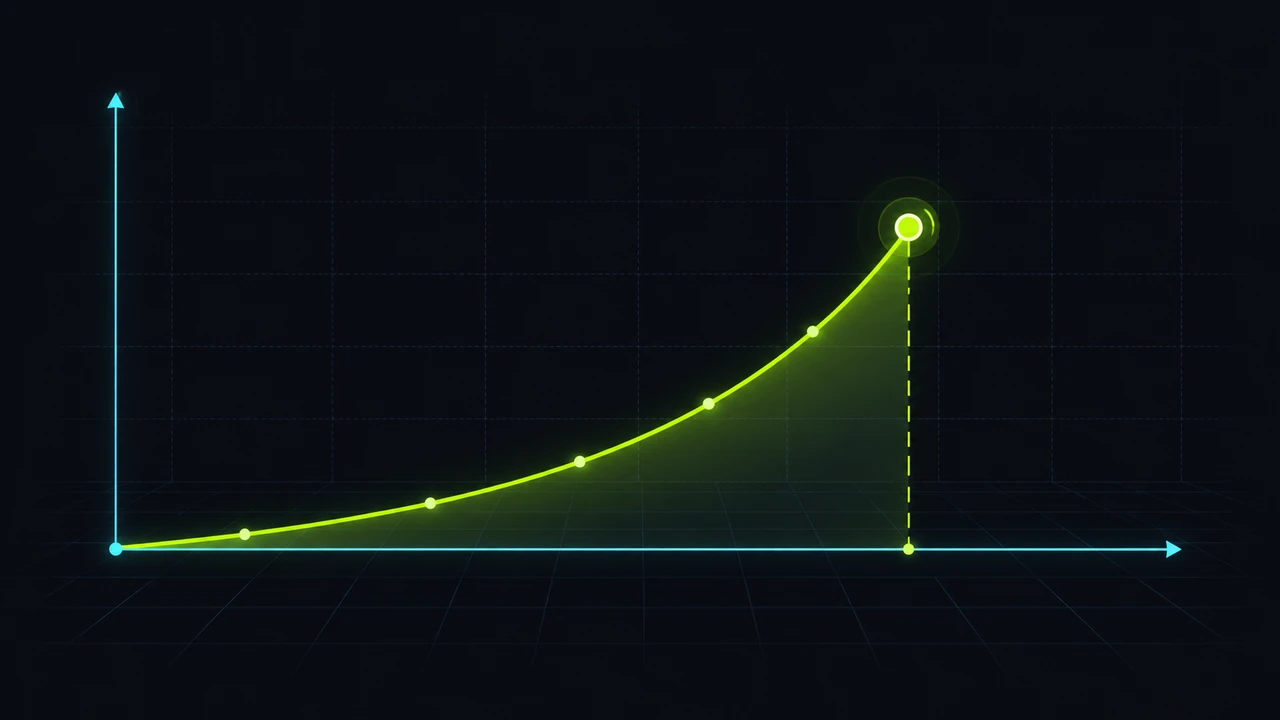
The collect event: a fisherman sweeping the board
The fisherman wild is the mechanism the game is built around. When one lands during free spins it collects the cash values of the money symbols visible at that moment and pays their total, adjusted by the active multiplier. That single event is where the designed return of this title is concentrated, and nothing else in the game does anything comparable.
The order of operations is what people get wrong, so take it as a sequence. One: money symbols land and sit inert. Two: a fisherman lands on the same spin. Three: the values currently on screen are summed. Four: the multiplier in force is applied. Five: the total is credited. A money symbol on a spin with no fisherman has contributed nothing and is gone when the reels next spin — not banked, not carried.
That sequencing produces the game's defining asymmetry. Six money symbols and no fisherman pays nothing. One money symbol and one fisherman pays that one value. Six money symbols and one fisherman pays all six at once. Free-spin outcomes here are violently uneven for a structural reason, not because of variance in the values themselves.
Whether more than one fisherman can land on a spin, and what happens when several do, is build-specific and stated in the panel. So is whether the fisherman substitutes for anything else. Neither can be inferred from watching.
// sponsored · Safe Casino · 18+
+500% + 120 free spins
Safe Casino welcome offer. Check the qualifying deposit and wagering conditions before you claim.
How the multiplier ladder is reached, fish by fish
The multiplier is not a bonus that drops; it is a ladder climbed by accumulating fisherman symbols across the round. Each fisherman that lands is counted, and at set thresholds of that running count the multiplier applied to later collections steps up a rung. The thresholds, the rung values and the number of rungs are printed in the panel for your build, and they govern the round.
Two things follow from the ladder being count-based rather than time-based. The multiplier does not advance on spins where no fisherman appears, however many pass. And early fishermen do two jobs: they collect what is on the board, and they advance the counter that makes later collections worth more. A fisherman on an empty board collects nothing but still moves the ladder.
This is why the round's value is back-loaded and why most free-spin rounds end well short of their potential. Reaching a high rung needs a quantity of fishermen inside a limited number of spins, and in the ordinary case the spins run out first. A round that reaches a high rung and then produces a crowded board with a fisherman on it is what the structure is shaped around, and it is correspondingly rare.
What to watch is therefore narrow: the fisherman counter, the current rung, and how many money symbols are visible. Nothing else in the round carries information — the animation accompanying a collection looks the same at the lowest rung and the highest.
Figures differ between builds and lobbies. Read the live game's information panel before you rely on any of them.
Play here →The choice at the start of the round, and what it trades
Big Bass Splash does not drop you straight into free spins. The round opens with a choice between alternative configurations, each pairing a number of spins with its own ladder behaviour, and selecting one is a real decision rather than a cosmetic one. The options, their spin counts and the thresholds attached to each are listed on the selection screen, which is the authoritative statement for your build.
The trade runs in one direction: more spins with a slower or shallower ladder against fewer spins with a faster or steeper one. Neither side is better, and nothing on the screen indicates which will pay more, because the choice redistributes the round's outcomes rather than increasing them. An option that reaches high rungs quickly also gives you fewer chances to reach them at all.
The decision rule is about outcome shape, not advantage. Ask one question before selecting: am I playing for a frequent moderate result or an infrequent large one? Many spins with a shallow ladder produces more rounds that pay something and fewer that pay a great deal. Few spins with a steep ladder does the reverse. Choose the shape, then stop reconsidering it, because it cannot be changed once the round begins.
Two cautions about that screen. It is the fastest-skipped screen in the game, and skipping it means a default chose your round's shape. And the options differ between releases in this family and can differ between builds of this one.

Worked arithmetic: the ladder against the values
Run the arithmetic with placeholder values to see where the round's money comes from, then substitute your panel's figures. Call the multiplier at the moment of collection M, and the sum of money values on the board V. The collection pays V × M. That is the whole payout formula for this feature, and both terms are visible on screen before the collection resolves.
Now vary one term at a time. A board totalling 10× your stake collected at a multiplier of 1 pays 10× stake. The same board at a multiplier of 4 pays 40×. A board totalling 40× at a multiplier of 1 also pays 40×. The terms are symmetric in the formula — but not in how easily they move.
V moves one money symbol at a time, inside a value range the panel caps. M moves in steps, and each step costs a threshold's worth of fishermen. The same proportional gain is therefore much harder to get from M than from V, which is why a round that fails to climb cannot be rescued by a crowded board, and a round that climbs does not need an exceptional one.
Apply the same arithmetic to the stake. Every figure above is a multiple of total bet, so doubling the stake doubles the collection and doubles the cost of every spin that produced none. The ratio does not move. No stake size, option selection or reading habit alters the return the build was configured with.
// sponsored · WinCrown · 18+
+500% + 120 free spins
WinCrown welcome offer. Read the current promotion terms, eligibility and withdrawal conditions.
Retriggers, and what survives into the extra spins
Free-spin rounds here can extend when the scatter condition repeats inside them, adding spins to the round in progress. The number of scatters required and the number of spins added are stated in the panel, and they are not necessarily the same figures that opened the round.
The question that matters is what persists across a retrigger, and it is the most useful line to find in the panel on this title. If the fisherman counter and current rung carry into the added spins, a retrigger extends a round that has already done the hard work of climbing. If the ladder resets, the added spins are a fresh round wearing the same balance.
Do not infer the answer from a session. A round that retriggers low and pays little is consistent with either rule, and so is one that retriggers high and pays well. One line in the panel settles what hours of play cannot.
There is a related error worth naming. A round retriggered repeatedly feels like it is building towards something, because the spin counter keeps refusing to reach zero. The spin counter is not the ladder. Length and progress are different quantities here, and only one changes what a collection pays.
The configurable return problem on this title
Pragmatic Play ships several titles, this one among them, in more than one return configuration, and the operator selects which to integrate. The result is that the same game name, artwork and mechanics can sit in two lobbies with different designed returns, and nothing visible in the game window except the information panel distinguishes them.
That is why no percentage appears here. A figure published on this page would describe one build in one lobby on one day and misdescribe every other instance of the tile. Review pages quoting this game's return to two decimals are not necessarily inventing anything; they are reporting a configuration, usually without saying so, and often one since changed.
The reading takes one tap. Open the information panel from inside the game frame — not the operator's page wrapped around it — in the lobby you are about to stake in, and read the return figure stated there. If two external sources disagree on this title, that is not a reason to average them. It confirms the value is build-dependent, which sends you to the panel anyway.
One procedural note that catches people out: the figure can differ between demo and real-money builds at the same operator, and between its desktop and app clients. Read the panel in the client you intend to play in.
Volatility rating and the cap that ends a round
The volatility rating in the panel is a studio classification rather than something you can verify, and on this structure it describes something specific: nearly all of the designed return runs through an event needing a fisherman and a populated board to coincide inside a limited number of spins. A rating saying outcomes are widely spread is describing that funnel, not predicting your session.
The maximum win cap is the second figure, and it does more work here than on most games. It is normally quoted as a multiple of total bet, and the rule that matters is what the game does when a round would exceed it. Read whether a collection that would pass the cap pays the cap and ends the round, because a high rung and a fully populated board are two large numbers that can meet.
Four values, then, from one screen, all four build-specific: the return figure, the volatility rating, the maximum win cap, and the ladder thresholds with their rung values. Advice stopping at "check the RTP" sends you to look at a quarter of what governs your session. The ladder table in particular has no external source worth trusting.
Volatility is not a measure of generosity, and a high rating is not a better or worse bet. It describes the spread of outcomes around a return the configuration already fixed.
Big Bass Splash against the rest of the series
The Big Bass family shares a collect mechanic and diverges on what the fisherman's multiplier does — exactly the part this page is about. Compare releases on four criteria and nothing else: whether the round is entered through a choice of options or dropped into directly; how the multiplier advances, if it advances; whether the fisherman counter survives a retrigger; and the maximum win cap as a multiple of stake.
Run those criteria rather than trusting the name. The earlier release is the baseline treatment of the collect mechanic and the one most external writing actually describes, so a page headed "Big Bass" quoting a ladder behaviour may be describing a different machine.
This matters because habits do not transfer. A player who learnt the series on the baseline release expects no selection screen, skips the choice, and plays a shape they did not pick. A player arriving from a title whose free spins build a multiplier every spin waits for a build this round only produces from fishermen.
The identification rule matches the one for the return figure. Do not identify the release from a lobby listing or thumbnail, both operator-supplied and often stale. Identify it from the free-spin round's description in the loaded panel, and from whether a selection screen appears.
Four expensive misreadings, and what this page does not assert
Four errors account for most of the money this game takes from people who thought they understood it. Reading printed money values as credits already won, when nothing pays until a fisherman collects. Raising the stake after a round that nearly climbed, which buys a higher loss rate on the waiting. Skipping the selection screen and letting a default choose the round's shape. And treating a long retriggered round as progress, when length and ladder position are unrelated.
A fifth is subtler. Because the collect event is dramatic and the counter advances visibly, this game is good at making a losing round feel like a near miss. A board that filled up on the spin after the last fisherman is not a near miss in any useful sense; it is the ordinary case, and the structure produces it constantly.
On a handset the counter and the current rung are the two things carrying information, and the two a portrait layout renders smallest, while the collect animation stays loud at any size. Find the information panel once per operator, before a session rather than during one.
Two matters sit outside this site's remit. Which operators carry this title, what bonus offers apply and how turnover on it is weighted towards a wagering requirement are covered at pokiesledger.com (operator shortlists and bonus offers); deposit methods, withdrawal timing and KYC at pokiescashout.com (payments, withdrawals, KYC). If you are hunting the tile in an offshore lobby — Safe Casino and WinCrown among those linked from this network — it tends to be filed under the studio's own tab rather than the general pokies list, though which releases any lobby has loaded on a given day is a question for that lobby's live game list.
What this page does not assert: no return percentage, no volatility figure, no maximum win multiple, no ladder thresholds or rung values, no money-symbol value range, no spin counts and no entry-option details. Each is set per build and stated in the loaded information panel. No operator is Australian-licensed; online casino services cannot lawfully be provided to people in Australia, and every operator referred to here is offshore. Sponsored links can earn this publisher a commission.

Questions people actually ask
What is the RTP of Big Bass Splash?
It depends on which configuration the operator integrated, which is why no figure appears here. Pragmatic Play ships this title in more than one return setting and the operator chooses at integration, so review pages quoting a percentage to two decimals are reporting one build, usually without saying so. Read the figure in the information panel inside the game frame, in the client and lobby you are about to play in.
How does the fisherman multiplier work in Big Bass Splash?
The multiplier is a ladder climbed by accumulating fisherman symbols across the free-spin round. At set thresholds of that running count, the multiplier applied to later collections steps up a rung. It does not advance on spins where no fisherman lands, however many spins pass. The thresholds and rung values are printed in the panel for your build.
Do the money symbols pay if no fisherman lands?
No. A money symbol is a printed value that pays nothing by itself. Values are summed and credited only when a fisherman lands on the same spin and collects what is visible at that moment. Money symbols on a spin without a fisherman contribute nothing and are gone when the reels next spin — they are not banked or carried forward.
Which free-spin option should I choose?
There is no better option, only a different shape of outcome. More spins with a shallower ladder produces more rounds that pay something and fewer that pay a great deal; fewer spins with a steeper ladder does the reverse. Decide which shape you want before the selection screen appears, because the choice cannot be changed once the round starts and skipping the screen lets a default decide for you.
Does the multiplier reset when free spins retrigger?
That is build-specific and it is the most useful line to find in the information panel on this title. If the fisherman counter and current rung carry into the added spins, a retrigger extends a round that has already done the climbing; if they reset, the added spins are effectively a fresh round. A session cannot tell you which rule applies — the panel can.
Is Big Bass Splash the same game as Big Bass Bonanza?
No. The family shares the collect mechanic and diverges on what the fisherman's multiplier does, which is the part that decides a round. Splash is distinguished by the choice of entry options at the start of free spins. Compare releases on four criteria: entry choice, how the multiplier advances, whether the counter survives a retrigger, and the maximum win cap.
What is the maximum win on Big Bass Splash?
The cap is stated in the panel as a multiple of total bet and differs by build, so no figure is quoted here. The rule worth reading alongside it is what happens when a round would exceed the cap — specifically whether a collection that would pass it pays the cap and ends the round. A high rung and a fully populated board can meet, and the cap is what resolves them.
Is this a high volatility pokie?
The rating in the panel is a studio classification rather than something you can verify, and on this structure it describes a real funnel: almost all of the designed return runs through an event needing a fisherman and a populated board to coincide inside a limited number of spins. A high rating is not a judgement about value — it describes the spread of outcomes around a return the configuration already fixed.
// next step
A paytable makes more sense with the game open in front of you.
View current offer