
- Studio
- NetEnt
- Grid
- 5 × 3, fifteen positions
- Paylines
- 20 fixed, left to right
- Engine
- Avalanche: pay, remove, refill, re-evaluate
- Multiplier
- Ladder advanced by consecutive wins, resets each round
- Authoritative figures
- The loaded game's information panel
The Avalanche engine: a grid that is filled rather than spun
Nothing on this machine turns. Blocks fall from above into the fifteen positions and settle, and the first board of a round is read by the paytable exactly as a spun board would be. Up to that point the fall is presentation. What is different begins after a win is paid.
The winning symbols are removed, the vacated positions refill from above, and the paytable is applied again to the board that results. If that board also pays, the sequence repeats. The round ends when a refilled board produces nothing, so one staked round is a container for an unknown number of evaluations.
Fix the vocabulary before any arithmetic: a round is what you paid for, an avalanche is one fall-and-evaluate step inside it. Most writing about this game uses the words interchangeably, and that is where the confusion about the multiplier starts.
The cascade changes nothing about how a win is identified — twenty fixed lines, left to right, on every board in the chain. No ways count, no clusters, no right-to-left reading. Nor is it additional value: the return is defined across the complete round, so the symbol values were set in the knowledge that chains occur. Read a four-link chain as four spins for the price of one and every estimate downstream is wrong.


18+ · Bonus conditions
Offer information supplied: 2026-10-05.


18+ · Bonus conditions
Offer information supplied: 2026-10-05.
The multiplier ladder: counting the rungs and finding the reset
The ladder is a counter, not a random award. Each consecutive paying avalanche inside one round advances it a rung: the first paying board settles at the bottom rung, the second consecutive one at the rung above, and so on to the top, after which further wins keep settling at the top.
The ladder is short and fixed, and the value on each rung belongs to the paytable of the build you loaded rather than to this page. What survives reconfiguration is that the rungs rise rather than vary, that the climb needs consecutive paying boards rather than merely several, and that there is a ceiling.
The reset rule is the line most often skipped. The counter returns to the bottom when the round ends, and a round ends the moment a refilled board pays nothing. No progress is stored and nothing about the next staked round depends on how long the last chain ran. A counter that resets every round is a different instrument from one that persists, and both kinds now exist.
Which rung applies to which win is the other thing to get right. The rung in force is the one the chain has reached at that board, so the opening win takes the bottom rung and the uplift arrives only from the second consecutive win onwards. A round with exactly one winning board receives no uplift, however large it paid.
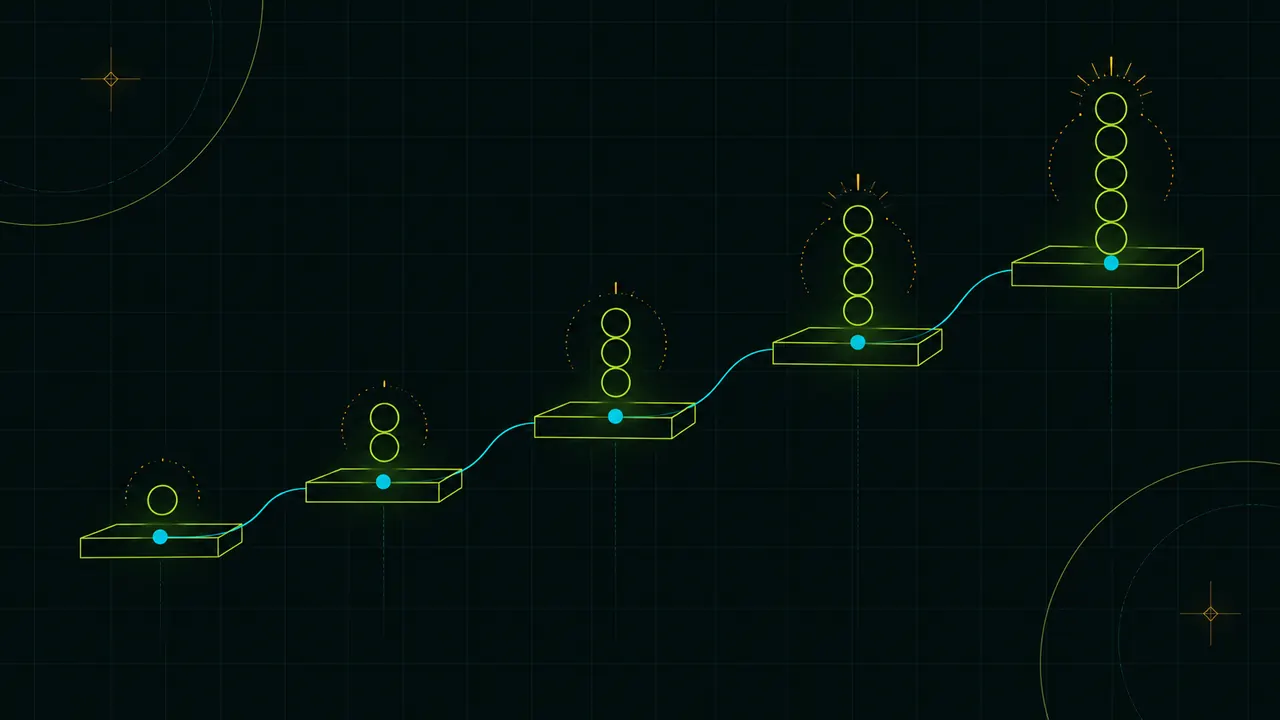
Totalling a chain: worked arithmetic with illustrative rungs
The rungs below are invented to make the shape legible and are read from no build of this game. Take a four-rung ladder of one, two, three and four, and a round in which four consecutive boards pay ten, six, four and two times stake before any multiplier.
Settle them in order. Ten at the bottom rung is ten; six at the second is twelve; four at the third is twelve; two at the fourth is eight. The round totals forty-two times stake against a raw sum of twenty-two. The ladder contributed twenty — nearly as much again as the boards produced.
Reverse the order of exactly those four boards, so the round pays two, four, six, ten. That settles as two, eight, eighteen and forty: sixty-eight. Same boards, same ladder, same stake, a result more than half again as large, decided purely by which board arrived when. Nothing available to a player influences that ordering.
Now break the chain: ten, then six, then a dead board. Twenty-two, round over, the four and the two never occur and the upper rungs are never reached. Chain length therefore matters out of proportion to itself, because the chain and the ladder multiply each other — and none of it is actionable. No stake size, speed setting or stopping point alters the arithmetic the machine was built to.
// sponsored · Safe Casino · 18+
+500% + 120 free spins
Safe Casino welcome offer. Check the qualifying deposit and wagering conditions before you claim.
The free-fall round: the scatter route and the raised ladder
Entry is a scatter-style condition: a set number of the feature symbol on consecutive reels from the leftmost opens a round of free falls. How many symbols the condition needs, how many falls are awarded and whether the symbol can reappear to add more are stated in the loaded build's rules.
Inside the feature the engine is unchanged — fall, evaluate, remove, refill, chain until a board pays nothing. The ladder differs: its rungs are higher, and in the way this title has historically shipped they are the base rungs lifted by a constant factor rather than a different sequence. Confirm both in the panel rather than from a review.
Scaling the ladder rather than enriching the paytable decides where the feature's value sits. One paying board inside a free fall is worth only the bottom feature rung, a modest uplift. A four-link chain is worth the whole raised ladder, which is not modest. The feature therefore distributes its value as unevenly within itself as the base game does, and most individual falls contribute very little of it.
Each free fall is a round for the purpose of the reset rule: a dead board ends that fall's chain and the counter drops for the fall after it. A ten-fall feature is ten separate chains, most one or two links long, not one long chain with ten chances to extend. Whether a build holds the ladder across falls, or resets it on a retrigger, is a rules line and not an assumption to import from another game.
Figures differ between builds and lobbies. Read the live game's information panel before you rely on any of them.
Play here →Twenty fixed lines on a five-by-three grid, and what the wild does
Five columns, three rows, fifteen positions, twenty paylines that are fixed rather than selectable, paying from the leftmost column rightwards. No ways count to recalculate, no cluster evaluation, no both-ways rule. By the standards of anything released recently that geometry is conservative.
Fixed lines change what the stake controls do. On an older machine you chose how many lines to cover and the stake followed; here the line count is settled and the stake is set by coin value and level instead. Read the total stake displayed rather than inferring it from either control alone.
The wild substitutes in line combinations, and on a cascading design a wild taking part in a win is destroyed with the rest of that combination. It is a single-evaluation asset, not a persistent one, and the default for this title is that no sticky or expanding behaviour sits on top.
A modest fixed line count paired with cascades is what separates this machine from its descendants: twenty lines cap how many combinations one evaluation can register, so the upside comes from chain length rather than board width. Symbol values live in the paytable screen, and the convention matters — some builds print coin counts, some multiples of total stake, and the two are not interchangeable.

What the rest of the industry took from this machine
Two ideas left this title and travelled separately. The cascade — pay, remove, refill, re-evaluate inside one staked round. And the ladder — a counter advanced by consecutive wins within that round. Many modern pokies carry one without the other, and knowing which you are looking at tells you more than any marketing name.
The cascade is now close to universal, sold as tumble, cascade, collapse, drop or avalanche. Fitted to cluster grids and ways engines it compounds far harder than here, because each refill is read by an evaluation that can register many more simultaneous combinations than twenty lines can.
The ladder's descendants vary more. Some attach the climbing multiplier to a symbol that stays on the grid, so the counter has a position to defend as well as a value. Some advance it only inside a feature. Some let it persist across staked rounds, removing the reset rule that defines this machine.
What did not travel is the restraint — twenty fixed lines, a short ladder, a reset every round. Later cascade titles pair the engine with a more generous counter, a wider board, or both, which is why they sit higher on their studios' scales. Cascading reels therefore carries almost no information alone: four panel answers describe the design — what the cascade is attached to, how many rungs the counter has, what resets it, and whether anything persists past the round.
// sponsored · WinCrown · 18+
+500% + 120 free spins
WinCrown welcome offer. Read the current promotion terms, eligibility and withdrawal conditions.
Volatility: where the rating is printed, and why the engine reads streakier
NetEnt prints a volatility indicator for this title, and the position it assigns is stated in the information panel of the build you loaded rather than anywhere on this page. Whatever that position turns out to be, the rating describes the shape of the outcome distribution and nothing else. It is not a quality score, not a payout forecast, and not comparable with another studio's rating, since each provider sets its own thresholds.
The engine nevertheless makes any printed position feel understated. A round resolves either as a dead board or as a four-link chain settled across the whole ladder, so the spread between adjacent rounds is wider than on a design that evaluates each stake once.
Rounds per hour run the other way, and a cost estimate needs that. A chain has to animate, so this machine delivers fewer rounds per hour than a turbo design. Cost is a fraction of turnover and turnover is stake multiplied by rounds: two dollars across a hundred rounds turns over two hundred, the same two dollars across two hundred and fifty turns over five hundred.
What a rating never supplies is a schedule. No chain becomes due, no credit accumulates from rounds that paid nothing, and nothing carries between rounds beyond what the feature rules persist. A run of dead boards is the same evidence about the next round as a run of long chains: none.
The return: why no percentage appears on this page
Studios distribute games at more than one return configuration, the operator chooses which to integrate, and nothing visible on the game surface announces which is loaded. A percentage accurate in one lobby can be wrong in the next, which makes it a reading taken per lobby on the day rather than a property of the name.
This machine is unusually exposed to that. It has been re-released, re-skinned, ported to new clients and re-integrated many times, and the pages quoting a figure rarely state which configuration they read, in which lobby, or when.
The procedure takes a minute per lobby. Load the game, open the information panel using the help control inside the game window rather than anything on the casino page wrapped around it, and read the return stated for the mode you intend to use. Where panel and casino description disagree, the panel describes the machine you are playing.
A return figure is also smaller than most readers assume: calculated across an enormous number of rounds, describing a long run no individual observes, so it is not a schedule and does not apply to a session. Return and volatility answer different questions and sit a line or two apart in the same panel.
The maximum win cap and the ceiling a long chain runs into
Every build states a maximum payout as a multiple of stake, and on this design one arrangement reaches it: a long chain inside the free-fall round with its later links settled at the top of the raised ladder. That makes the cap a feature-round concern rather than a base-game curiosity.
Read the definition before the number, because three circulate and they are not interchangeable. Check whether the limit applies per avalanche, per staked round or per feature; whether the round terminates when it binds; and whether remaining falls are forfeited or played out.
The check below can be set out without inventing either of the two numbers it needs. Take the cap m from the panel, in multiples of stake, and the value t on the top feature rung. One board paying w times stake reaches the cap when w multiplied by t is at least m, so m divided by t gives the raw win size at which the limit binds on a single evaluation.
If the limit is defined per round instead, the relevant quantity is the running total across the chain, and the ceiling can be reached by an accumulation of ordinary boards rather than one remarkable one. That is why scope deserves more attention than the headline multiple. What happens to a capped balance afterwards is an account matter — withdrawal limits, verification and processing are covered on pokiescashout.com and are set by the operator.
Gonzo's Quest Megaways and the other machines sharing the name
Several products carry this title and character and they are not the same machine. A Megaways release built on a variable-ways engine, produced by a different studio under licence to that engine's owner, replaces the fixed twenty lines with a ways count that changes board by board. Different paytable, different volatility position, different cap, its own return configurations.
There are also live game-show products and further sequels wearing the character; a live product priced by a bet table has nothing arithmetically in common with a line pokie. Read the full title from the game's own header or the first screen of its help panel rather than from the tile you clicked, because operator-written tiles truncate and occasionally mislabel.
If you go looking for any of them in an offshore lobby such as Safe Casino or WinCrown, searching the exact title string tends to be more reliable than browsing a studio category page, since those pages are marketing assets rather than live indexes of what has actually been integrated on the day you look.
Online casino services cannot lawfully be provided to people in Australia, which is the ACMA's stated position, so any lobby carrying this title is offshore and may carry no Australian consumer protection. Whether an operator is worth an account is pokiesledger.com's subject, with operator shortlists and bonus offers covered there; this site stops at the machine.
A nine-line panel check, and what this page did not assert
Nine lines, in this order, once per lobby before the first real-money round. One, the return percentage printed against whichever mode you actually intend to play. Two, the volatility indicator as NetEnt states it. Three, the line count and the direction combinations pay. Four, whether symbol values are coins or multiples of total stake. Five, the base ladder: how many rungs and what each carries.
Six, the feature ladder and the factor between it and the base rungs. Seven, the entry condition and the number of falls awarded. Eight, whether a retrigger exists and what it does to the counter. Nine, the maximum win and its scope. If any of the nine comes back empty the game is unread rather than fine, and the answers do not travel: the same title in a second lobby can carry a different configuration.
Taken as structural here: that this is a NetEnt title; that symbols fall into a five-by-three grid, winning symbols are removed, vacated positions refill and the board is evaluated again inside the same staked round; that combinations pay along twenty fixed lines from the leftmost column; that a ladder is advanced by consecutive paying boards, has a ceiling and resets when a round ends; and that the free-fall round scales that ladder rather than replacing the paytable.
Deliberately absent, because it is build-specific: the return percentage for any configuration, the value on any rung of either ladder, the factor between them, the number of feature symbols required, the number of free falls awarded, the retrigger condition, the maximum win multiple and its scope, the symbol-value convention, and whether any operator has integrated this release or its variants today. Declining to print those is this network's house style, not a gap in the research, and the ladder of one to four with its totals of forty-two and sixty-eight is illustrative only.
Nothing above is a strategy and nothing described alters the designed return. Stake, mode and the point at which you stop are the only inputs, and none changes the arithmetic. Set a spending and time boundary before the game is open rather than during a chain, because an engine that ends a round on one dead board is unusually good at suggesting the last round nearly continued. Some links here are commercial and can earn a commission. This is a description of a machine, for adults only; if the reason for the next round has become the last one, read the support guide instead.

Questions people actually ask
What is the RTP of Gonzo's Quest?
There is no single figure to quote. Titles ship at more than one return configuration and the operator chooses which it integrates, so the number that applies to you is the one printed in the information panel inside the game frame, in your lobby, on the day. This title is especially exposed to that, because it has been re-released and re-integrated many times and review pages quoting a figure rarely say which configuration they read or when.
How does the Avalanche feature actually work?
Symbols fall into the five-by-three grid rather than spinning into it. When a board pays, the symbols forming the combination are removed, new symbols drop in to fill the vacated positions, and the paytable reads the new board. If it pays as well, the sequence repeats. The round ends when a refilled board produces nothing, so one staked round can contain any number of evaluations.
How does the multiplier ladder climb, and when does it reset?
Each consecutive paying avalanche inside one round advances the counter a rung, with the first paying board settled at the bottom rung and further wins climbing until the ceiling. It resets to the bottom when the round ends, which happens the moment a refilled board pays nothing. No progress carries into the next staked round. The value on each rung is in the loaded build's paytable.
Why did a big win in the base game get no multiplier?
Because the rung in force is the one the chain has reached at that board, and the opening win of a round sits at the bottom rung. The uplift arrives only from the second consecutive paying board onwards, so a round containing exactly one winning board receives none of it, however large that board paid. That is the rule working as written rather than a fault.
Does the free-fall round use a different multiplier ladder?
Yes, the rungs are higher, and in the way this title has historically shipped they are the base rungs lifted by a constant factor rather than a different sequence. The reset rule still applies within each fall, so a ten-fall feature is ten separate chains rather than one long one. Confirm the rung values, the factor and the retrigger behaviour in the panel for your build.
Is Gonzo's Quest Megaways the same game?
No. It is a separate machine built on a variable-ways engine by a different studio under licence to that engine's owner, replacing the fixed twenty lines with a ways count that changes board by board. Different paytable, different volatility position, different cap and its own return configurations. A figure read for one is not evidence about the other, and the same applies to the live and sequel products carrying the character.
How volatile is Gonzo's Quest?
NetEnt prints a volatility indicator inside the game's own information panel, and that panel is where the position for your build is read rather than from a review. The structure tempers it: twenty fixed lines cap how much a single board can register, a short ladder caps the uplift, and the counter resets every round. It nevertheless reads streakier than any printed rating, because a round resolves either as a dead board or as a chain settled across the whole ladder. Ratings are not comparable between studios.
Is this game licensed for play in Australia?
No operator offering it is. The ACMA's position is that online casino services cannot lawfully be provided to people in Australia, so any lobby you reach carrying this title is offshore and may provide no Australian consumer protection. The game itself is a studio product; the licence question belongs to whichever operator has integrated it, and operator assessment is pokiesledger.com's subject rather than this site's.
// next step
A paytable makes more sense with the game open in front of you.
View current offer