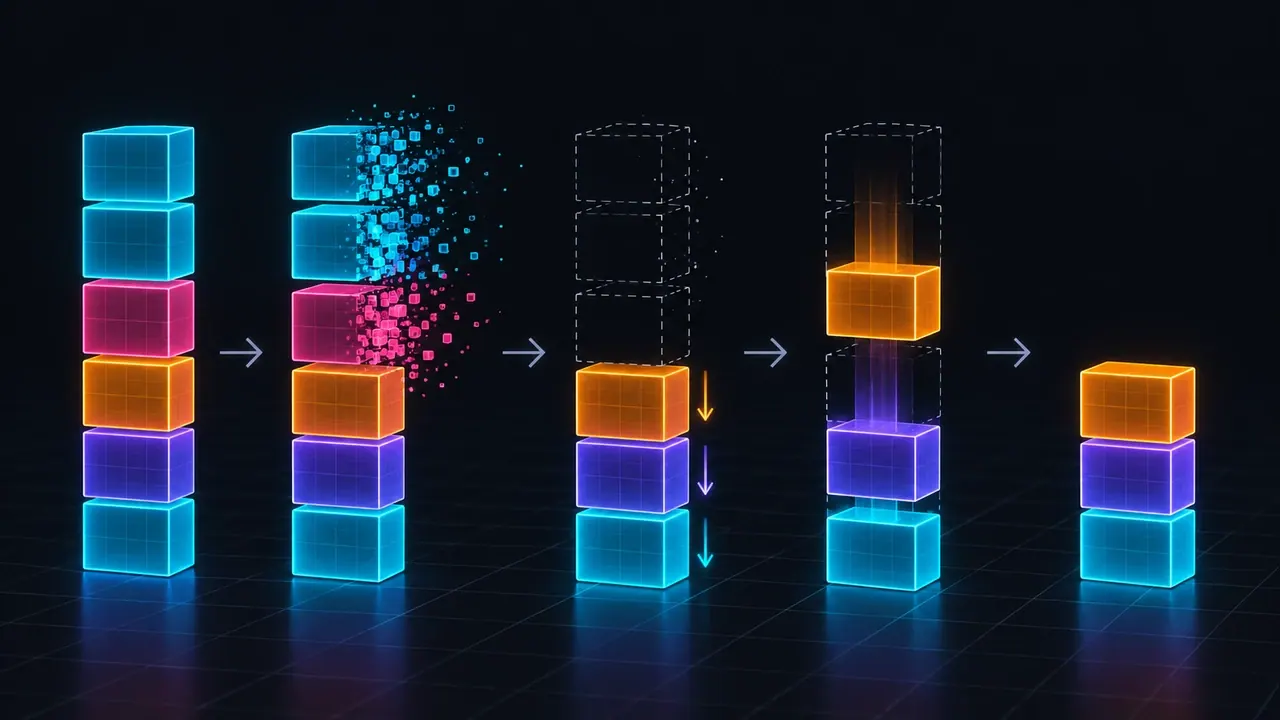
- Grid
- 5 × 5, 25 cells
- Win type
- Adjacent runs, cleared
- Engine
- Clear and refill
- Powers
- Love, Star, Storm
The five-by-five grid and what clearing actually means
Strip the artwork and this is twenty-five cells in a five-by-five block, with no reels turning in columns and no paylines drawn across them. Symbols drop in, matching symbols standing next to one another in a horizontal or vertical run qualify, and the qualifying symbols are taken off the board rather than left sitting there. The minimum run length and the award at each length live in the payout table of the build you have loaded.
The word to be precise about is clearing, because the game uses it in two senses readers run together. The first is local: one run is cleared and whatever sits above the emptied cells falls into them. The second is total: every symbol is removed from all twenty-five cells. The first happens several times inside an ordinary spin; the second is the event the design points at, and the panel describes it separately from any symbol win.
A spin is therefore a sequence, and most misreadings come from flattening it into one result. A stake buys an initial fill plus however many clear-and-refill steps that fill generates, and the sequence ends on the first refill forming no qualifying run, or when the board empties. The engine in general terms is covered in the tumbling reels reference.
Nothing inside the sequence is a decision. The stake is fixed before the first drop, each refill resolves itself, and no button or speed setting alters what lands or in which order. A board that has nearly emptied looks like a result nearly reached and is not: one cell short is not a partial clear, it is a sequence that ended.


18+ · Bonus conditions
Offer information supplied: 2026-10-05.


18+ · Bonus conditions
Offer information supplied: 2026-10-05.
How a run of matching symbols qualifies on the board
Position matters here in a way it does not in the scatter-pays games this title is shelved beside. A qualifying group has to be a run: matching symbols in consecutive cells along a row, or consecutive cells down a column. Diagonals are not runs. Copies of one symbol scattered across the grid without touching along a row or column are not a group, however many are visible, and they pay nothing.
Set that against the alternatives. A payline game asks which cells were occupied and compares them against a fixed drawn path. A pays-anywhere game, covered in the cluster pays reference, asks only how many symbols landed and ignores position. This design asks how many and whether they are adjacent in one of two permitted directions, and both conditions hold at once or nothing pays.
Removing a run changes the adjacency of everything falling into the space. Two symbols separated by a third type become neighbours once the type between them clears, and a column collapsing by three cells rearranges three rows together. One run can set up a second that was not visible before it cleared, which is why sequences here run longer and vary more than in a conventional cascading game.
A complaint the format generates reliably is worth settling in advance. A grid crowded with one symbol type, scattered so no run reaches the required length, pays nothing and is behaving correctly. Read the payout table for the symbols that turn up often, not the premium one whose longest-run award is the figure people memorise and rarely collect.

The cascade counter and the multiplier ladder beside the grid
Beside the grid sits a counter advancing as clears accumulate inside one spin, and in most builds each step carries a multiplier. The first clear pays at one value, the second higher, the third higher again, until the ladder reaches a ceiling and holds. The number of steps, the value at each and the ceiling are build-specific and printed in the rules screen.
Work it with illustrative numbers, a demonstration rather than a reading from any build. Four clears pay two, one, three and one times stake, and the ladder reads one, two, three and four across those steps. The totals become two, two, nine and four: seventeen times stake. Flatten the ladder to one throughout and the same four clears pay seven. The clears did not change; the step they landed on did.
Two consequences follow. A long sequence is worth disproportionately more than a short one, because the large steps exist only at its far end, so two sequences of two clears are not equivalent to one of four. And where a clear lands in the order matters as much as what it pays, so a small run arriving late can out-earn a larger run that arrived first.
The reset rule is the line to find before anything else, and it differs between builds and between base game and feature. Where the counter resets each spin, a long sequence is the only route to the upper steps. Where a round retains part of the ladder, early spins become investments in later ones and the arithmetic changes completely. The panel's base-game and feature descriptions have to be read as two documents.
// sponsored · Safe Casino · 18+
+500% + 120 free spins
Safe Casino welcome offer. Check the qualifying deposit and wagering conditions before you claim.
Love, Star and Storm: three powers with three different jobs
Three princesses sit alongside the grid, each attached to a power that acts on the board rather than paying a prize. Love transforms symbols of one type into another, manufacturing a run where none existed. Star introduces wild symbols, which stand in for other types and can complete a run they are adjacent to. Storm removes every copy of the symbol types it selects, paying nothing itself but collapsing the board.
Read those as three jobs rather than three sizes of one reward. Love creates a win from what is already on the board. Star creates the possibility of a win and leaves the fill to decide. Storm creates space, and space in a clearing game is the raw material for both a long sequence and an empty board. A power paying nothing on the spot can be the most valuable of the three on the right grid.
The trigger is what most descriptions get backwards. A power is not a bonus awarded on top of a good spin: it fires when a spin or sequence has produced nothing — a dead grid, no qualifying run, no clear to pay. The powers are a floor under dead spins rather than a ceiling raised on winning ones, and a mechanic reducing blank spins has to be funded from elsewhere in the same table.
Everything quantitative belongs to the panel: how many symbols Love converts and which types are eligible, how many wilds Star adds, how many types Storm selects and which, whether any behaves differently inside the feature, and whether a power can fire twice in a sequence. No studio in this category publishes the weights behind a random selection, so judge a spin by what the board looked like afterwards rather than by whether the power paid on the spot.
Figures differ between builds and lobbies. Read the live game's information panel before you rely on any of them.
Play here →The trinity meter and what each full clear advances
Emptying all twenty-five cells is the event the trinity progression is built on. A full clear is not simply a large win: in most builds it advances a step on a meter, and the step the meter sits on changes what the next full clear is worth. That is a progression rather than a repeated identical award, which is why two full clears in one session can produce visibly different outcomes.
Treat it as a second ladder running slower than the cascade counter. The counter lives inside one spin and is scored by individual clears; the meter lives across a longer horizon and is scored only by complete clears of the board. Both are multipliers on the same wins, both are on screen, and confusing them is the commonest way a round in progress gets mispriced.
The quantitative detail is in the panel and nowhere else: how many steps the meter has, what each awards, whether it resets per spin, per round or persists, whether the final step triggers the feature outright, and whether the progression runs during free spins. Builds differ on every one of those, so a page quoting a step count would describe one installation and mislead everyone on another.
What follows without any figure is a way of valuing a board. Where a full clear advances a progression, the cells remaining matter more than the credits already banked. A board down to three symbols with the counter high is a different position from the same three symbols with the counter at the bottom. No reading changes what the next refill produces, but it explains why readers of this game watch the cell count.
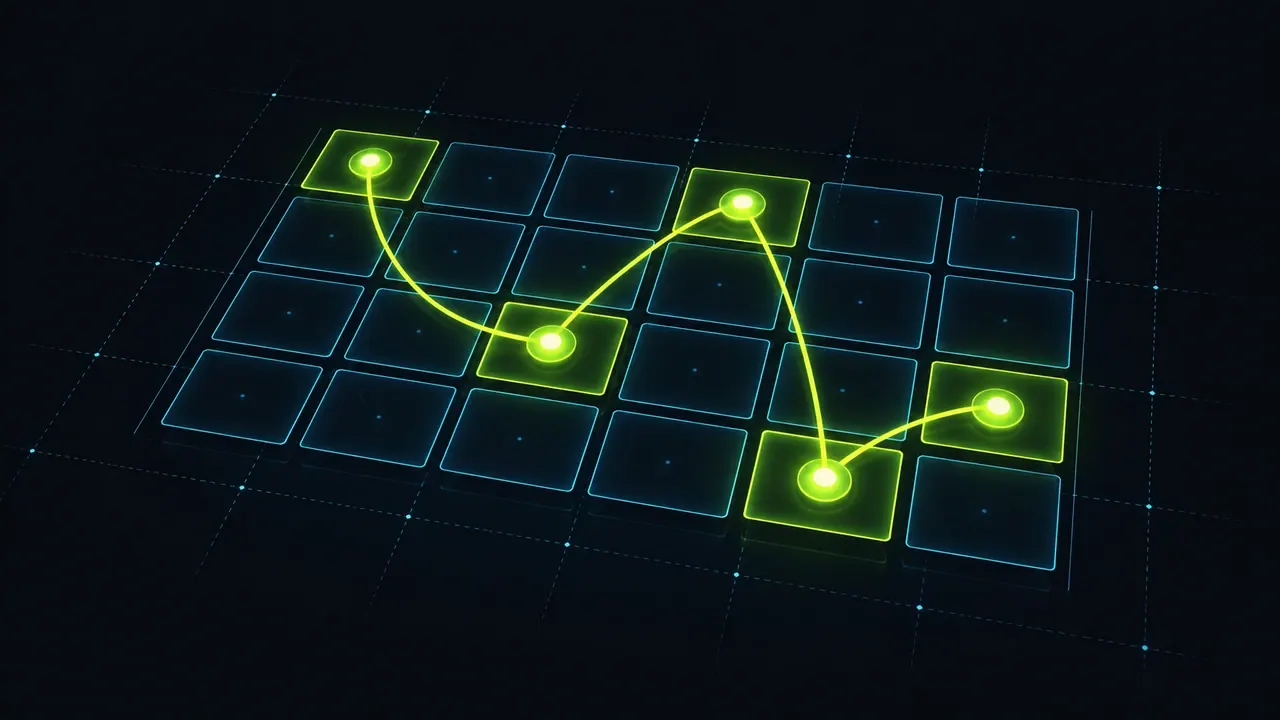
Choosing a princess before the free-spins round starts
Where the build offers a free-spins round, entry is normally tied to the trinity progression rather than a scatter count, and the round opens with a choice of which princess governs it. The entry condition, the number of spins and the terms of that choice are stated in the rules screen of the loaded game, and they are among the details that have differed between releases carrying this name.
Treat the choice as a volatility selection, not a value selection. A round governed by a power that manufactures runs tends to produce more frequent, smaller resolutions; one governed by a power that clears space tends to produce fewer resolutions with longer sequences behind them. Neither adds value, because the round's return was configured before you picked.
Multiplier behaviour inside the round is the part to read as a separate document. A ladder resetting per spin in the base game may persist across free spins, climb without a ceiling, or start above the base-game floor. Each produces an entirely different round from the same spin count, and that difference is far larger than the difference between the three princesses.
The retrigger condition matters for the reason it matters in any persistent-state design. Where the ladder or the meter carries forward, extra spins are further attempts at a total the round has already accumulated. Where everything resets, extra spins are simply more spins at the starting value. The panel says which; nothing on the grid does.
// sponsored · WinCrown · 18+
+500% + 120 free spins
WinCrown welcome offer. Read the current promotion terms, eligibility and withdrawal conditions.
Where the return figure for Moon Princess actually lives
The query bringing most readers to a page like this wants one number, and the honest answer has a shape rather than a value. Play'n GO, like most studios of its size, has supplied titles to operators in more than one return configuration, and the operator decides which to integrate. Two lobbies can run this game behind an identical tile at different configured returns, and neither is doing anything irregular.
Any mode sitting on top of the base game is priced separately again. Where a build offers a raised-cost entry option or a feature purchase, each carries its own stated return, and the base game's figure describes none of what you are doing if you use one. A number quoted elsewhere with no mode attached is unattributable even if it was accurate somewhere once.
So the figure applying to your session sits in the information panel inside the game frame — the icon within the game window, not the casino page wrapped around it. Four steps, once per lobby. Open the game. Read the full title from the header, including any number, subtitle or seasonal tag. Open the information panel. Record the return attached to the mode you intend to select.
What a return figure measures, and why it describes a volume of play no individual reaches, is set out in the RTP reference. It is a long-run property of a configuration, not a forecast for an evening. In a clearing game the ladder's reset rule, the trinity progression and the maximum-win cap shape what you see far more than a percentage point nobody outside the studio can verify.
Volatility read off the engine, and the cap a full clear runs into
A lobby tile prints volatility as one to five markers, which is the studio's own summary rather than anything auditable from outside. Three features of this design push outcomes toward the tails. Adjacency means many visually busy grids pay nothing. A ladder weighted toward its upper steps concentrates value in clears only a minority of sequences reach. And a progression scored by complete board clears attaches the largest structural reward to a rare event by construction.
The visible consequence is a session shape to expect rather than diagnose: long stretches resolving at or near nothing, interrupted by sequences that empty most of the board and pay a large multiple of stake in one motion. That is designed behaviour, not evidence of a cold session or a tight lobby, and the volatility reference explains why two games sharing a return figure deliver different experiences of it.
Every build also carries a maximum payout expressed as a multiple of stake, and where a cascade ladder stacks on a trinity progression that ceiling is not a remote curiosity. Read what the rules say happens at the limit: whether the round terminates at once, whether remaining free spins are forfeited or played out for nothing, and whether the limit applies per spin, per sequence, per round or per feature.
Those four scopes produce materially different results from one identical set of clears. Illustratively: clears totalling thirty times stake, lifted by the ladder to a hundred and eighty, with the progression applying a further step. Under a per-spin cap set below that, the round pays the cap and the excess disappears with no explanation on screen. Under a per-round cap it may pay in full and close the round on the spot. The max win cap reference covers why these ceilings exist.
On a phone: the meter, the counter and the round history
Most Australian play happens on a handset, and this layout loses something specific in portrait. Twenty-five cells at phone width is a dense board, the three princesses and the trinity meter shrink to icons at its edge, and stake, balance, the cascade counter and the meter's current step share one compressed strip. The two numbers that explain a round are the two likeliest to be missed.
Turbo and autoplay remove the pause in which a clear is paid, the counter advances and a power resolves. That pause is the only moment the game shows the relationship between a clear and the step it was scored on. If the aim is to understand a sequence rather than watch one disappear, the speed settings are the first thing to switch off.
The round-history screen is the second thing to find, and the only reliable answer to whether something was displayed and then withheld. At speed, a power firing on a dead grid and a sequence that paid very little read as one event, which is how a player leaves convinced a win was taken away. History settles it; memory, watching twenty-five cells move at once, does not.
Both screens sit inside the in-game menu, which on mobile is rarely where the desktop layout puts it — worth locating once in each new lobby. One navigational note, since people ask where the title turns up: in offshore lobbies such as Safe Casino and WinCrown a studio filter is generally a faster route to a specific Play'n GO release than scrolling a new-games row, though whether this release is listed in either on the day you look is a question for the live lobby.
What this page asserts and what it leaves to the game panel
Carried here because it survives a reconfiguration: the five-by-five grid of twenty-five cells, wins formed by matching symbols in adjacent horizontal or vertical runs, the clear-and-refill engine, a cascade counter with a multiplier attached to its steps, three named princess powers acting on the board rather than paying prizes, a power triggering on a non-paying grid, and a progression scored by complete clears.
Absent, because they are build-specific and a figure printed here would misdescribe most installations: the return for any mode, the maximum-win multiple and its scope, the minimum run length, the award for each symbol at each length, the number of ladder steps and their values, the counter's reset rule, the number of meter steps and what each awards, the entry condition and spin count for free spins, the retrigger condition, what each power places or removes, and the price of any raised-cost mode. Where a third-party page and the loaded panel disagree, the panel is the one that pays.
Two pointers, because they are deliberately not this site's subject. Which operator to open an account with, and whether a bonus attached to it is worth claiming, belongs to pokiesledger.com (operator shortlists and bonus offers). What it costs and how long it takes to move money in or out, including identity checks, belongs to pokiescashout.com (payments, withdrawals, KYC).
On the legal position, nothing here is Australian. Online casino services cannot lawfully be provided to people in Australia, every operator reachable from a page like this is offshore, and no Australian consumer recourse attaches to an account held with one. Nothing above is a method: a designed return is not altered by stake size, timing, speed, autoplay, the princess you choose or the order in which you press anything. Decide a limit before the session rather than inside it, and read the support guide if the reason for the next spin has become the last one.

Questions people actually ask
What is the RTP of Moon Princess?
No single figure is correct for every player, which is why none is printed here. Play'n GO has supplied titles like this to operators in more than one return configuration and the operator decides which to integrate, so two lobbies can run the same tile at different configured returns. Any raised-cost mode or feature purchase carries its own stated figure again. The one that applies to you is in the information panel inside the game frame, beside the mode you intend to select.
How do wins form if there are no paylines?
Matching symbols have to occupy consecutive cells along a row or down a column, and the run has to reach the minimum length stated in the payout table. Diagonals do not count. Copies of one symbol scattered across the grid without touching along a row or column pay nothing, however many are visible. Qualifying symbols are then removed from the board and the cells above them fall to refill the gap.
What do the three princesses do?
Each is attached to a power acting on the board rather than paying a prize. Love transforms symbols of one type into another to manufacture a run. Star places wild symbols that can complete a run they are adjacent to. Storm removes every copy of the symbol types it selects, which pays nothing itself but clears space and forces a refill. How many symbols, wilds or types each places or removes, and which types are eligible, is stated in the loaded game's rules screen.
When does a princess power trigger?
On a grid that has produced nothing — no qualifying run left and no clear to pay. The powers are a floor under dead spins rather than a bonus added to winning ones, which is the opposite of how most descriptions present them. Whether one fires on every dead grid or only a proportion, and whether it can fire more than once in a sequence, is build-specific and printed in the panel.
What is the trinity feature and how does it progress?
It is a progression scored by complete clears of the board rather than by individual wins. Emptying all twenty-five cells advances a step, and the step the meter sits on changes what the next full clear is worth, so two full clears in one session can pay very differently. The number of steps, what each awards, whether the meter resets per spin or persists, and whether it runs during free spins are all stated in the game's own rules screen and vary between builds.
Does the cascade multiplier reset every spin?
That depends on the build, and it is the most important line to find before staking. Where the counter resets at the end of each spin, a long sequence is the only route to the upper steps of the ladder. Where a round retains part of it, early spins become investments in later ones and the arithmetic of the round changes completely. The base-game and feature descriptions in the panel have to be read as two separate documents, because they often differ.
Which princess should I pick for the free spins?
The choice is a volatility selection, not a value selection. The round's return was configured before the choice was offered, so a power that manufactures runs tends to produce more frequent, smaller resolutions, while one that clears space tends to produce fewer resolutions with longer sequences behind them. Neither adds value. What the multiplier counter does between free spins matters far more than which of the three you choose.
Is Moon Princess high volatility?
The engine points that way whatever a tile's star rating says. Adjacency means many busy-looking grids pay nothing, a ladder weighted toward its upper steps concentrates value in clears few sequences reach, and a progression scored by complete board clears attaches the largest structural reward to a rare event by construction. Expect long flat stretches between sequences that empty most of the board. That is the designed behaviour of the category rather than evidence about any lobby.
// next step
A paytable makes more sense with the game open in front of you.
View current offer