- Also called
- Avalanche, tumble, cascade, rolling reels
- Stake
- One per round, any chain length
- Evaluations
- Until a board pays nothing
- Format licence
- None - any studio can implement it
One stake, several boards
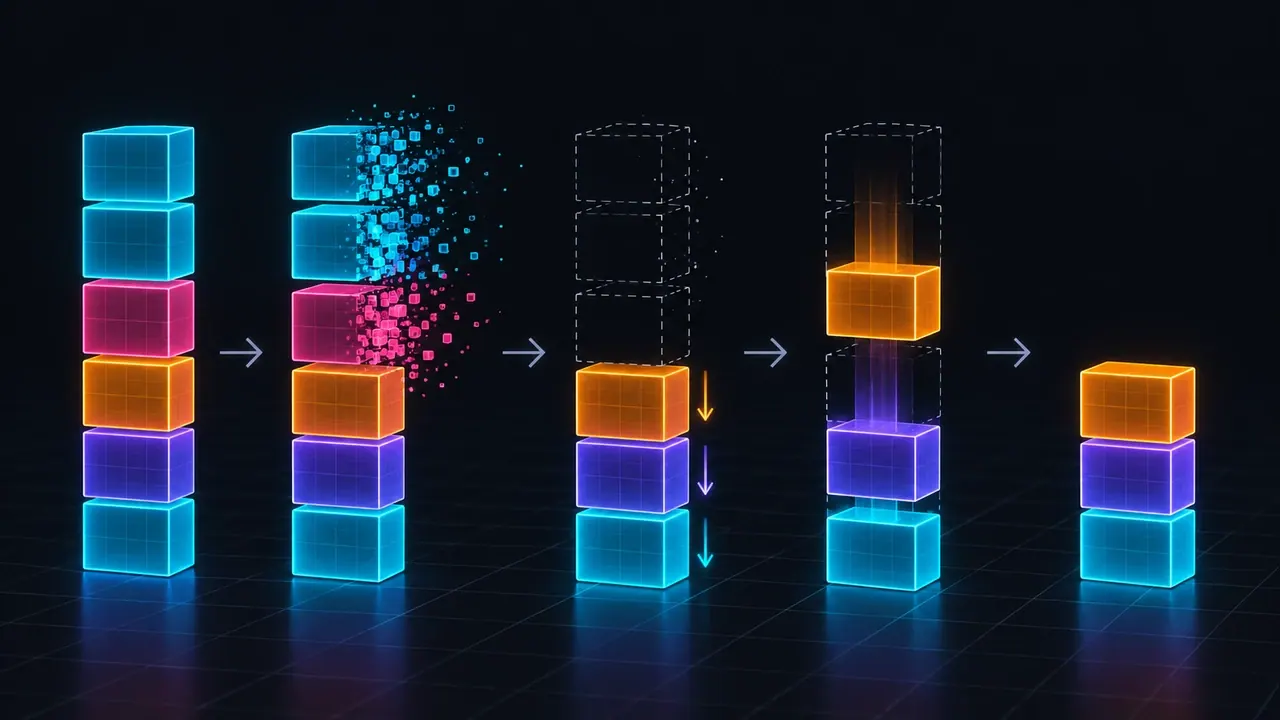
Tumbling reels change what a spin is. On a line-based pokie a stake buys one arrangement of symbols, that arrangement is scored, and the round is over. On a tumbling game the stake buys a sequence: the first board is scored, every symbol that formed part of a win is removed, the vacated positions are filled, and the new board is scored as well. That repeats until a board arrives that pays nothing, at which point the round closes and the total is credited.
The word that causes trouble is spin. The interface usually shows one spin counter increment, one stake deduction and one win figure, whether the round ended on its first board or ran a long chain. Everything in between is an evaluation pass, not a purchase. A long chain costs no more than a short one.
That single design decision changes several things at once. The number of wins inside a round stops being bounded by a payline count. How often something pays and how much a round returns come apart, so a round can light up several times and still settle below the stake. For what that does to published return and payout spread, the returns and volatility guides in the maths section are the right place.
One more definition, because lobbies blur it. A tumble refills a grid inside a paid round. A respin re-spins some or all reels, usually with symbols held in place, and is governed by its own counter. A free spin is a separate round, scored in its own right, that can contain tumbles of its own. Games combine all three, and the information panel treats them as three different things even where the animation makes them look alike.


18+ · Bonus conditions
Offer information supplied: 2026-10-05.


18+ · Bonus conditions
Offer information supplied: 2026-10-05.
The two ways a grid refills
Studios implement the refill in one of two ways, and the difference is visible in a single tumble once you know to watch for it.
The first is gravity fill. Winning symbols are deleted, every symbol above a gap drops down to close it, and brand-new symbols enter only from the top of each affected column. A surviving symbol therefore keeps the column it was in and changes the row it occupies. The second is in-place replacement. The cleared positions are filled directly by new symbols and nothing shifts; every surviving symbol stays exactly where it was.
To tell which one a game uses, pick a distinctive low-value symbol near the bottom of a column where a win clears above it, and watch whether it moves. If it rises, the grid is gravity-filled. If it sits still while the hole above it fills from nowhere, the game replaces in place. Most games do not state this in the rules, so observation is the only reliable method; a demo round settles it.
It matters because the two produce different chains. On a grid where wins are judged by position - clusters, adjacency, any rule where neighbours count - gravity fill rearranges the survivors into new neighbourhoods, so an existing group can grow because the board compacted rather than because a useful new symbol arrived. In-place replacement leaves the existing geometry intact and makes the chain depend entirely on what drops into the holes. On a game scoring by symbol counts across consecutive reels, vertical position matters less and the two behave alike. If you are trying to work out why a chain continued, establish which refill you are watching first, because the two explanations are not interchangeable.
Where the multiplier attaches, and when it resets
Multiplier rules are where two tumbling games with similar artwork stop resembling each other, and most confusion about tumbling games is really confusion about multiplier timing. There are four separate questions, and a game can answer each independently of the others.
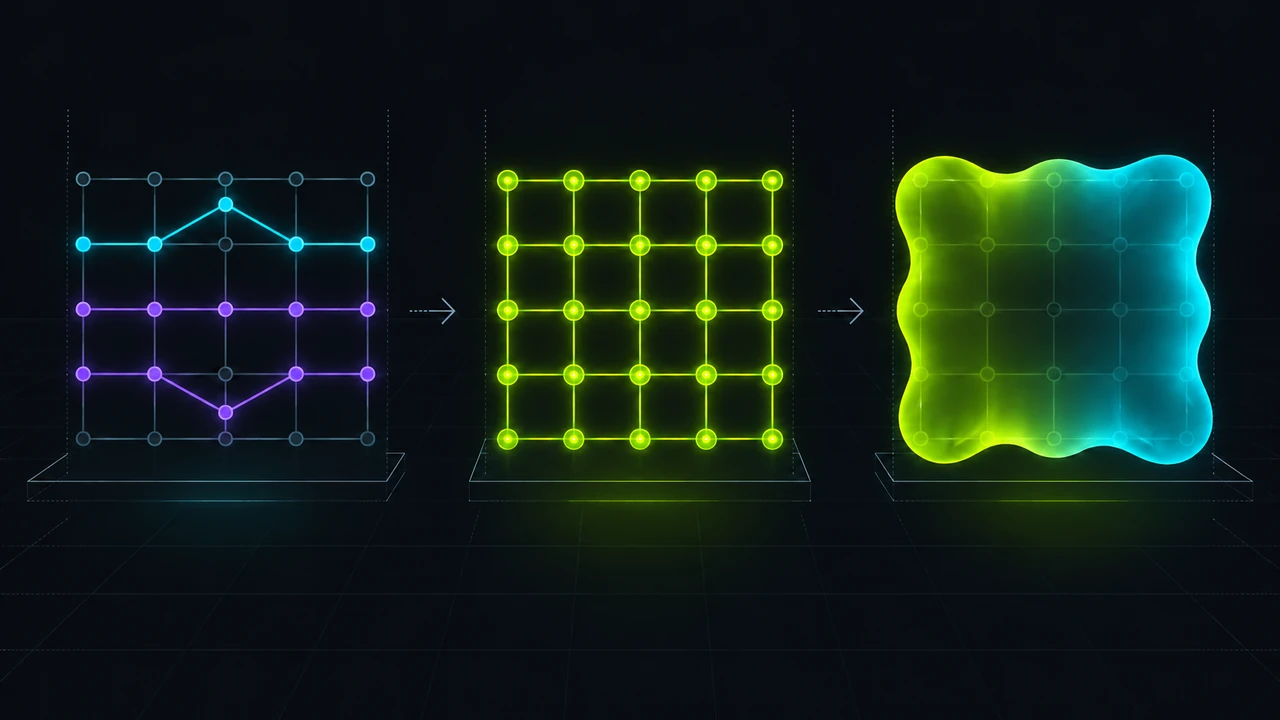
First, what increments it. In some titles the multiplier is a ladder driven by the tumble count, so each successive paying board in the same round moves it up a step. In others, multiplier values are carried by symbols that land during the chain, so the increment depends on what dropped rather than how far the chain has run. The two feel almost identical in play and behave very differently: a ladder rewards chain length, while symbol-carried multipliers reward a useful drop at any point.
Second, what it is applied to. A ladder can act on the win that just paid, or on the next paying board. An off-by-one here is the difference between a first win being multiplied and a first win being plain, and it is stated in the rules rather than shown in the animation. Symbol-carried multipliers are frequently collected across the whole chain and applied once when it ends, a structural detail worth noticing: in that architecture the sequence has to finish before the multiplier does anything, so a chain still running has not yet been paid.
Third, where it is active. Plenty of titles tumble in the base game with no multiplier at all and introduce one only inside the feature. Reading the multiplier description and then expecting it during ordinary spins is a common and expensive misreading.
Fourth, when it resets. Ask this one first, because it determines the shape of everything else. If the multiplier resets at the start of every paid round, chain length inside one round is all that matters and a feature is a run of independent rounds. If it persists across a whole feature, the feature is one long accumulation and the early spins exist mainly to build state for the later ones. Those are different games wearing the same artwork, and the information panel is where they are distinguished.
There is usually a ceiling as well, and whether the ladder stops climbing and whether the chain stops being able to extend are two separate limits. Find both.
// sponsored · Safe Casino · 18+
+500% + 120 free spins
Safe Casino welcome offer. Check the qualifying deposit and wagering conditions before you claim.
Reading a round that paid in instalments
A tumbling round settles as one figure that is really a sum. Several boards paid, each at its own amount, and the credit that arrives is the total. The cluster pays guide covers why a cleared board cannot be reconstructed from the screen; the problem specific to tumbles is narrower - you are reconciling an addition, and you need the addends.
How much of that addition the round history exposes varies by game and by lobby, so find out before you need it. A detailed view itemises a tumbling round board by board, so the stake, each paying board and the round total are readable separately. A basic one records a single line: stake in, total out, nothing about the chain that produced it. Open the history after an ordinary round early in a session and see which you have, because that decides whether a later question about an amount is answerable.
Two things make the addition surprising. Small amounts repeated across a chain feel larger than they sum to, because each one gets its own animation and its own sound. And where a game collects multipliers through the chain and applies them at the close, the sum becomes a product and the credit bears no visible relationship to any single board - the per-board figures that flashed past may be pre-multiplier, which the rules screen states and the animation does not.
If you want a note worth keeping, four fields from the history do it: the stake, the number of paying boards, the round total, and whether a multiplier was active. A column of those says whether a game delivers through single boards or through chains, a question about this mechanic that no published figure answers.
Figures differ between builds and lobbies. Read the live game's information panel before you rely on any of them.
Play here →Scatters, retriggers and the end of a chain
A tumble chain interacts with feature triggers in a way specific to this mechanic and frequently left unexamined.
The question is whether scatter symbols that land during a tumble count toward the trigger. In some titles they do, and they accumulate across every board in the round, so a chain can assemble a trigger that the initial board did not contain. In others only the first board's scatters count and anything arriving later is decoration. The two rules produce noticeably different trigger behaviour from the same symbol frequencies, and the rules screen is where the answer lives. The same question returns inside the feature, where it governs whether a chain can retrigger free spins and whether there is a limit on how often.
Chains also end, and for several different reasons. A board that pays nothing is the ordinary one. Some titles impose a hard limit on consecutive tumbles in a round, a design decision rather than a malfunction. And a round can terminate because a payout limit was reached, in which case remaining tumbles may be cancelled and the round credited at the cap. How caps truncate a round is covered in the maximum-win guide, and a tumbling game is exactly the structure where that truncation is easiest to walk into, because a round accumulates instead of paying once.
If a chain stops somewhere you did not expect, the order to check is: the rules for a tumble limit, then the stated payout limit, then the round history for the credited total. One of those three almost always explains it, and assuming a fault before checking wastes a support ticket.
The same mechanic under a dozen names
Cascading symbols are not owned by anyone, unlike the licensed reel formats. No studio licenses the idea, which is why it turns up in effectively every developer's catalogue under whatever name was preferred: avalanche, tumble, cascade, chain reaction, rolling reels, reactions, drops. NetEnt's Gonzo's Quest is widely credited with popularising it online, and the years since have produced no standard vocabulary at all.
The practical consequence in a lobby is that you cannot filter for it reliably. A game tagged Megaways usually tumbles as well, because the two are commonly shipped together, and a game tagged cluster pays usually does too, since clearing winners is how a cluster game produces more than one win per stake. Both are inferences to confirm in the game's feature list, not facts about the tile. A feature list that says cascading wins tells you the symbols clear without answering any of the four multiplier questions above.
This is where the naming confusion becomes a real risk. Two games can both say tumble on the tile, use the same word in their rules, and still differ on reset behaviour, on what the multiplier attaches to, and on whether the base game multiplies at all. The word is not a specification. The same goes for however a lobby shelves its games: if you are browsing Safe Casino or WinCrown through the sponsored links here, treat a studio or feature tag as a way of narrowing the shelf and nothing more - what either lobby holds, and how it is filtered, is readable only on the live page, and the mechanic is specified in the loaded game's rules screen.
Recognition on sight is still worth having. If wins clear instead of freezing and the round continues without a new stake, you are on a tumbling game regardless of what the tile calls it.
// sponsored · WinCrown · 18+
+500% + 120 free spins
WinCrown welcome offer. Read the current promotion terms, eligibility and withdrawal conditions.
Controls, turbo and interrupted chains
A few interface behaviours are particular to this mechanic, and each has caught people out.
Turbo and quick-spin settings compress or skip the tumble animation. For getting through rounds quickly that is the point; for understanding a game it removes the only view you have of the chain, since the per-board detail is what the animation shows. If you are trying to establish refill geometry or multiplier timing, switch it off first.
Autoplay limits are evaluated per round, not per board. A setting that stops when a single win exceeds an amount is comparing against the round total, which only exists once the chain has finished. A loss limit counts the stake once per round no matter how long the chain ran. Anyone expecting a board-by-board evaluation will find the stops firing later than anticipated.
You cannot change stake mid-chain, and the control is usually locked for the duration. The round was staked at the amount showing when it started, and every board in it is scored at that stake. A chain also cannot be stopped early to bank what it has paid so far; the round pays once, at the end.
Interruptions are the case worth knowing in advance. A round is resolved by the game server rather than by the animation on your device, so a connection dropping mid-chain does not discard it. The usual behaviour is that the round completes or is restored on reconnection and the credited total appears in the history. Check the specific game's interrupted-round rule, because recovery behaviour and the time window differ. This is also where a tumbling round is harder to query than a single-spin round, since it has no single visible board to describe - quote the round identifier from the history rather than what the screen was doing when the connection dropped.
What this page does not tell you
No figures for any title appear above, and that is deliberate. Multiplier ladders, ceilings, tumble limits and payout caps are set per game and frequently per build, so a number taken from one lobby misdescribes the next. The four multiplier questions are stable; their answers are not, and the only authoritative source is the rules screen inside the game you have open.
The refill description covers the two implementations you will actually meet. Studios customise around them - a column that fills from the bottom, a board that redraws entirely after a certain chain length, symbols that survive clearing by rule - and where a game departs from the two patterns, its own rules and a few demo rounds are the authority.
There is no worked example of the arithmetic either, for the same reason. Board totals come from a specific paytable at a specific stake, and inventing a set to illustrate the addition would have put a figure here that no rules screen would confirm.
Nothing here recommends a title, a stake or a place to play. Australian law makes no provision for licensing online casino services to people in Australia, so any operator reachable from this site sits outside that framework and is offshore - including the two named earlier, about which this page asserts nothing beyond our linking to them for a commission. Set a spending and time limit before a lobby is open. The mechanic is explained here for a narrow purpose: so that a lobby full of games advertising cascading wins stops reading as one interchangeable category, and the word tumble on a tile prompts a look at the rules screen instead of an assumption.

Questions people actually ask
What are cascading reels in pokies?
A grid where winning symbols are removed and the gaps refilled, so the same board can be scored several times within one paid round. The round ends when a board pays nothing. Avalanche, tumble, cascade, chain reaction and rolling reels are all names for the same family of mechanic.
Do tumbling reels cost extra for each tumble?
No. One stake buys the whole round regardless of how many times the grid refills. A long chain and a single-board round cost the same, which is also why the win total arrives once, at the end, rather than board by board.
Why does the win amount not match the symbols on my screen?
Because the boards that paid have already been cleared, and the credit is the sum of all of them. The round history is where the payment can be reconciled, and some history views itemise a tumbling round board by board while others record only the stake and the total.
Do cascading reels improve your chances of winning?
They change how wins are presented and counted per stake, not what the game is designed to return. A round can show several win animations and still credit less than the stake. Read the title's published return and volatility figures in its information panel rather than inferring anything from the chain.
Are Megaways and tumbling reels the same thing?
No. Megaways is a proprietary variable-reel-height format that studios license from its owner; tumbling is an unlicensed refill mechanic that anybody can implement. They are commonly shipped together, which is why the two names get used interchangeably, but a game can tumble without being Megaways and the rules for each are documented separately.
Does the tumble multiplier reset on every spin?
That depends entirely on the title, and it is the first thing worth checking. Some reset at the start of every paid round, so only chain length within that round matters. Others persist across an entire feature, which makes the early free spins a build-up phase. The information panel states which.
// next step
A paytable makes more sense with the game open in front of you.
View current offer