- Mechanic
- Variable reel heights
- Six-reel layout ceiling
- 7 to the 6th = 117,649
- Ways per spin
- Product of six heights
- Height weights published
- No
Two draws per spin, not one
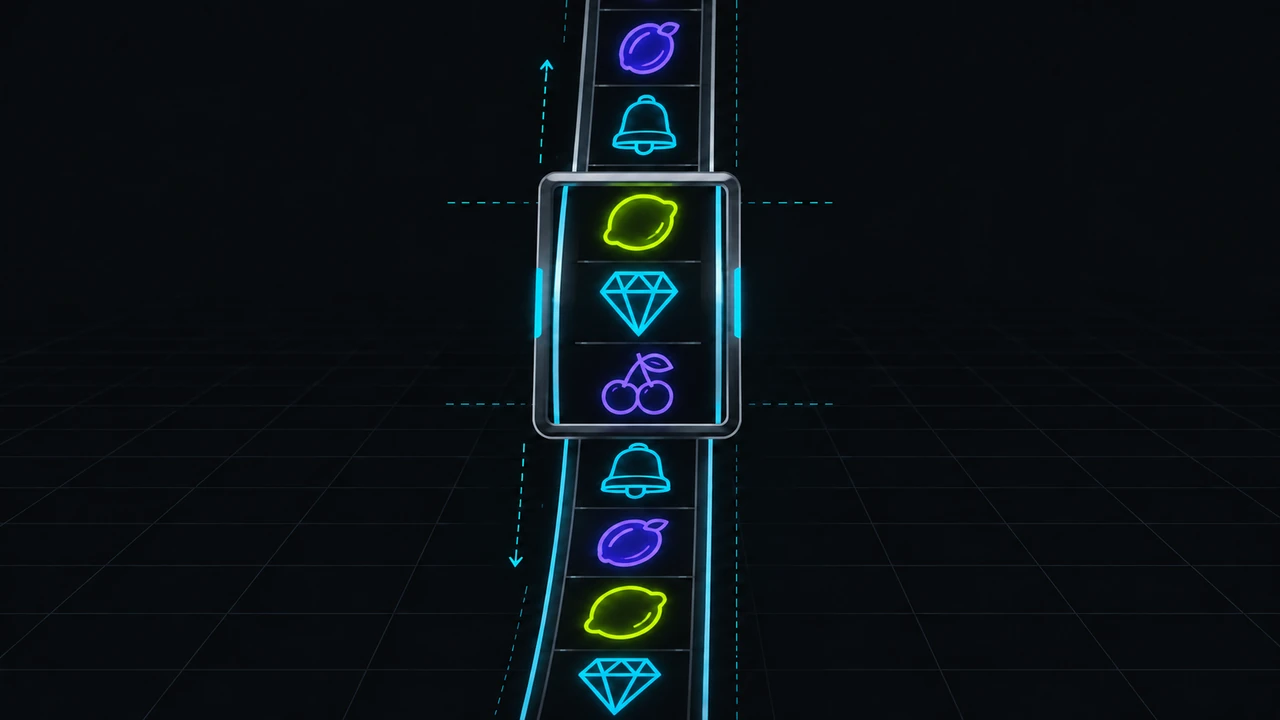
Every pokie resolves a spin by drawing symbols. A Megaways title draws twice. First it sets the geometry, meaning how many symbol positions each reel will show for this spin, and only then does it fill those positions. The second draw is the one every pokie makes. The first is the mechanic, and it is the part that changes the arithmetic.
That ordering matters because the geometry is fixed before any symbol lands, which means the spin's combination count is already settled while the reels are still turning. A spin that draws short reels cannot produce the number of combinations a tall spin can, whatever symbols arrive. Where a title shows a live ways figure, it sits on or beside the grid and updates as the heights are set, before the result resolves.
The consequence worth carrying around is that two spins on the same game are not playing the same board shape. One may be offering a few hundred combinations and the next a few thousand. The paytable has not changed, but the number of combinations the board can theoretically produce has changed by an order of magnitude. No fixed-grid pokie behaves this way.
Nothing about that first draw is disclosed. Studios publish the range of heights a reel can show and the maximum the layout produces; they do not publish how often each height occurs. That gap is the most important thing to understand about the mechanic, and most of this page is about what you can and cannot work out without it.


18+ · Bonus conditions
Offer information supplied: 2026-10-05.


18+ · Bonus conditions
Offer information supplied: 2026-10-05.
What a product of six numbers does
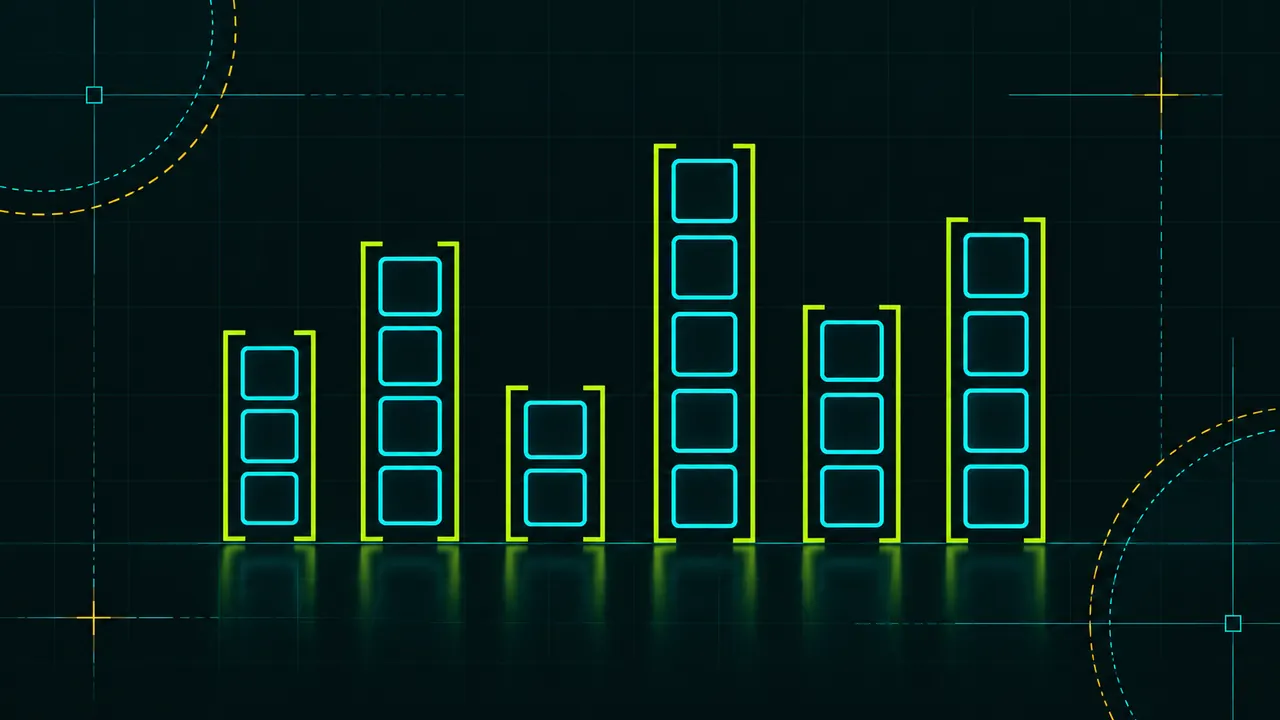
Six reels, each able to show up to seven symbols, gives seven multiplied by itself six times: 117,649. The arithmetic is not in dispute and it is the only fixed figure on this page. What is worth seeing is how that product behaves when the six inputs are not all sevens.
Take a board showing three, five, two, six, four and four symbols. Multiply them and you get 2,880 ways, about two and a half per cent of the ceiling, and that is an ordinary board. Now hold five reels at seven and drop one reel to two. Seven to the fifth multiplied by two is 33,614, under a third of the maximum. One short reel removes more than two-thirds of the count by itself, because a product is held down by its smallest factor.
That is the structural reason the headline figure is unusual rather than rare in some mysterious way: reaching it requires six separate draws to land at their top value at once. Run the crudest possible model, in which each height is drawn with equal probability from two to seven, and all six landing at seven arrives once in six to the sixth power, or 46,656 spins. A board at the range's midpoint, four and a half to the sixth, totals roughly 8,300 ways, around seven per cent of the ceiling.
Treat those two figures as what they are: the output of a deliberately simple model with no claim to describe any title, showing the shape of the distribution rather than its position. Real weightings are undisclosed and form part of how a game's return is tuned. The shape survives any plausible weighting, because multiplying six variable numbers always concentrates the result well below the maximum product.
A ways count is not a probability
The most expensive misreading of this mechanic is arithmetic rather than psychological. People treat the ways figure as a denominator, and it is not one. It counts the paths across the grid that could carry a qualifying match. It is not the number of outcomes the game can produce, and it is not the chance that any of those paths pays.
A ways figure says nothing about symbol weights, which is where the probability lives. Two boards with identical geometry and identical ways counts can have very different chances of paying, because the strips feeding those positions carry different proportions of high symbols, low symbols, wilds and scatters. The geometry says how many positions are open; the strips decide what walks into them.
The practical test is one line long. If a claim would change when the ways count changes but the paytable and symbol weights stay as they are, the claim is probably wrong. "More ways means more chances to win" fails that test: more open paths with the same symbol supply does not establish a higher chance of a paying combination.
What the figure legitimately bounds is the number of distinct combinations a board can total within one paid round, which is why large wins on this mechanic are sums of many small prizes rather than one big one. How far that sum can go is a separate rule, the title's payout cap, and the ways count neither raises nor lowers it.
// sponsored · Safe Casino · 18+
+500% + 120 free spins
Safe Casino welcome offer. Check the qualifying deposit and wagering conditions before you claim.
Why your stake does not move with the ways count
One figure that does not change when the geometry does is the cost of the spin. On a payline pokie the stake is a coin value multiplied by the lines in play, so buying more lines buys more covered ground. This mechanic removes that lever. A single stake covers every way the board opens, and how many it opens is not yours to set.
Follow that through and a genuine oddity appears. Two consecutive spins at the same stake buy wildly different amounts of board, and nothing in the betting interface acknowledges it. Players notice this and conclude the short spins were poor value, which is a wrong conclusion drawn from a correct observation: the price of a spin is an average across the whole height distribution, not a price for the board in front of you.
The practical effect is that the geometry gives you no stake decision to make. No setting favours tall reels, and no stake size makes the ceiling more likely to arrive. Where a title sells entry to its feature, that purchase is governed by the rules on its own screen: it buys entry, not reel height, and the heights keep being drawn at random inside the feature. The two are easy to conflate.
It also means the old advice about playing all the lines has nothing to attach to here. There is nothing to max. The only levers in your hands are how much each spin costs and how many you take, and the geometry sits entirely on the game's side of the table.
Figures differ between builds and lobbies. Read the live game's information panel before you rely on any of them.
Play here →What a taller reel actually buys
Height has a specific and limited effect, and precision is worth the effort here because the marketing is not precise at all. Adding one position to a reel does two things. It multiplies that spin's ways count by the ratio of the new height to the old. It also adds one more chance for that reel to hold a copy of whatever symbol a developing match needs.
The multiplication is the part people notice, and it is linear in each reel: a reel going from three symbols to six doubles that spin's ways count, whatever the other five are doing. The second effect decides whether a win forms, and it is governed by the strip rather than the height. A reel showing six positions drawn from a strip thick with low-value symbols is six chances at a low-value symbol.
That is why counting copies of a symbol on screen is a poor guide to what a board is worth on this mechanic. A match needs the symbol present on consecutive reels from the leftmost, so a tall reel full of copies contributes nothing once the chain has broken on the reel before it. Six copies spread across reels one, two, three, five and six produce no five-reel match at all, because reel four holds none of them.
Where extra positions do compound is inside a chain that is already alive. If a symbol sits on three positions of reel one, two of reel two and two of reel three, a three-reel match pays twelve combinations rather than one, and every further position on a reel already carrying it multiplies the total again. That is why a modest-looking board can return an awkwardly specific amount.
The extra reel, and where hand arithmetic stops
Some layouts built on this mechanic add a reel running horizontally across the top of the grid, feeding extra symbols into the middle columns rather than standing as a column in its own right. Where it exists, it is how those middle columns reach their tallest heights at all, and it is also where attempts to verify the ways figure by eye fall apart.
The difficulty is that the horizontal reel's contribution is already folded into the counter on screen, and whether a given position belongs to the column beneath it is a rule in the paytable rather than something the artwork shows. Implementations differ. Where a title departs from the standard layout its own rules screen is the authority, because the counter is computed by the game and will not agree with a hand count made on the wrong contribution rule.
The useful move is to stop auditing the counter and start using it. It is the only live reading of the geometry you are given, and across a demo session it is the raw material for the one measurement worth taking.
// sponsored · WinCrown · 18+
+500% + 120 free spins
WinCrown welcome offer. Read the current promotion terms, eligibility and withdrawal conditions.
Measuring the height distribution yourself
Because the weights are undisclosed, the distribution of ways counts is the one property of a Megaways title you can observe directly, and a demo build makes observing it cheap. It is a short exercise with pen and paper, and it produces something no review page can hand you.
If a demo is available, open the title, find the ways counter, and record its value for consecutive spins without skipping any, since skipping the dull ones is exactly how a sample gets ruined. Write the numbers in a column rather than keeping a running impression of them. Then sort the column and read three things off it: the middle value, the largest value you saw, and how many spins fell above half the advertised maximum.
What the exercise teaches is calibration. Whatever middle value your column produces is the figure that describes the game in front of you, and the headline ceiling is the one that does not. It also makes a comparison concrete: two games advertising the same ceiling can sit at visibly different middles, and that difference is a real property of their weightings rather than an impression.
Be strict about what it does not establish. A short sample cannot measure a tail, so the largest figure you recorded is not the game's practical maximum. It says nothing about return, payout spread or feature frequency, all properties of the symbol weights rather than of the geometry. The demo build may also not be the build a lobby runs.
Safe Casino and WinCrown are the two sponsored lobbies linked from this site, and if you intend to hold a demo reading against a real one, take the second reading inside whichever lobby you actually play in and compare the game headers first. Which release a lobby loads, and how it is configured, is settled on that live page rather than here.
Why you cannot reconstruct a win from the final board
A particular complaint recurs on variable-height games: the payout does not match the board. The cause is almost always that the board being looked at is not the board that paid, and this mechanic makes that failure more likely than it is anywhere else.
Two things are moving at once. Tumbles clear winning symbols mid-round and refill the positions, so a round can contain several paying arrangements while you only ever see the last. And the geometry in force when an earlier arrangement paid has gone: a grid part-way through a tumble sequence no longer shows which combinations were open when the big arrangement landed. On a fixed-grid pokie the frame at least stays put.
The procedure that works is to stop reading the screen and open the round history, which records the round as a sequence rather than as a final state. Before interpreting it, settle two rules from the paytable: whether a feature multiplier applies to the current win, the next tumble or the next spin, and whether the round is subject to a payout cap that truncated the total. Both change the arithmetic and neither is visible in the animation.
If the history and the rules still disagree with the credited amount, that is an operator question rather than a maths question. Raise it with support with the round identifier in hand, and read the operator's own terms first to see which licensor its complaints route ends at, because no Australian body sits above it.
What to do with the figure, and what this page could not verify
The decision rule is short, because the ways count earns very little weight. Use it to recognise the mechanic and to understand why a win total looks strange. Do not use it to choose between titles, to estimate how long a balance will last, or to argue that one game pays more often than another. Those questions are carried by the loaded return figure, the volatility rating and the payout cap, all three in the live game's help panel. Open that panel before the first paid spin, while the ways counter is still just a number on a grid.
Whether a particular title using this mechanic is in a given lobby, and which configuration it runs, is a question for that lobby's own game header rather than for this page; a catalogue is the operator's to change at any time. Online casino services cannot lawfully be provided to people in Australia, so every operator carrying these games is offshore. A reachable lobby, Australian dollar pricing and familiar studio artwork are not evidence of Australian authorisation.
No reel-height weightings appear on this page, because no studio publishes them, and the uniform model above is explicitly a model. No per-title figures appear either. Licensees set their own payout tables, feature rules, caps and configurations around the licensed geometry, so games branded identically are not mathematically interchangeable, and the measurement procedure above is specific to the build in front of you.
Nothing here is a recommendation to play a title built on this mechanic or to play one anywhere in particular. The counting exercise was written as a method, not reported as a result: no distribution on this page is one this page observed. Check the availability position against the regulator rather than against an affiliate page. Set a spending and time boundary before a lobby is open, and stop if the point of a session becomes recovering a loss. Sponsored links on this site can earn the publisher a commission.

Questions people actually ask
Why is the ways count different on every spin?
Because the game draws the reel heights before it draws the symbols. Each reel is set to a height within its published range for that spin, and the ways figure is those six heights multiplied together. Change one height and the figure changes with it.
Does a higher ways count mean a better chance of winning?
No. The ways count says how many paths across the grid could carry a qualifying match; it says nothing about the symbol weights that decide whether anything fills them. More open paths with the same symbol supply does not establish a higher chance of a paying combination.
Does a spin with more ways cost more?
No. One stake covers every way the board opens, however many that turns out to be, and there is no setting that buys reel height. The price of a spin reflects an average across the whole height distribution rather than the board currently on screen.
Where do I find the ways count on screen?
Where a title displays one, it sits on or beside the grid and updates as the heights are set, before the result resolves. If a title does not show one, its rules screen states the height range and the maximum the layout produces, and the figure for a given board is the product of the heights you can see.
Can I work out how often all six reels land at their tallest?
Not from published information. Studios disclose the height range, not how often each height occurs, so any frequency you read is either a model or a guess. Recording the ways counter across a demo session shows you where the middle of the distribution sits, which is the part that matters.
Why did a win total not match the symbols on my screen?
The final board is usually not the board that paid. Tumbles clear and refill positions mid-round, and the heights in force when an earlier arrangement landed are no longer displayed. Open the round history, and check whether a multiplier applied to that win and whether a payout cap truncated the total.
Does the reel across the top count as a seventh reel?
That depends on the title. A horizontal reel normally feeds extra symbols into the middle columns rather than standing as a column of its own, and whether a position counts with the column beneath it is set in the paytable. Its contribution is already included in the on-screen counter.
// next step
A paytable makes more sense with the game open in front of you.
View current offer