- Studio
- Push Gaming
- Grid
- 8 × 8, cluster pays, no paylines
- Core mechanic
- Tumbling clusters, walking jar wilds
- Multiplier
- Printed on the jar, climbs with participation
- Volatility label
- High end; confirm in the loaded panel
Eight by eight, and nothing to trace left to right
Jammin Jars is played on a grid eight symbols wide and eight symbols tall, and it has no paylines. Nothing runs from the leftmost reel, nothing is traced across the board, and there is no ways count that changes per spin. A win is a group of matching symbols sitting in contact with each other somewhere on the grid, and where on the grid that group sits is irrelevant to what it pays.
That removes the usual way of reading a pokie. On a line game you check whether symbols fell on a path the paytable recognises; here you check whether enough of one symbol landed touching each other. Position carries no premium, a group in a corner pays exactly what the same group pays in the centre, and the question the board asks you is a counting question rather than a tracing one.
The paytable changes shape to match. Instead of rows keyed to how many symbols appeared along a line, it is keyed to symbol and cluster size: this fruit, this many in contact, pays this multiple of stake. Larger clusters are worth disproportionately more than the step in size suggests, which is why one extra symbol falling into a group can change the value of a spin out of all proportion to its apparent contribution.
The mechanic in general terms is covered on the cluster pays page on this site. The version of it in this game has its own minimum size and its own definition of what counts as touching, and both are read in the loaded paytable rather than carried across from another cluster title.


18+ · Bonus conditions
Offer information supplied: 2026-10-05.


18+ · Bonus conditions
Offer information supplied: 2026-10-05.
What counts as touching, and where the paytable steps
Two rules decide every win on this grid, and both are specific enough to the build to be worth reading before you stake anything. The first is the minimum cluster size: the smallest number of matching symbols in contact that pays at all. Public descriptions of the original put it at five, and the paytable in the game you have open is what actually settles it.
The second is adjacency. A cluster rule may count symbols as touching only horizontally and vertically, or it may include diagonals, and the difference is not cosmetic. Diagonal counting makes scattered groups far more likely to qualify, so the same arrangement can be a paying cluster under one definition and nothing at all under the other. The paytable or the full rules screen states which one applies.
Once both are known, reading a board is mechanical. Find the largest contiguous group of one symbol, count it, and look the count up against that symbol's row. Worked through on illustrative placeholders rather than this game's real figures: if a symbol's row paid two units of stake at the minimum size and twelve units at a size three symbols larger, those three symbols have added ten units. The step is not linear, and the upper end of each row is where the value sits.
This is why the symbol hierarchy matters less here than on a line game. A low-paying fruit arriving in a very large group can be worth more than a premium symbol arriving at the minimum size. Comparing rows at the cluster sizes you actually see, rather than at the top of the table, is the only comparison that tells you anything useful.
One press of the button, several evaluations
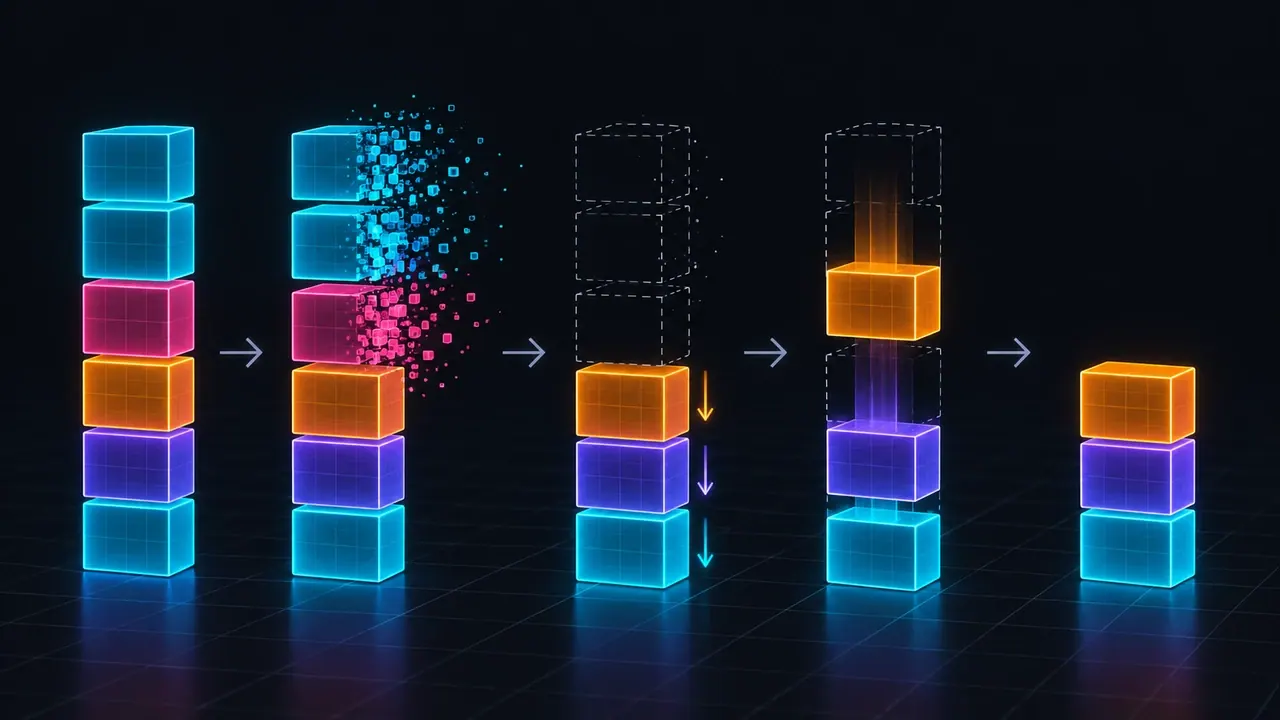
A win does not end the spin. The symbols forming the paying cluster are removed, the symbols above them drop into the gaps, new symbols fall in from the top, and the grid is evaluated again. If a new qualifying cluster has formed, it pays and the process repeats. The chain ends when an evaluation produces no qualifying cluster.
That makes the unit of play ambiguous in a way it is not on a line pokie, and the ambiguity is the source of most confusion about this game. One press of the button can produce a single evaluation or a long sequence of them. The figure shown at the end is the sum of every evaluation in that sequence, not the value of any single arrangement you watched go past.
The consequence is that the final board tells you almost nothing. By the time the chain stops, every symbol that paid has already been cleared from the screen. Reconstructing a total from what is left is futile; the round history, which lists the sequence, is the only place that breakdown exists. Find it on each new operator before the session rather than during one.
Cascading grids in general are covered on the tumbling reels page here. What is specific to this title is what the tumble does to the jars, and that is the part worth understanding properly, because the chain is also the clock that drives the multiplier.
// sponsored · Safe Casino · 18+
+500% + 120 free spins
Safe Casino welcome offer. Check the qualifying deposit and wagering conditions before you claim.
The jar that stays on the board and keeps count
The jar is the game's wild and it behaves unlike an ordinary symbol in three ways at once. It substitutes, so it can complete a cluster of any paying symbol it touches. It carries a multiplier value printed on its face where you can see it. And it persists: where a paying symbol is cleared by the tumble, a jar remains on the grid.
It also moves. Between evaluations a jar shifts to a different position rather than staying put, which means the symbols it is in contact with change from one pass to the next. A jar that contributed to nothing on one evaluation can be sitting inside a large cluster on the following one, and the reverse is equally true and equally common.
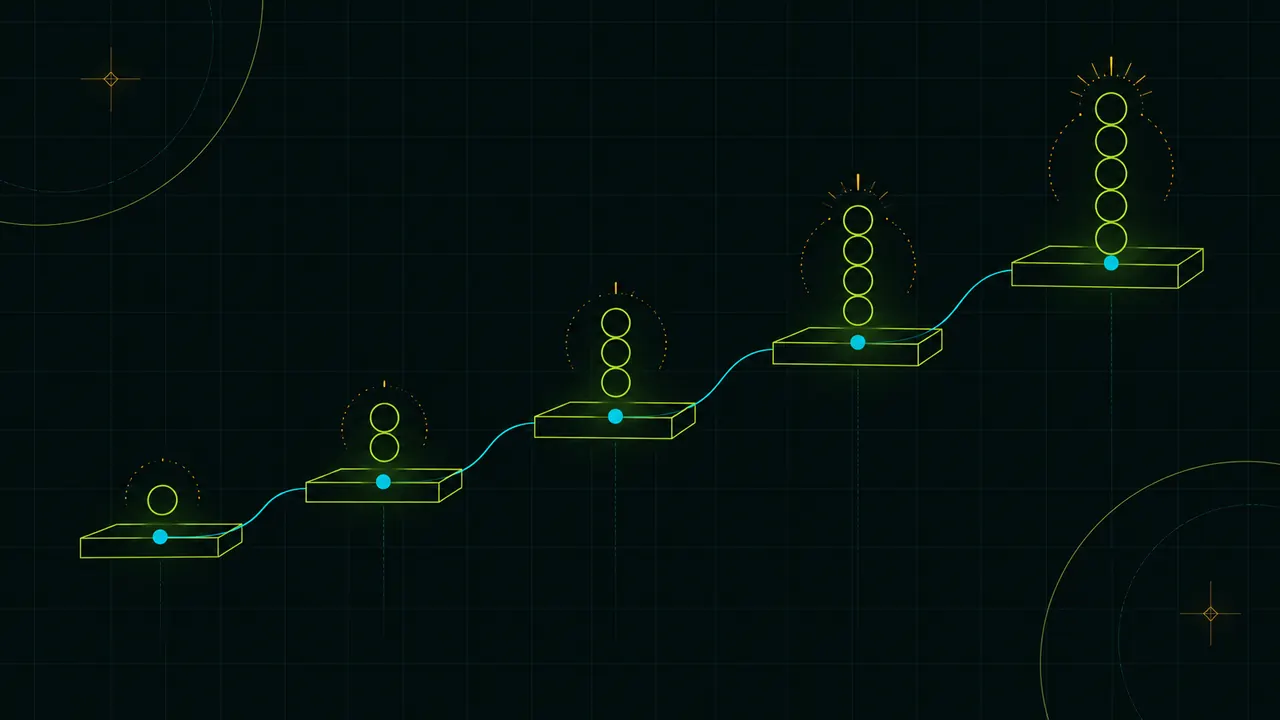
The printed figure climbs. Public descriptions of the original have it starting low and stepping up each time the jar takes part in a winning evaluation. The loaded rules state the starting value, the size of the step, exactly what triggers it, and the conditions under which it resets. Those four details govern more of this game's output than any paytable row does, so read the sentences rather than skimming them.
This gives you something concrete to read off the screen. The number of jars on the grid and the values printed on them are the state of the game, and that state is visible. A board carrying two raised jars next to a developing cluster is in a different condition from a board carrying one jar at its starting value, even though the paytable has not moved.
Figures differ between builds and lobbies. Read the live game's information panel before you rely on any of them.
Play here →How a jar multiplier is applied, and what two jars do
A cluster that includes a jar is paid at the cluster's paytable value multiplied by the jar's printed figure. Illustrative placeholders, not this game's numbers: a cluster worth six units of stake, touched by a jar printed at four, returns twenty-four units. That is the simple case, and it is not where this game's tail comes from.
The decisive rule is what happens when more than one jar touches the same cluster, and there are two possible treatments. If the printed values are added, two jars at four and five apply a total of nine, and the six-unit cluster returns fifty-four units. If they are multiplied, the same two jars apply twenty, and the same cluster returns a hundred and twenty. Identical board, identical symbols, identical printed numbers, and more than double the difference between the two readings.
That one sentence in the rules does more to shape this game's distribution than the return figure does. Multi-jar contacts are uncommon. Under a multiplicative rule the rare ones carry an enormous share of the game's total output, concentrating value into fewer and larger results; under an additive rule the same events are still the good ones, but the extremes are far less extreme and the game pays out along a flatter curve.
Do not take the treatment from a review page, this one included, and do not assume it from another cluster-and-multiplier title, because studios differ on it and so do builds of the same title. The game's own rules screen states it. If you read one thing in the panel before staking, read that.
Why the session shape is so uneven
Volatility describes how a game's return is distributed across outcomes, not how much of it comes back. Two games can share a return figure and feel nothing alike: one pays small amounts constantly, the other pays almost nothing for long stretches and occasionally pays a great deal. This title sits firmly at the second end, and the mechanic above is the reason.
Trace where the money sits. Most presses of the button produce no qualifying cluster at all, or one small cluster with no jar involved in it. The results people post about require several things to coincide: more than one jar present, their printed values already raised by earlier participation, and a large cluster forming in contact with them. Each of those is ordinary on its own. The conjunction is not.
The arithmetic consequence is specific and worth stating plainly. When a large share of total return is concentrated in rare conjunctions, the typical session result sits well below the average session result, because the average is pulled upward by outcomes that most sessions never contain. A session that produced nothing memorable is the designed normal case for a game shaped like this, not an unlucky deviation from it.
What the high-volatility label does not do is predict anything about the next spin, or justify a longer session on the grounds that a rare outcome is overdue. Spins carry no memory of the ones before them. The label describes the shape of a distribution, which is genuinely useful for setting a stake size and a session length in advance and useless for any decision taken during one. The volatility page on this site sets out what the label can and cannot support.
// sponsored · WinCrown · 18+
+500% + 120 free spins
WinCrown welcome offer. Read the current promotion terms, eligibility and withdrawal conditions.
The free-spins round, where jars are not cleared
Jars are also the trigger. Public descriptions of the original have the round entered when enough jars are on the grid at once, with the count required, whether jars arriving mid-chain qualify, and the number of spins awarded all stated in the loaded rules. Those three details differ between builds and between a title and its sequel often enough to be worth checking rather than recalling.
What changes inside the round is persistence. Across the round the jars remain in play and their printed values carry forward instead of resetting between spins, which turns a sequence of independent spins into a cumulative one. Early spins in the round function partly as a mechanism for raising numbers that later spins then get to use.
Compare that with a design where the multiplier is assembled and discarded inside a single spin, which is the approach Sweet Bonanza takes with its bombs. There, every spin of the round is an independent attempt and any one of them can be the good one. Here, a late spin operates under conditions the earlier spins created. Neither design returns more; they distribute the same uncertainty along different timelines.
The practical difference is about interpretation rather than money. A cumulative round that ends without a large cluster forming next to the raised jars reads like a failed feature when it was an ordinary one, and the pull to keep going because the state on screen is better than the state you started in is a property of the design rather than information about what comes next. Read the panel for retriggers, for whether additional jars can be introduced during the round, and for exactly what carries between spins.
Return configurations and the maximum win cap
No return percentage appears on this page, and the omission is deliberate. Push Gaming, like most studios, supplies a title in more than one return configuration, and the operator selects one when it integrates the game. A figure printed here would describe one build in one lobby and misdescribe every other reader's.
This is also why third-party pages disagree about this title, and the disagreement is the expected state rather than evidence that one of them found the real number. Some are describing a different build. Some are describing the sequel without saying so. Some were accurate about one lobby on one day and were never revisited. A confident percentage on a review page is a figure with no build attached to it.
The figure that applies to you is in the information panel inside the game frame, reached from a menu within the game itself rather than from the casino page around it, in the lobby you intend to play in, on the day you intend to play. If the build offers any optional mode or feature purchase, that carries its own separate figure stated in the same panel, and it is frequently not the same as the base one.
The cap needs the same treatment plus one extra question. Read the figure, then read whether it is expressed per spin or per round, because on a game with cumulative multipliers and chains that can run long, that distinction decides what the cap actually constrains. Read also what happens when a round reaches it: whether remaining tumbles resolve, whether remaining free spins are forfeited, and whether jar multipliers keep being applied. The max win cap page here explains why that sentence matters more than the number beside it.
A pre-stake checklist for the build in front of you
Eight things in the loaded game's own screens decide what you are playing, and all eight can be read before the first stake. The grid dimensions and the minimum cluster size. The adjacency definition. The paytable value of each symbol at the cluster sizes you will realistically see rather than at the top of the table. The jar's starting value, its step size, its trigger and its reset condition.
Then: the rule for combining more than one jar on a single cluster. The free-spins trigger requirement and what persists inside the round. The return figure for this build, plus any separate figure for an optional mode. And the cap, with its scope and its resolution rule. Written down once for a given operator, that list is the whole game. Read nowhere, it is a guess dressed up as knowledge.
Where a lobby tile, a help tooltip or a review page disagrees with the rules screen inside the game frame, the rules screen is the one that pays. If you are looking for the title in an offshore lobby, Safe Casino and WinCrown both expose a provider filter on their live game pages, which is usually a faster way to check whether a given Push Gaming title is present than scrolling a lobby — this page does not assert that either of them carries it today.
Two questions fall outside what this site covers. Which operators are worth shortlisting, and what their bonus terms do to a cluster game's wagering contribution, belongs to pokiesledger.com, which handles operator shortlists and bonus offers. How deposits, withdrawals and KYC actually work, including what a cap-sized result does to a payout schedule, belongs to pokiescashout.com. This page stops at how the machine works.
Jammin Jars II, and the games built to look like it
There is a sequel, and it is a separate game rather than a reskin. It keeps the fruit, the grid format and the jar idea, and it adds further jar types and features of its own. Its return configurations, its cap, its trigger requirements and its multiplier rules are its own, documented only in its own information panel.
Treat a figure or a rule read in one as establishing nothing whatsoever about the other. That applies in both directions, and it is the most common way readers end up holding the wrong numbers for the game they have open: the artwork across the two is deliberately similar, lobby tiles truncate names, and search results for the original routinely describe the sequel without flagging it.
The fix is mundane. Read the title in the game header inside the frame, including any numeral or subtitle after the name, before trusting anything you have read about it. Where the header and the lobby tile disagree, the header is the one describing the build that is actually loaded.
The wider lookalike problem is structural. Cluster grid, tumbling wins and a climbing multiplier is now a common combination, and two games built on it can differ completely in the rules that matter most: minimum cluster size, adjacency, whether multipliers add or multiply, and whether anything persists between spins. Recognising the family tells you which questions to ask. It does not answer a single one of them.
What this page could not verify
The structural description above is stable across builds: an eight-by-eight cluster grid with no paylines, wins formed by contact rather than position, tumbles that clear winning symbols and re-evaluate the grid, jars that substitute, persist, move between evaluations and carry a multiplier that climbs with participation, and a free-spins round in which jars and their values carry forward. That is the part worth writing down.
Everything numeric is not. The minimum cluster size, the adjacency definition, every paytable value, the jar's starting value and step, the combination rule for multiple jars, the free-spins requirement and length, the loaded return figure, and the cap with its scope and resolution rule all require the rules of the game in front of you. Where a figure varies by build, the authoritative source is the loaded game's own information panel and nowhere else.
Nothing on this page is a method for improving results. No reading of the grid, no stake pattern and no choice of when to press the button changes a game's designed return. The jar values and the chain length are outputs of the same random process as the symbols, and a board in a promising state owes you nothing. Understanding the mechanism changes what you expect, not what you get.
Decide a spend and a time boundary before opening the game rather than during a round, and never with money needed for essentials. Online casino services cannot lawfully be provided to people in Australia; ACMA sets out that position, and every operator referred to here is offshore — a site being reachable, pricing in Australian dollars or showing familiar studio artwork is not authorisation. Sponsored links on this site can earn this publisher a commission, which is not a statement that any title is in any catalogue or that any particular build is loaded.

Questions people actually ask
What is the RTP of Jammin Jars?
There is no single figure, because the title is supplied in more than one return configuration and the operator chooses one when it integrates the game. The number that applies to you is in the information panel inside the game frame, in the lobby you are playing in, today. If the build offers an optional mode or feature purchase, that carries its own figure stated separately in the same panel.
How volatile is Jammin Jars?
Its label sits at the high end, and the mechanic explains why: most spins produce no qualifying cluster or one small one, while the memorable results need several jars present, their printed values already raised, and a large cluster forming in contact with them. Because so much return is concentrated in that conjunction, the typical session result sits well below the average session result. Confirm the label in the loaded panel.
How do the jar multipliers work?
A jar is a wild carrying a visible multiplier value. It persists on the grid when paying symbols are cleared, it moves position between evaluations, and its printed value steps up each time it takes part in a winning evaluation. The starting value, the step size, the trigger and the reset condition are stated in the loaded rules, and they matter more to your results than any paytable row.
Do two jars on the same cluster add or multiply?
Read it in the game's rules screen, because both treatments exist and the difference is enormous. On illustrative placeholders: jars printed at four and five applied to a six-unit cluster return fifty-four units if added and a hundred and twenty if multiplied. That single rule shapes the game's distribution more than the return percentage does, so it is the one line worth finding before you stake.
What is the minimum cluster size in Jammin Jars?
Public descriptions of the original put it at five matching symbols in contact, and the paytable in the loaded game is what settles it. Check the adjacency definition in the same place: whether symbols count as touching only horizontally and vertically, or diagonally as well, decides whether a given arrangement is a paying cluster or nothing.
What is the maximum win on Jammin Jars?
Read the figure in the game's information panel, and read whether it is expressed per spin or per round. That distinction matters more here than on most pokies, because the free-spins round is cumulative and a cap reached mid-round is the point at which the jar values you spent the round raising stop mattering. The panel should also say whether remaining tumbles resolve and whether remaining spins are forfeited.
Is Jammin Jars II the same game?
No. It is a separate release that keeps the grid format and the jar idea while adding further jar types and features, with its own return configurations, its own cap and its own trigger requirements. A panel read in one establishes nothing about the other. Because the artwork is similar and lobby tiles truncate names, read the title in the game header inside the frame rather than the tile.
Why does the end-of-spin total not match the board I can see?
Because one press of the button can contain several evaluations. Every symbol that paid was cleared by the tumble before the chain finished, so the arrangement left on screen is the one that paid nothing. The round history lists the sequence and is the only place the breakdown exists — locate it on each new operator before you start rather than mid-session.
// next step
A paytable makes more sense with the game open in front of you.
View current offer