
- Studio
- London development studio
- Release cadence
- Deliberately narrow — a short shelf, not a wall
- House style
- High volatility, return weighted into features
- Supplier licences
- Listed on the studio's own licence page
- Australian licence
- None exists for this sector
A studio that ships few games on purpose
Scale is the defining commercial fact about Push Gaming. It is a London development studio whose catalogue is counted in dozens rather than hundreds, with a release schedule that produces a few titles a year instead of one most weeks. Volume studios exist partly to fill lobby shelves; this one does not, and the difference announces itself the moment you use a provider filter.
Practically, that filter returns a shelf short enough to read end to end in one sitting. None of the triage you apply to a studio with six hundred titles is needed here: no sorting by popularity to find the handful anybody actually plays, no working assumption that a third of the list is reskinned filler. The live title count moves with every release and every regional withdrawal, so count it on the studio's own game list rather than trusting a number quoted anywhere else, this page included.
Restraint is not a quality guarantee and should not be read as one. Fewer releases means the business places fewer bets, so each title carries more of its reputation and usually gets longer in development. It also means one house style applied consistently across the range, which cuts both ways: if that style does not suit your bankroll, it will not suit much of the catalogue either.
Whatever standing the studio has stays with the studio. A developer writes maths and draws art. It does not hold your balance, does not decide whether a withdrawal clears, and does not write the wagering terms that can void a feature purchase. Those belong to the operator, and a recognisable developer mark on a lobby tile establishes only that a distribution agreement exists somewhere upstream.


18+ · Bonus conditions
Offer information supplied: 2026-10-05.


18+ · Bonus conditions
Offer information supplied: 2026-10-05.
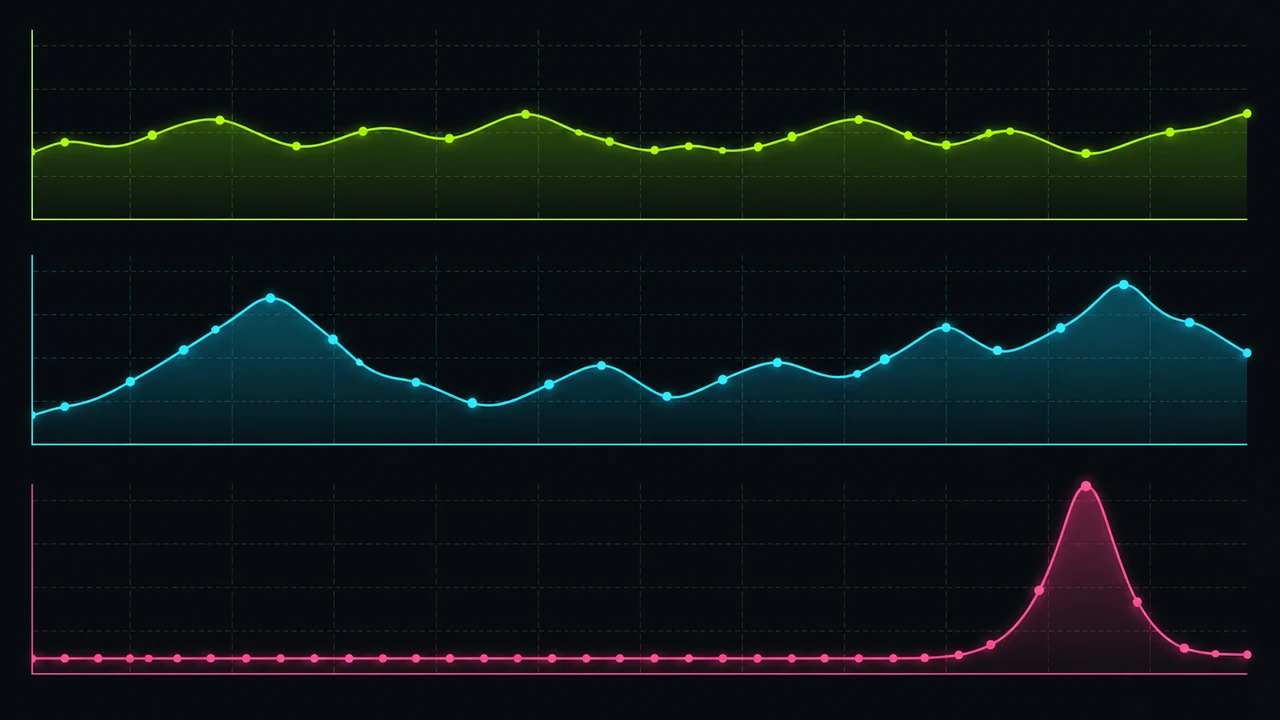
High volatility here means the return lives in the feature
The consistent design decision across this catalogue is where the designed return is placed. On most of the studio's reel games a large share of it is allocated to the bonus round rather than to ordinary spins, and the base game is tuned thin to fund that. The arithmetic is not negotiable: a return weighted into a rare event has to be taken out of the common one.
The session that produces is distinctive and routinely misdescribed. Long stretches give back very little, the balance declines at a steady and uncomfortable rate, and then a feature resolves at a scale bearing no relation to the preceding hour. Players call such a game cold and then hot. It was neither. It was doing the only thing its distribution describes.
Which number deserves your attention follows from that. On a game built this way the volatility rating and the maximum payout tell you more about the session ahead than the return figure does, because the return is an average across outcomes most sessions never reach. Both sit in the loaded game's info panel, on whatever scale that particular release prints, and neither is on this page.
Stake sizing changes too. A long thin tail needs more spins to express itself, so the stake that feels comfortable on a low-volatility game is usually too high here for the same budget. Decide how many spins you are funding first and let that set the stake, rather than the other way round.
The art direction is the catalogue's other constant — bright, cartoon-leaning, one strong motif per title — and it is worth naming mainly so you stop reading it as information. Presentation and tuning are produced by different people to different briefs. A cheerful fruit theme and a brutal distribution coexist perfectly comfortably here.
Four devices the studio keeps rebuilding
Grid and cluster boards come first. Several titles resolve wins by groups of adjacent matching symbols on a square or near-square grid instead of along fixed lines, usually with winning symbols removed and replacements dropped in, so one spin can pay several times. Two rules decide everything about such a board: what counts as adjacency, and the smallest group that pays. Both are in the paytable, and studios genuinely disagree on whether diagonal contact qualifies.
Multiplier accumulation is the device most readers associate with the studio: a symbol that carries a multiplier, grows when it takes part in a win, and in some implementations holds that value across spins inside a bonus round. Ask three things of any version. Does the value persist between spins or reset? When two of them meet, do they add or multiply? And does the current value apply to the win being paid now, or only to the next one? Meters that look identical diverge at exactly that third point.
Persistent symbols and respins make up the other recurring family. Something is held on the board while the rest spins again — a locked position, a stacked mystery symbol, a nudge that pushes a partial stack into place and buys another spin. Razor Shark, which this site covers on its own page, is the title most readers meet from this family. Describe any such game to yourself in those terms before judging it: what is held, what respins, and what condition ends the sequence.
Feature purchase is the fourth, and it is conditional. A buy control appears on some titles in some markets and not others, because availability is a regulatory and operator question rather than a design one. Where it exists, three facts get confused constantly: the price is quoted as a multiple of the base stake, the purchased feature commonly carries its own separately stated return, and the confirmation dialog shows the real amount in your account currency. That last figure is the one to read before you tap anything.
A purchase priced at a large multiple of base stake is also the fastest way to breach a maximum-stake clause while a wagering requirement is running. The game will happily let you. The terms will not, and the money is gone to a rule that had nothing to do with the maths.
// sponsored · Safe Casino · 18+
+500% + 120 free spins
Safe Casino welcome offer. Check the qualifying deposit and wagering conditions before you claim.
Reading the catalogue by family rather than by theme
The short shelf is organised in families, and a family name carries more information than theme art does. Sequels and spin-offs in this catalogue reuse a device and a presentation language rather than a subject, so the useful question about a new release is not what it looks like but which earlier game it descends from mechanically.
What to expect from a later entry is the pattern visible right across the high-volatility end of the industry: the payout ceiling and the volatility tend to move up together. A sequel is rarely the gentler version of the game you survived. If an original was comfortable at a given stake, treat the follow-up as a different instrument and read its own volatility rating and payout cap instead of assuming either carried across.
Naming traps work in the other direction as well. A word shared by two titles does not establish a shared family, because the vocabulary of this industry is small and every competitor reuses it. And a studio can revisit a device under an entirely different name and theme, so two games with nothing in common on the tile can behave almost identically once loaded.
Where a release actually sits is settled by its own rules screen, which names the mechanic the build is running. That screen is also where you find out that a title you had filed as a reskin uses a different board shape, resolves wins by a different rule, or ends its feature on a different condition from the one you were counting on.
Figures differ between builds and lobbies. Read the live game's information panel before you rely on any of them.
Play here →Why this page prints no percentage
Three separate things stop a provider page from stating a usable return figure, and all three apply to this studio. Titles can ship in more than one return configuration, with the operator choosing which it integrates. A feature purchase, where offered, carries its own figure that replaces the base one for money spent that way rather than adding to it. And builds get revised, so a number that was true a year ago need not describe the game loading now.
Withholding the figure is a deliberate position rather than a gap in the research. Any percentage published on a page like this is a copy of a snapshot, and a reader who trusts the copy has stopped checking the original. The original is the information panel reached from the menu inside the loaded game, in the lobby you are actually playing in, read on the day you play.
If it is not there, the absence is itself a finding. The temptation is to assume the operator took the studio's best-known configuration. A missing figure is at least as likely to be hiding the opposite, and declining an unverified build costs nothing.
One further distinction is worth keeping straight on a catalogue tuned like this one. A return percentage, a maximum payout and a feature-purchase price are three unrelated quantities that appear on adjacent screens in similar type. The first is a long-run average, the second is a ceiling that can truncate a result the maths otherwise produced, and the third is money leaving your balance immediately.
Authorisation to supply is a different document from a tested build
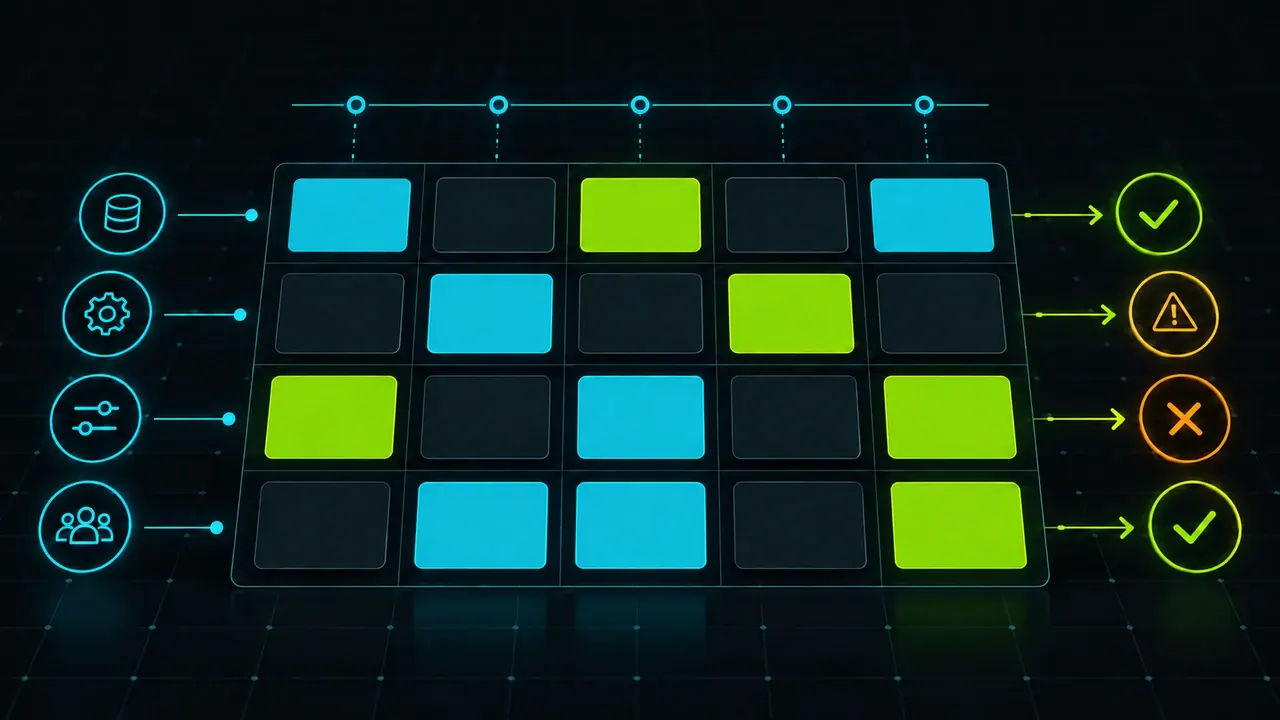
Two unrelated approvals get loosely called certification. One is the supplier authorisation a studio holds in order to distribute its games to licensed operators in a named jurisdiction. The other is the examination of one specific mathematics build, and of the random number generator beneath it, carried out by an accredited test house for a specific market.
They answer different questions. The first says the studio is permitted to supply somebody. The second says that one build of one game was measured and behaved as documented, in one place, on one date. A studio can hold the first for years while a particular build sitting in a particular lobby has never been covered by the second.
This page names no issuers, no references and no jurisdictions for Push Gaming, and that is on purpose. A licence list is a live register; a copy of one is a photograph of a register. The studio maintains its own licence page, and the regulators concerned maintain supplier and software registers of their own. Read the scope and the issue date there — not here, and not from a logo strip in a casino footer, which is artwork an operator placed about itself.
Nothing in that chain produces Australian authorisation, because there is none to produce. ACMA's position is that online casino services cannot lawfully be provided to people in Australia, so an operator serving these games to an Australian player is offshore, and the consumer protections a reader here might assume are not necessarily available. A well-regarded developer on the shelf is not a licence, a guarantee or a complaints process.
Complaints split along the same seam. A payout that does not match the paytable, or a feature that terminated early, is a game matter escalated through whoever licenses the supplier. A frozen balance, a verification demand or voided winnings is an operator matter, handled by the operator and then by its own licensor. The studio cannot intervene in the second category, and writing to it about one is time you do not get back.
// sponsored · WinCrown · 18+
+500% + 120 free spins
WinCrown welcome offer. Read the current promotion terms, eligibility and withdrawal conditions.
Where the catalogue turns up, and what the tile does not tell you
Availability is settled per operator and per region, and it moves without notice. A studio's games reach a lobby either through a direct integration or through an aggregator, and either arrangement can be added, dropped or regionally restricted with nothing on the lobby page to explain it. Nothing written here establishes that any operator carries any title today.
Because the studio's titles are widely distributed and several of its devices have been copied across the industry, its games — or close imitations of its mechanics — turn up in a great many offshore lobbies, Safe Casino and WinCrown among the ones this site links to, though what either holds on any given day is a question only their own live game lists can answer.
The provider filter is the first tool to reach for and an unreliable one. Lobbies file the same studio under inconsistent strings, abbreviate names, and sometimes bury several developers inside a single aggregator entry. If the filter comes back empty, search two or three exact titles before concluding the range is absent, because a mislabelled vendor string hides a shelf far more often than a missing integration does.
The opposite error is more expensive. Multiplier-collection and mystery-stack devices have been reproduced widely enough that a game can look like this studio's work and be another studio's product entirely, with its own tuning and its own payout ceiling. The attribution that counts is the developer line inside the loaded game, never the heading printed above the tile.
A working procedure, and what this page could not verify
Work studio-first and lobby-last. Take exact titles, including any subtitle or trailing word, from the studio's own game list, because that is where canonical spellings live and lobby search boxes are least forgiving of a near miss. A catalogue this short makes the job unusually quick — you can write the entire list down before you open a casino at all.
Then, in the lobby, search the exact title rather than browsing the filter. Open the game. Confirm the developer and the full title on the loading screen or in the info panel. Read the volatility rating, the maximum payout, the stated return and the purchase price if one exists, and note the date you read them. Decide after that, not before.
If you are comparing one title across two lobbies, the fields that actually move are the return configuration and the buy price, and both are blank on every page that describes a game from outside it. Record them yourself. Two shelves labelled identically can hold two differently tuned builds wearing the same artwork.
Stated plainly, this page does not verify the following: how many live titles the catalogue currently holds; which return configuration any operator has integrated for any title; whether a feature purchase is available to you, or what it costs; the current issuers and scope of the studio's supplier licences; or which of its games any named lobby carries this week. Each of those has an authoritative source, and none of those sources is a provider page.
Keep game questions and money questions in separate boxes. The board, the feature rules and the configuration belong to the game. Deposits, identity checks, bonus eligibility and withdrawals belong to the operator's terms, and a studio's craft says nothing whatever about whether a cashier pays promptly. Set the stake and the time limit before the first spin rather than during a feature, and stop if the reason you are still playing has become the last hour rather than the next one.
Questions people actually ask
Is Push Gaming licensed in Australia?
No, and no studio is for this sector. ACMA's position is that online casino services cannot lawfully be provided to people in Australia, so any operator serving these games to an Australian player is offshore. The studio holds supplier authorisations elsewhere; its own licence page and the relevant regulators' registers are where the issuers and scope are authoritative.
How many pokies has Push Gaming made?
Fewer than the volume studios by a wide margin — a catalogue in the dozens rather than the hundreds — and this page prints no count because the number changes with each release and with regional withdrawals. The studio's own game list is the figure to use, read on the day you need it.
What RTP do Push Gaming pokies have?
There is no single answer and no figure here. A title can ship in more than one return configuration with the operator choosing which to integrate, a feature purchase carries its own separate figure, and builds get revised. The only number that applies to you is in the info panel of the game loaded in your lobby.
Why do Push Gaming games feel so punishing between features?
Because that is the design. A large share of the designed return is allocated to the bonus round, which means the base game has to be tuned thin to pay for it. The pattern is not a malfunction or a cold streak; it is what a distribution weighted into a rare event looks like from the inside.
Do Push Gaming pokies have a bonus buy?
Some titles offer one in some markets and not in others, since availability is set by regulation and by the operator rather than by the studio. Where a buy exists, read the amount in the confirmation dialog in your own currency rather than the stake multiple, and check whether the purchase carries its own stated return.
A pokie looks like a Push Gaming game but is not on its list. What is it?
Most likely another studio's game using a similar device, since this studio's multiplier-collection and mystery-stack mechanics have been copied widely. Open the game and read the developer line in the info panel. A lobby tile's provider heading often comes from an aggregator feed and can name a publisher rather than the developer.
// next step
A paytable makes more sense with the game open in front of you.
View current offer