- Grid
- 7 × 7
- Win type
- Cluster pays
- Engine
- Tumbling reels
- Feature
- Persistent multiplier spots
The board, and the one rule that shapes everything
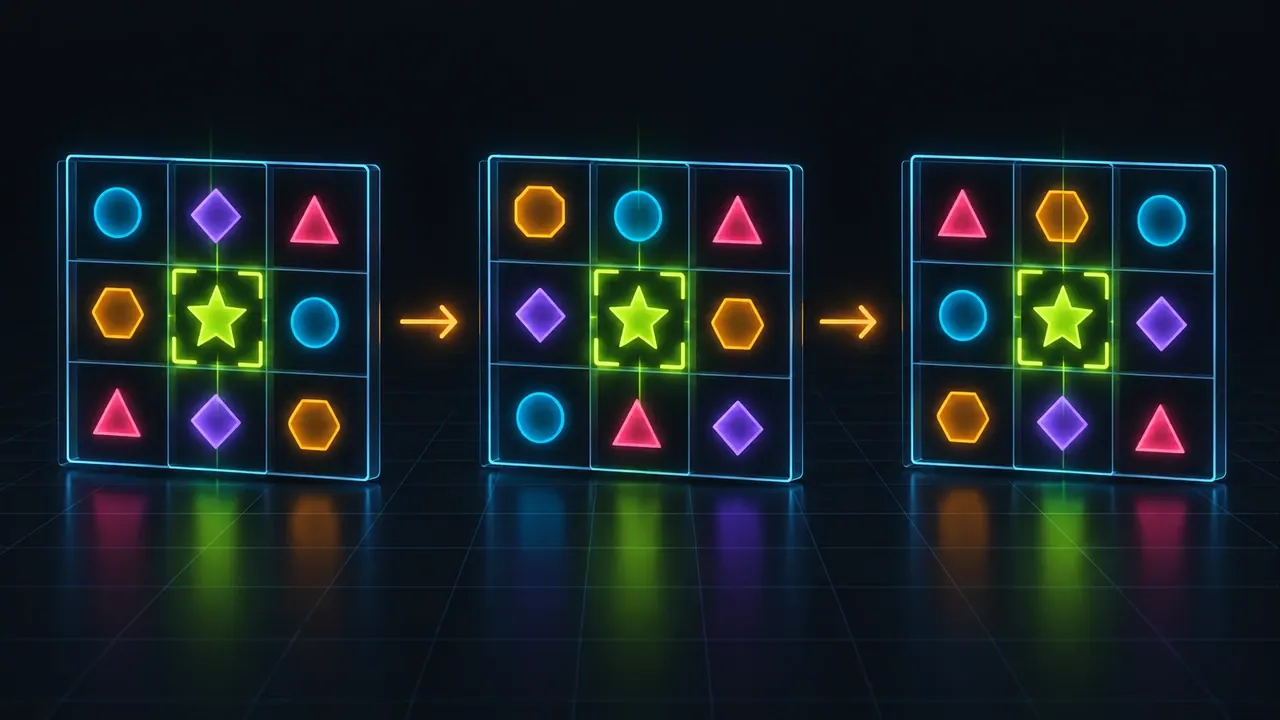
Sugar Rush 1000 has no reels in the conventional sense and no paylines. Symbols fill a seven-by-seven board, and wins form from clusters: the provider describes a qualifying cluster as a group of matching symbols touching one another horizontally or vertically, with a stated minimum size. Diagonal contact alone does not join a group. Read the minimum count and the adjacency rule in the loaded payout table before anything else, because between them they decide what the game is even willing to call a win.
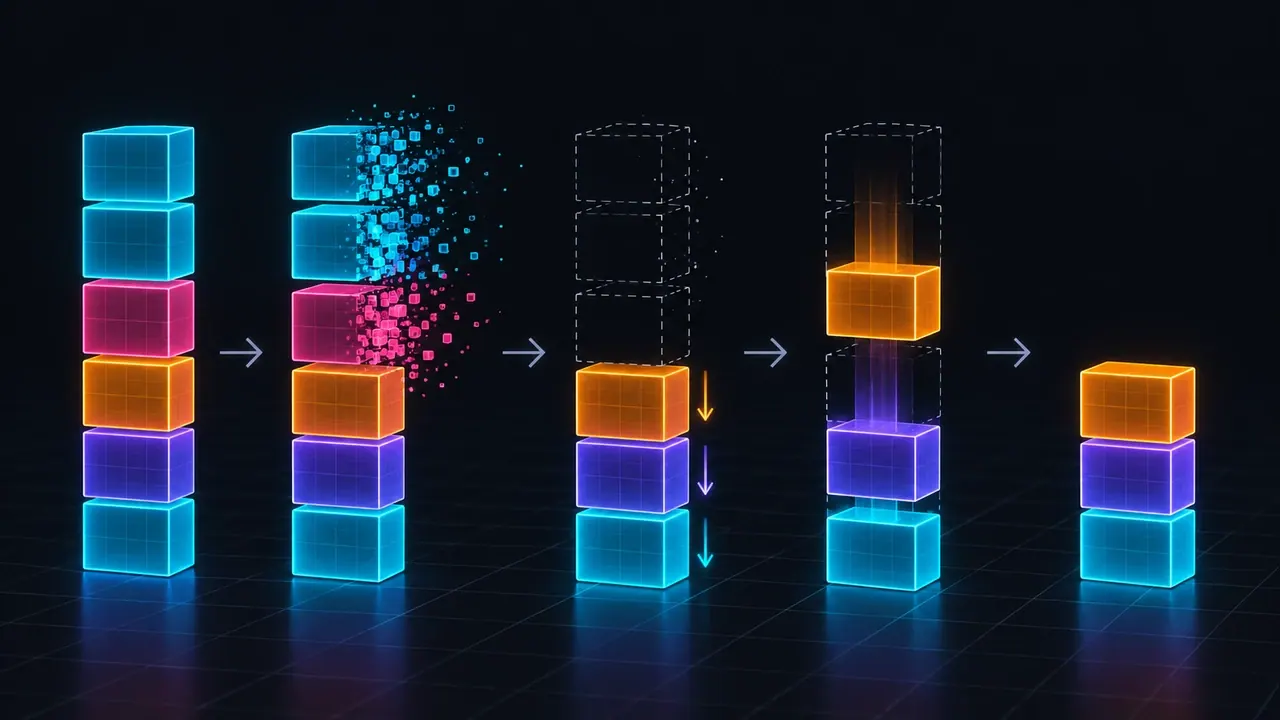
Qualifying clusters are then removed, the symbols above them drop down, and new symbols fall into the gaps. The refreshed board is checked again, and if it contains another qualifying cluster it pays and clears as well. One paid spin can therefore resolve several times over. The consequence is worth holding onto: the arrangement you are looking at when the win counter finally stops is the arrangement that failed to pay. Every board that did pay has already been cleared off the screen.
Cluster wins and tumbles are not unusual on their own, and plenty of studios ship both. What makes this title behave the way it does is what it does with the positions a cleared cluster used to occupy, and that is the whole subject of the next section.


18+ · Bonus conditions
Offer information supplied: 2026-10-05.


18+ · Bonus conditions
Offer information supplied: 2026-10-05.
A multiplier spot is a place, not a symbol
When a cluster clears, the positions it occupied are marked. The mark belongs to the coordinate on the board. It is not attached to a symbol, it is not attached to the cluster that created it, and it is not added to the round total. It appears as a value printed on that square, and it stays there as a standing condition.
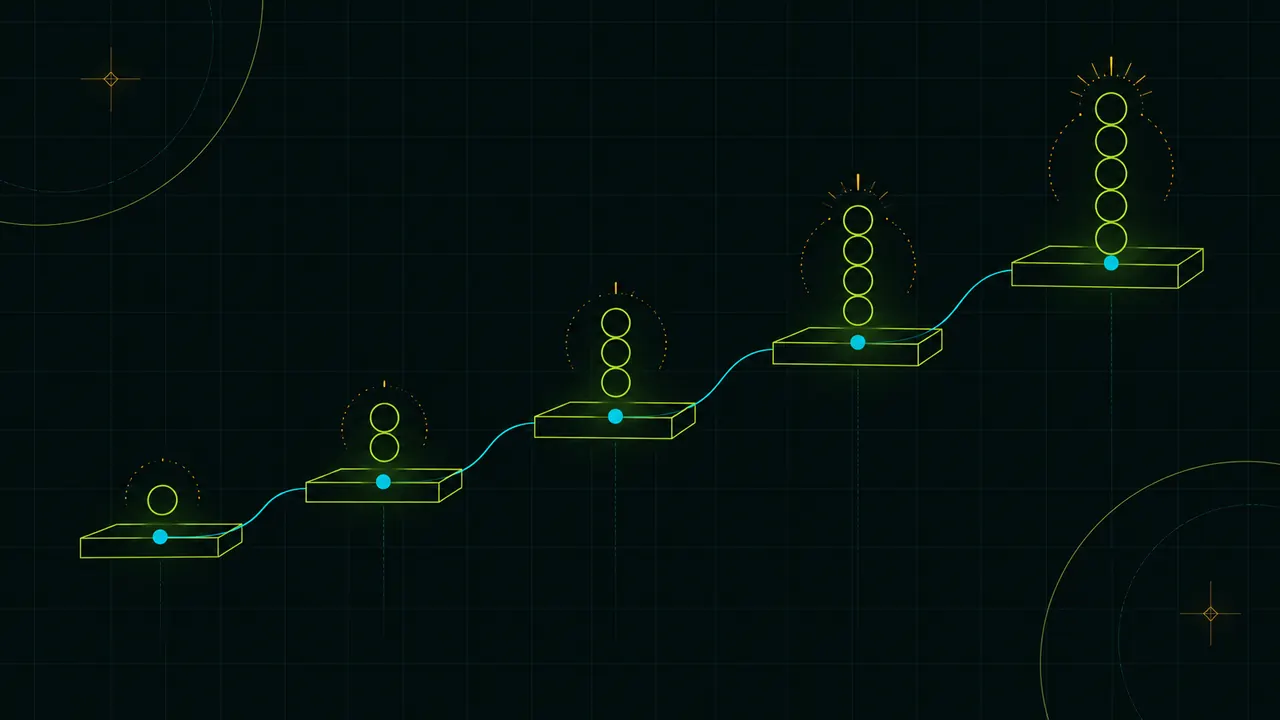
Each marked position carries a value that increases when a later qualifying cluster covers that same square again, doubling step by step up to a ceiling stated in the game's information panel. That is the only part of the design capable of producing the extreme results the title is known for, and it depends on one specific event: a cluster landing on ground that has already won.
Application is where readers most often go wrong. When a winning cluster covers one or more marked positions, those values are added together and the sum applies to that cluster's win. They are added, not multiplied against each other, so two marks inside one cluster sum rather than compound. A mark that the winning cluster does not cover contributes nothing to that win at all. It simply continues to sit there.
So a large number printed on the board is not money and not progress. It is a conditional offer that pays only if a later cluster happens to land on that exact square. Reading it as banked value is the single most expensive misreading of this game, and the interface does nothing to discourage it.
A paid spin and a free spin are different games here
In the base game, marks live for the duration of the paid spin and its tumble chain. When the chain ends with a non-paying board, the board resets and the marks go with it. Base-game upside is therefore bounded by how far one chain can run from a single purchase — you get one opportunity to build and re-cover inside that chain, and then the slate is wiped.
In the free-spins round the provider describes the spots as persisting: they carry from spin to spin inside the round. The round stops being a sequence of independent spins and becomes one accumulating board. Each spin adds new marks and can raise existing ones, and nothing clears between spins until the round itself ends. The same mechanic, given a longer canvas, produces a completely different distribution of outcomes.
Compare it with the better-known sibling design in the same studio's catalogue. Sweet Bonanza's free spins use multiplier symbols that reset every spin, so that round's result turns on whether one spin happens to combine a long tumble chain with heavy multipliers. Sugar Rush 1000 inverts the question. Its round turns on where the early spins put their marks and whether the later spins come back to those coordinates.
For a reader, that changes what a round looks like on the way through. A free-spins round here can read as worthless for several spins and then resolve, because those early spins were doing map work rather than paying. The reverse also happens: a round pays well in its first spin, never revisits the squares it marked, and finishes near where it started. None of this is steerable. It is simply why the round's shape tells you so little until it is over.
// sponsored · Safe Casino · 18+
+500% + 120 free spins
Safe Casino welcome offer. Check the qualifying deposit and wagering conditions before you claim.
Why two rounds that look identical pay nothing alike
Because marks attach to coordinates, the spatial distribution of the early wins is the variable that decides a round. Geometry does the rest, and the geometry is not symmetrical. An interior position can be part of groups extending away from it in four directions; a corner position can be reached from two. Marks sitting in the middle of a dense board are simply reachable by more of the arrangements the game can produce next.
A round whose first wins are a few tight, overlapping clusters near the centre is building a ladder: the same squares keep getting covered, and the values on them keep rising. A round whose first wins are the same number of clusters of the same size, strung along the rim and in opposite corners, is building something wide, flat and mostly decorative. Both rounds look productive while they happen. Only one of them is.
That is the failure mode, and it has a cause rather than a vibe. A round ends with impressive figures printed across much of the board and a small total, and the explanation is always the same: the marks are sitting on squares that the later clusters never covered. A mark that is never re-covered pays nothing and raises nothing. What is printed on the board is a record of where wins have already happened, not a forecast of where the next one will land.
The honest decision rule that follows is a short one. Nothing in the interface lets you influence where a cluster lands, so the only decisions available to you are the stake and the point at which you stop, and both have to be settled before the round rather than during it. Judging a session by how the map is filling in means judging it by the part of the game you do not control.
Figures differ between builds and lobbies. Read the live game's information panel before you rely on any of them.
Play here →The four figures that actually matter for this release
Because the mechanic is a doubling ladder running against a hard ceiling, the figures worth finding here are not the ones that matter on an ordinary payline game. There are four. All four are published by the studio inside the game itself, under the help control that sits within the game window; the casino's own description of the title is a separate document written by a separate party, and where the two disagree it is the studio's panel that describes the build you are actually playing.
First, the loaded return. This title is distributed in more than one return setting, the choice belongs to whoever integrated it, and nothing on the surface of the game announces which one you have — so a figure that was accurate in one lobby can be wrong in the next one you open. Treat it as a per-lobby reading taken on the day, not as a property of the game. Second, the per-position multiplier ceiling. This is the value the release's name gestures at, and it is the one figure that most changes how the ladder behaves, because it fixes the point at which a repeatedly covered square stops growing. Read what the panel states rather than doing arithmetic on the title.
Third, the maximum win, expressed as a multiple of stake, together with the rule for what happens when a round reaches it. On a design like this a cap is not approached gradually. A single cluster covering several high marks can jump straight into it from a round that looked ordinary a spin earlier. Check whether hitting the cap ends the round immediately and what happens to any free spins still owed. Fourth, any separately stated figure for an optional increased-stake mode or a feature purchase: those carry their own return, printed in the same panel, and if you intend to use one then that is your number and the base game's is irrelevant to you.
The volatility rating will sit at the high end, and the reason is the persistence described earlier. A design whose upside requires repeated coverage of the same coordinates concentrates its return into rare rounds by construction. Do not carry a figure across from the original Sugar Rush, from a seasonal release in the same family, or from the overlay on somebody's stream clip.
Telling the releases apart in a lobby
The family shares its artwork almost completely, and a lobby tile will often truncate the name. The original and this release are separate games: separate help panels, separate multiplier ceilings, separate caps, separate return configurations. Reading about one and playing the other is an ordinary mistake with an entirely avoidable cost, and the only thing distinguishing them on a tile may be a number.
The identification procedure takes a few seconds. Load the game and read the full title where the game itself states it — its own header, or the first screen of its help panel. Not the lobby tile, not the browser tab, not the breadcrumb on the casino's page, all three of which are written by the operator rather than the studio. Then read the help panel belonging to that exact title. A screenshot of one release's rules establishes nothing whatsoever about another.
Seasonal and themed releases exist in the same family, and a new subtitle can come with a changed ladder or changed feature entry. Treat any variation in the name as a different game until its own help panel tells you otherwise.
The shared artwork creates one further trap specific to this family. Where an operator restricts which titles count towards a promotional balance, that restriction is written as a list of names — and a list naming the original does not thereby include this release, nor the reverse. Two tiles that look like the same game can sit on opposite sides of an eligibility list, and the game's help panel will never tell you so, because eligibility is an account term rather than a rule of the machine. If you are playing under any promotional balance, match the exact title you read off the game's own header against the exact title written in the promotion terms before you spin, not after.
// sponsored · WinCrown · 18+
+500% + 120 free spins
WinCrown welcome offer. Read the current promotion terms, eligibility and withdrawal conditions.
On a phone, and on finding the game at all
A board like this one loses more than most designs when it moves to a phone. Forty-nine positions plus printed multiplier values on a narrow screen means the values are small, and during a tumble sequence they change while the symbols are still moving. The practical effect is that you stop reading the board and start trusting the counter, which is precisely the moment the standing-condition confusion from earlier takes hold. Pinch-zoom is generally unavailable inside a game frame, so there is no fixing it mid-spin.
The information panel this page keeps pointing you to is reached through a menu inside the game frame on mobile rather than sitting beside the game. It is easy to skip and worth finding once on each new operator, before a session rather than in the middle of one. Round history, where the game offers it, is in the same in-frame menu, and on this title it is more than a curiosity: it is the only way to reconstruct which cluster was multiplied by which marks when a total looks wrong.
On availability, this page asserts nothing. Pragmatic titles are the kind of catalogue entry worth searching for by name in a lobby such as Safe Casino or WinCrown; whether this exact release is live there, and at which configuration, is a question only that lobby's own game search and the loaded help panel can answer on the day. Category pages and provider logos in a footer are marketing assets, not an index of what is currently integrated.
What this page could not verify
Cited to the provider's description of the game: the board, cluster adjacency, the tumble sequence, marks attaching to positions, values rising on repeat coverage, values adding within a single winning cluster, and persistence of the spots through the free-spins round. Not established here, and not establishable from outside a live lobby: the loaded return, the stated multiplier ceiling, the maximum-win multiple, the minimum cluster size in a given build, free-spin counts, the price of any optional mode, and whether any particular operator runs the game at all.
On the regulatory position: providing online casino services to people in Australia is prohibited, and ACMA is the authority to consult on it. Every operator referred to on this site is offshore. Nothing in a lobby's presentation alters that — not a studio logo in a footer, not prices shown in Australian dollars, not this game's own artwork on the tile — and an offshore service may carry no Australian consumer protection at all.
The mechanical description above is structural and stable across builds, which is why it is the part worth writing down. Everything configuration-specific is deliberately left to the panel inside the game. Set a spending and time boundary before you open it, never use money needed for essentials, and stop if the purpose of a session becomes recovering a loss. Some links here are commercial and can earn the publisher a commission; what you have just read is a description of a machine, not a recommendation to play it.

Questions people actually ask
What is the RTP of Sugar Rush 1000?
There is no single figure. Pragmatic ships titles at more than one return configuration and the operator chooses which one it integrates, so the only number that applies to you is the one in the game's information panel in the lobby you are playing in, on the day. Any optional increased-stake mode or feature purchase carries its own figure in the same panel.
Do the multiplier spots carry over between free spins?
The provider describes them as persisting through the free-spins round, so the round builds one accumulating board rather than resetting each spin. In the base game they last only for the paid spin and its tumble chain, then clear with the board. Confirm both behaviours in the loaded rules of the exact release you have open.
If two multiplier spots are inside one winning cluster, do they multiply each other?
No. Their values are added and the sum is applied once to that cluster's win. Two marks do not compound. A mark the winning cluster does not cover adds nothing to that win and stays on the board unchanged.
Why did my round show huge multipliers on the board and still pay almost nothing?
Because a mark only pays when a later cluster lands on that exact square. If the marks are sitting on squares the following clusters never cover, they pay nothing and rise no further. The figures on the board record where wins have already happened; they are not banked value and not a forecast.
Is Sugar Rush 1000 the same game as Sugar Rush?
No. They are separate releases with separate help panels, separate multiplier ceilings, separate caps and separate return configurations, and they share almost all their artwork. Read the full title from the game's own header or help panel rather than from the lobby tile, which may truncate it.
What happens if a round reaches the maximum win?
That depends on the rule stated in the game's information panel, which is why it is one of the four figures to read there. On a doubling-ladder design a cap can be reached in a single jump rather than gradually, so check whether hitting it ends the round at once and what becomes of any free spins still owed.
// next step
A paytable makes more sense with the game open in front of you.
View current offer