- Studio
- Play'n GO
- Grid
- 7x7, 49 positions
- Win rule
- Clusters of touching matching symbols
- Paylines
- None; adjacency replaces them
- Cascade
- Winners clear, replacements drop, grid re-evaluated
- Meter
- Charges from cleared symbols, spends on features
- Authoritative figures
- The loaded game's info panel
A seven-by-seven grid with no paylines, and what replaces them
The first thing to unlearn is the reel. Reactoonz presents a square field of forty-nine positions, seven across and seven down, and it does not evaluate left to right along fixed lines. A win is a group of identical symbols that touch each other, and where that group sits is irrelevant: a cluster in the bottom-right corner pays exactly as one in the top-left does.
A square grid changes the geometry of what counts as near. Count the field: of forty-nine positions, twenty-four sit on the border and twenty-five are interior, so slightly more than half is fully surrounded. Cluster grids are drawn large for that reason — a small grid is mostly edge, and mostly edge means groups rarely grow past the minimum.
The paytable follows the same logic. Instead of a prize per symbol per line length you get a prize per symbol per cluster size, usually banded rather than listed one count at a time. Which bands exist, where they start and what each pays are build facts in the loaded paytable. What is structural is the table's shape: the prize rises with group size, and it rises in steps.
Everything below is mechanism rather than measurement. The devices survive a change of operator; every number attached to them belongs to the build you have loaded and is read in its information panel. None of it is a decision point — it runs automatically once the stake is committed.


18+ · Bonus conditions
Offer information supplied: 2026-10-05.


18+ · Bonus conditions
Offer information supplied: 2026-10-05.
What counts as a cluster: adjacency, minimum size and the diagonal question
Two rules define a cluster and both have to be read rather than assumed. The first is adjacency: whether two symbols count as touching when they share an edge only, or also when they meet corner to corner. The second is minimum size: how many connected matching symbols a group needs before the paytable recognises it at all.
The gap between the two adjacency rules is wider than it sounds. Under an edge-only rule an interior symbol has four neighbours; counting diagonals gives it eight. That multiplies the paths by which separate pockets of one symbol can join, and since the paytable pays in bands, merging two groups of four into one of eight can be the difference between nothing and a prize.
Minimum size produces the most common complaint about cluster games. Six symbols of one type forming two separate groups of three are two sub-minimum groups, not a group of six — separation matters, raw count does not.
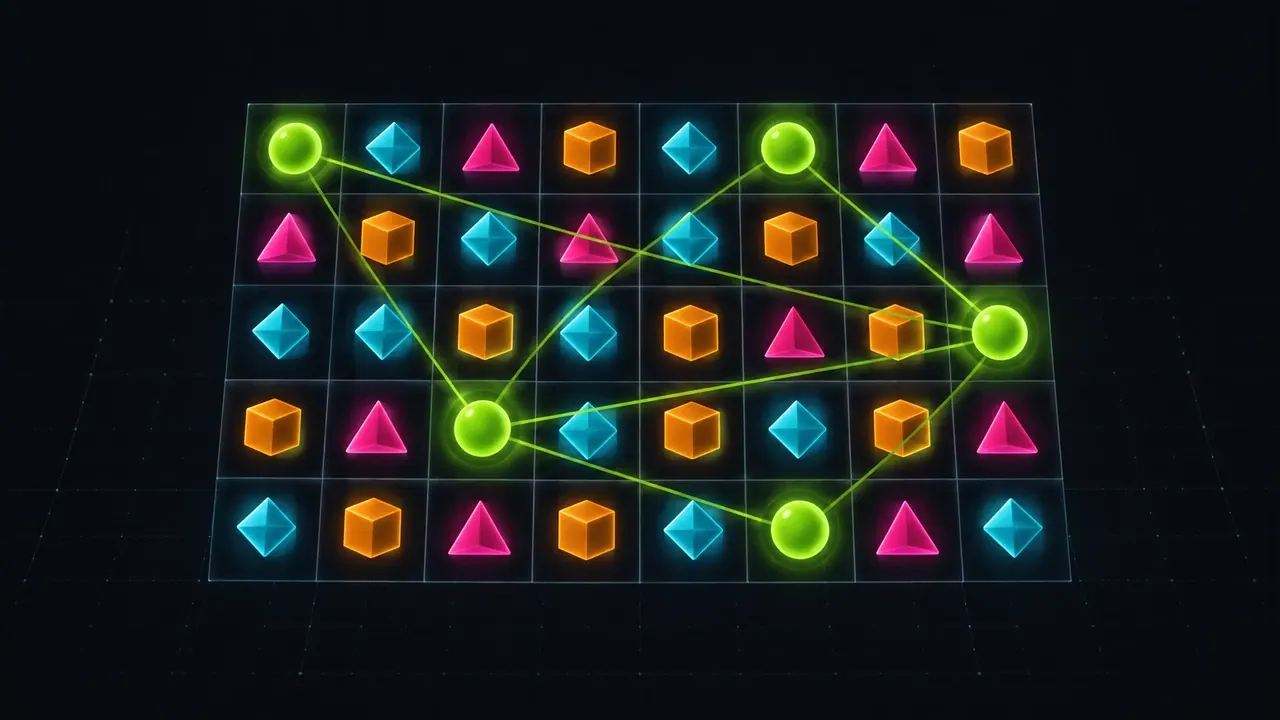
A lattice illustration shows how fast reach changes with the rule. Place one symbol at the centre: under edge-only adjacency the positions within one step number four, within two steps twelve, within three twenty-four. Counting diagonals, one step reaches eight, two reaches twenty-four, three reaches forty-eight — effectively the whole field. Those are lattice counts, not figures from any build.
Cascades: one paid spin, many evaluations of the same grid
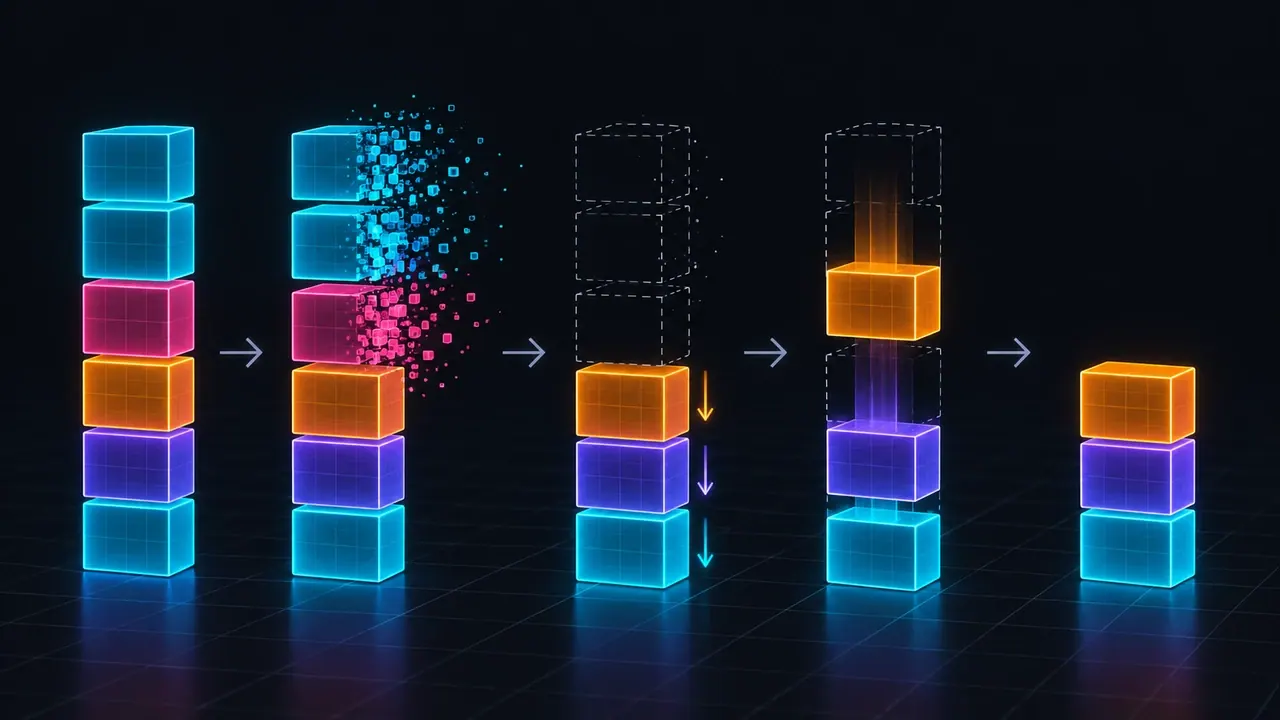
When a cluster pays, its symbols are removed. New symbols drop in to fill the gaps, the grid is evaluated again, and if the refilled grid holds a qualifying cluster the process repeats until an evaluation finds nothing. You paid once; the grid was read as many times as the chain lasted.
That decouples the stake from the number of wins, and it is the central structural fact about this family. On a payline pokie one stake buys one evaluation; here one stake buys a first evaluation plus however many the chain earns, each paid at the same stake.
Work the shape without inventing a probability. Suppose, purely illustratively, a refilled grid holds a qualifying cluster four times in ten. Reaching a second cascade is four in ten, a third sixteen in a hundred, a fourth sixty-four in a thousand, a fifth about twenty-six in ten thousand. Each extra link costs a factor, so the memorable results are rare by construction rather than by bad luck.
One refill detail changes the geometry rather than just the animation, and it is worth identifying early. Replacements can arrive column by column, with surviving symbols above a cleared group moving down into the gap, or they can appear in place wherever a hole opened while the rest of the board stays put. Under a column-wise refill the entire upper field is rearranged by one win, so the next qualifying group can form well away from where the first one sat. Under an in-place refill only the cleared positions change and every other adjacency on the board is preserved. Which behaviour a build uses becomes obvious over a few slow spins, and it decides whether a cascade is a local event or a partial redraw of the grid.
Turbo and quick-spin compress the animation until the grid resolves as one event, and the meter movement described next is invisible at that speed. Those settings live in the in-game menu, and turning them off is the only way the chain is legible at human speed.
// sponsored · Safe Casino · 18+
+500% + 120 free spins
Safe Casino welcome offer. Check the qualifying deposit and wagering conditions before you claim.
The charge meter: how cleared symbols turn into a feature
Alongside the grid sits a meter that fills as symbols are cleared. Every symbol removed by a paying cluster contributes, so a long cascade chain charges it far faster than a single small win. When it reaches a stated level it spends what it has accumulated on a feature.
This is where the devices stop being separate. The cluster rule decides what clears, the cascade decides how many clearances one stake produces, and the meter converts total clearance into feature frequency. The device producing the large base wins is therefore also the device producing the features, and both arrive on the same rare spins rather than being spread out.
Three questions decide how your build's meter behaves, all answered in its panel. How much charge one cleared symbol is worth. The level at which it fires. And what happens afterwards — whether it empties, retains a remainder, or steps down by the amount spent. A fourth clause is worth finding: whether its state survives into the next paid spin, because a meter that persists makes a spin partly dependent on its predecessors.
Work the relationship once with your own figures. Read the charge per cleared symbol as c and the firing threshold as t; the symbols that must clear to reach a feature from empty is t divided by c. Compare that against a typical paying cluster's size in your build and you have the number of wins, not spins, a feature costs. That quotient is the work required, not a forecast of when it will be done.
Figures differ between builds and lobbies. Read the live game's information panel before you rely on any of them.
Play here →The feature chain: what the meter buys, and the block symbols it places
When the meter fires, a feature is awarded. The panel lists which features exist, what each does to the grid, and whether they arrive in a fixed sequence or are selected at firing. Those names and that order are build facts, left out here because lists and wording have differed between releases.
What is structural is the categories a grid feature falls into. It can add substituting symbols. It can convert one symbol type into another, merging separate pockets into one group. It can destroy a set of positions, forcing a refill and therefore another evaluation. Or it can place a large symbol occupying several positions at once. Each acts on adjacency, the only thing the paytable reads.
Conversion produces the largest swings for geometric rather than generous reasons: it adds no symbols, it removes a boundary. Two pockets separated by a line of another symbol become one connected group, lifting a board from two sub-minimum pockets to a single banded cluster. Destruction reads as a loss but buys a refill and another evaluation at no extra stake.
Where a build places a block symbol spanning several positions, count its perimeter. One position on an edge-adjacency grid touches four others; a two-by-two block occupies four positions and touches eight; a three-by-three occupies nine and touches twelve. Contact grows as edge length while consumed area grows as its square, so a breakdown into smaller blocks raises total perimeter at roughly constant area.
Symbol families on the grid, and why the low payers do the work
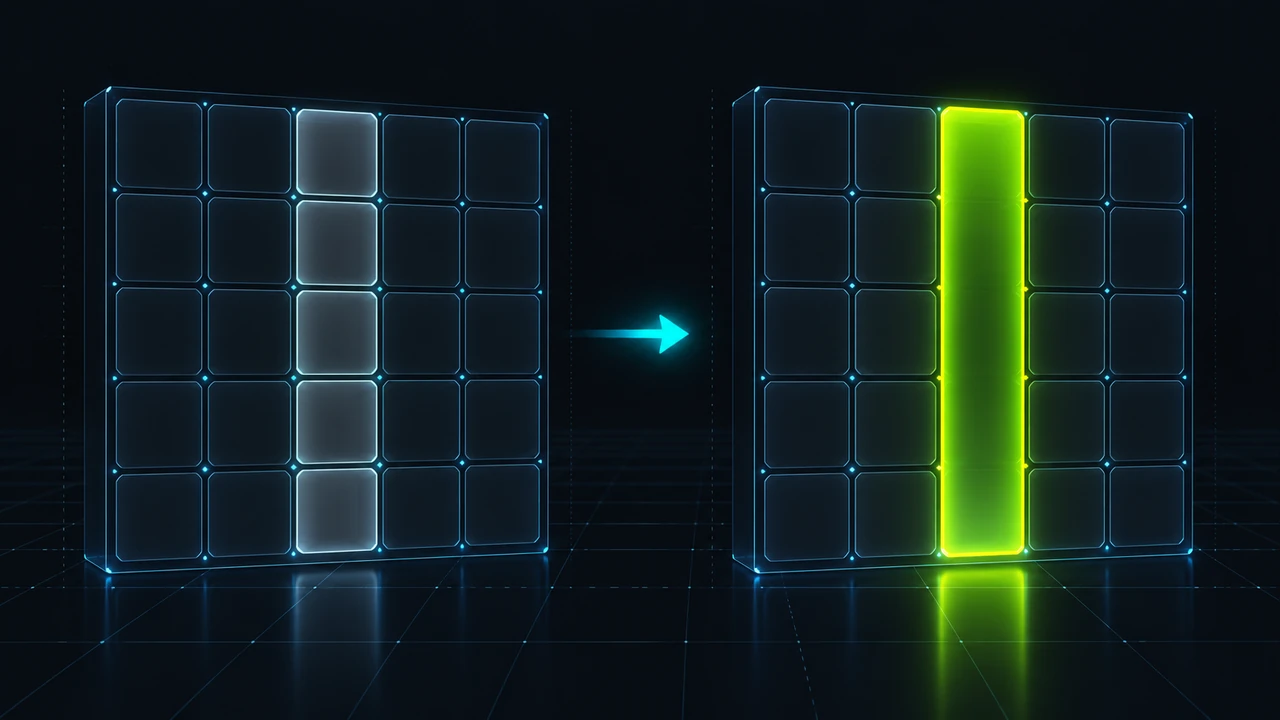
Cluster grids divide symbols into classes, functionally rather than cosmetically. A lower-paying class appears often and forms large groups routinely; a higher-paying class appears rarely and pays substantially at a smaller group size. The paytable bands each class differently, and the symbol distribution — which the game does not publish — is what makes them behave differently.
The consequence is counter-intuitive. Most of the designed return usually moves through the common, low-paying symbols rather than the premium ones, because those are the symbols capable of forming the large connected groups the upper bands reward.
Which symbols belong to which class, how many classes exist, and whether any symbol substitutes for others are read from the loaded paytable. So is whether a substituting symbol counts towards the cluster size the bands measure, or merely connects groups without being paid for itself. Those two treatments produce different totals on the same grid.
One habit worth forming before the first real-money spin: open the paytable and read the band rows for one common and one premium symbol side by side. The shape of those two rows tells you in seconds where the design expects its money to flow.
// sponsored · WinCrown · 18+
+500% + 120 free spins
WinCrown welcome offer. Read the current promotion terms, eligibility and withdrawal conditions.
Reading the volatility rating honestly, not as a payout forecast
Play'n GO prints a volatility indication in its panels, and the mechanics explain what a high one means here. The large outcomes need a long cascade chain; a long chain needs several consecutive refills each to hold a qualifying group, which compounds away geometrically. A design whose upside requires several things to coincide produces that upside rarely, by construction.
A rating describes the shape of the outcome distribution. It is not a score and not a statement of how much the game returns. Two titles can share a return and sit at opposite ends of a scale: one pays small amounts often, the other almost nothing for long stretches and then occasionally a great deal. Volatility is how the money is distributed through time; return is how much of it there is.
Ratings are also not comparable across studios. Each provider defines its own scale with its own thresholds, so a high rating from one studio and a high rating from another are two claims made by two parties using the same adjective.
A decision rule follows from the shape rather than the label. Where return concentrates into rare long chains, the typical session result sits further below the long-run average, because the average is held up by outcomes most sessions never contain. A rating never provides a schedule either: there is no point at which the game becomes due.
The return: why no percentage for this game is printed here
No return percentage for Reactoonz appears on this page, for a specific reason rather than a coy one. Studios distribute titles at more than one return configuration, the choice belongs to the operator, and nothing on the game's surface announces which is loaded. A figure accurate in one lobby can be wrong in the next.
Modes compound that. Where a build offers an alternative bet mode or a feature purchase, each carries its own separately stated figure in the same panel, frequently different from the base game's. A quoted number would have to match both the configuration the operator integrated and the mode you are about to use.
Reading it takes under a minute, and it is worth repeating in every new lobby rather than once overall. Load the game, open the information panel using the help control inside the game window rather than anything on the casino page around it, and read the return stated for the mode you intend to use. Where panel and page copy disagree, the panel describes the build you are playing.
Return and volatility answer different questions. A return percentage is calculated across an enormous number of rounds and describes a long run no individual player observes; it is not a schedule and does not apply to your session. The rating tells you how unevenly that fraction arrives. Both sit in the panel, usually a line or two apart.
The maximum win cap, and the chain that collides with it
Every build states a maximum payout as a multiple of stake, and on a cascading design that ceiling is not a distant curiosity. A long chain accumulates its total across many evaluations of one paid spin, so because the total builds step by step rather than arriving at once, when the limit is applied genuinely matters.
Read what the loaded rules say happens when it binds, because several definitions circulate and they are not interchangeable. Whether the chain terminates immediately or plays out. Whether the limit applies per evaluation, per paid spin, or across a feature sequence. And whether anything the meter was holding survives.
A worked check makes the headroom concrete without either figure having to be invented here. Take the cap m from the panel in multiples of stake, then note the running total t after each cascade in the same units. The chain reaches the ceiling when t is at least m, so m minus t is the headroom at any point in the sequence.
If you read one line before the first spin on a cascading design, make it the maximum-win definition rather than the return. What happens to money after a capped round is an account matter rather than a game one: withdrawal limits and verification are the operator's, and pokiescashout.com's subject.
A ten-line check inside the info panel, and watching a 7x7 grid on a phone
Ten lines, in this order, read once per lobby before the first real-money spin. One, the stated return for the specific mode you are about to play, rather than the base game by default. Two, the volatility indication as the studio states it. Three, the adjacency rule: edge-only, or edges and diagonals. Four, the minimum cluster size. Five, the band structure for one common and one premium symbol.
Six, the charge a single cleared symbol contributes. Seven, the level at which the meter fires and what happens to it afterwards. Eight, whether the meter persists between paid spins. Nine, the feature list and whether features are selected or sequenced. Ten, the maximum win as a multiple of stake together with the scope of that limit. If any of the ten comes back empty, the game is unread rather than fine.
Those answers do not travel between lobbies: each is a property of an integration rather than of a title, so the same game at a second operator can carry a different configuration. On a handset the design also loses something specific — forty-nine positions compressed into a portrait width make symbols small, and the meter is often a thin bar outside the grid. Landscape, where the build supports it, restores most of that.
If you go looking for the title in an offshore lobby such as Safe Casino or WinCrown, searching the exact game name tends to work better than browsing a provider category, since studio category pages are marketing assets rather than live indexes of what is currently integrated. Whether a given operator is worth an account, and what its offers are worth, is pokiesledger.com's subject; how money moves in and out is pokiescashout.com's. This site stops at the machine.
What this page deliberately did not assert
Taken as structural: that Reactoonz is a Play'n GO title; that it is played on a seven-by-seven grid of forty-nine positions with no paylines; that wins are clusters of touching matching symbols evaluated by size rather than position; that winners are removed and replaced, producing further evaluations of the same paid spin; and that a charge meter fed by cleared symbols funds a feature at a stated level.
Deliberately absent because it is build-specific: the return percentage for any mode, the adjacency rule, the minimum cluster size, every paytable band and prize, the symbol distribution, the charge per cleared symbol, the meter's threshold and reset behaviour, the names and order of the features, the maximum win multiple and the scope of that limit. Declining to print those is house style, not a gap in the research.
The arithmetic above is illustrative. The border and interior counts on a seven-by-seven lattice, the neighbourhood sizes under each adjacency rule, the block perimeters of eight and twelve, and the four-in-ten cascade example were chosen to make geometry and compounding legible rather than read from any build.
Nothing here is a strategy, and nothing described changes the designed return — no bet pattern, meter-watching habit or spin timing moves this design's outcome distribution. Online casino services cannot lawfully be provided to people in Australia, which is the ACMA's stated position, so any lobby reachable from here is offshore. Set a spending and time boundary before the game is open, because a design whose upside depends on a chain continuing is unusually good at producing the sense that the last spin came close. Some links on this site are commercial and can earn the publisher a commission.

Questions people actually ask
What is the RTP of Reactoonz?
There is no single figure to quote. Titles ship at more than one return configuration and the operator chooses which it integrates, so the number that applies to you is the one inside the information panel in the game frame, in your lobby, on the day. Where the build offers an alternative bet mode or a feature purchase, each carries its own separately stated figure in the same panel, and a figure copied from a review describes whatever build that reviewer loaded.
How volatile is Reactoonz?
The studio states a volatility indication in the panel, and the mechanics explain why a high one is unsurprising: the large results need a long cascade chain, and each extra link costs a factor, so long chains fall away geometrically. A high rating describes the shape of the distribution — return concentrated into rare, large results — and says nothing about how much the game returns. Ratings are also not comparable between studios, because each defines its own scale.
How do cluster pays work on a 7x7 grid?
Position is irrelevant and paylines do not exist. A win is a group of identical symbols that touch one another, and the paytable pays by how many are connected in a single group, usually in bands rather than one count at a time. Two rules decide everything: whether symbols count as touching edge-to-edge only or also corner-to-corner, and the minimum group size the paytable recognises. Both are stated in the loaded build's paytable.
Why did six matching symbols on screen pay nothing?
Because separation matters and raw count does not. Six symbols of one type forming two separate groups of three are two sub-minimum groups, not one group of six, so if the stated minimum is above three the grid pays nothing however crowded it looks. The adjacency rule also decides this: two pockets touching only at a corner are one group under a diagonal rule and two under an edge-only rule.
What charges the meter, and when does it fire?
Symbols cleared by paying clusters feed it, so a long cascade chain charges it far faster than a single small win does. The charge per cleared symbol, the level at which it fires, and whether it empties, retains a remainder or steps down are build facts in the panel. Dividing the firing threshold by the charge per symbol gives the number of symbols that must clear to reach a feature from empty — which measures the work required, not when it will be done.
Does the charge meter carry over between spins?
Read the panel, because builds differ and the answer matters. A meter retaining its state between paid spins makes a spin partly dependent on its predecessors, which is an unusual property worth knowing before staking. A meter that resets at the end of each spin is simply a long-chain bonus. The clause is usually one line in the feature description and it is easy to skim past.
What happens if a cascade chain reaches the maximum win?
That depends on the rule stated in the loaded panel, which is why it is worth reading before the first spin on a cascading design. Check whether the chain terminates immediately or plays out, whether the limit applies per evaluation, per paid spin or across a whole feature sequence, and whether anything the meter was holding survives. The same grid totals differently under each definition.
Is Reactoonz licensed for play in Australia?
No operator offering it is. The ACMA's position is that online casino services cannot lawfully be provided to people in Australia, so any lobby you reach carrying this title is offshore and may provide no Australian consumer protection. The game itself is a studio product; the licence question belongs to whichever operator has integrated it, and that is pokiesledger.com's subject rather than this site's.
// next step
A paytable makes more sense with the game open in front of you.
View current offer