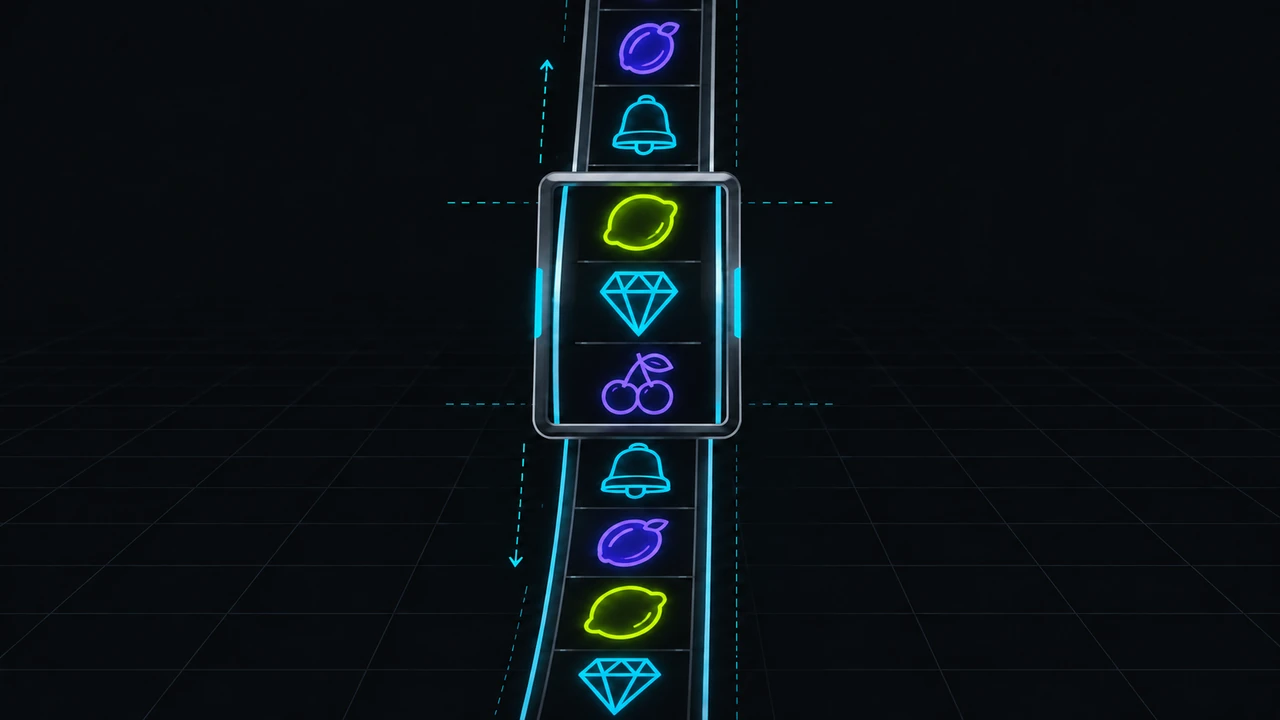
- Studio
- Big Time Gaming
- Engine
- Megaways, heights redrawn per spin
- Reel device
- Extender symbol raises reel height
- Feature entry
- Trigger or Feature Drop, per build
Which White Rabbit is loaded in the game frame
A lobby tile is the worst available place to identify a Big Time Gaming release. The Megaways suffix gets added in one catalogue and dropped in the next, tile labels truncate long names from the right, and a studio that reworks its own titles ships artwork that barely changes. Two entries can look identical at thumbnail size and run different maths.
Confirm the title from inside the frame, not from the page around it. The game's header carries the full name, and the panel's first screen normally repeats it beside a build string. Read both before any figure, because every number here is attached to one release and one integration, neither visible from the lobby.
The failure sequence is predictable. Someone searches the return percentage, lands on an aggregator quoting one confident figure, opens a tile showing a waistcoated rabbit, and assumes it applies. It may describe the studio's flagship configuration, or a neighbouring release, and the tile cannot tell you which.
Nothing of substance carries between releases on this engine. Return configurations are set per release, extension rules get rewritten, and whether a purchase route exists is decided per build and per operator. A help panel or feature clip for one title establishes nothing about another, however similar the artwork.


18+ · Bonus conditions
Offer information supplied: 2026-10-05.


18+ · Bonus conditions
Offer information supplied: 2026-10-05.
The extending reel device: a symbol that changes the grid, not the paytable
Separate the two jobs a symbol can hold. A pay symbol contributes to a winning combination and appears inside it. An extender does neither: it lands, adds a position to the reel it occupies, and the board resolves on a taller grid than the one it landed on. It changes what the reels can produce without appearing in the result.
The studio presents the device here as an extender raising a reel's height inside a round, the new height holding under conditions the rules spell out. That outline is as far as any off-game source should be trusted. Three lines decide what reaches your balance: the per-reel ceiling, the persistence rule, and whatever resets it.
Height is not decoration on a ways engine, which is why this device rather than the artwork is the game. The combinations available on a spin are the product of the active positions across the reels, so adding one position to one reel rescales every count that follows. Resting grid to extended grid is a multiplicative gap, not an additive one.
The device also causes the reconciliation problem readers write in about. When a modifier changes the grid before settlement, the symbols on screen are not the symbols the win was computed from, so a final frame often cannot be made to agree with the amount credited. The round history entry records what was paid; the last frame does not.
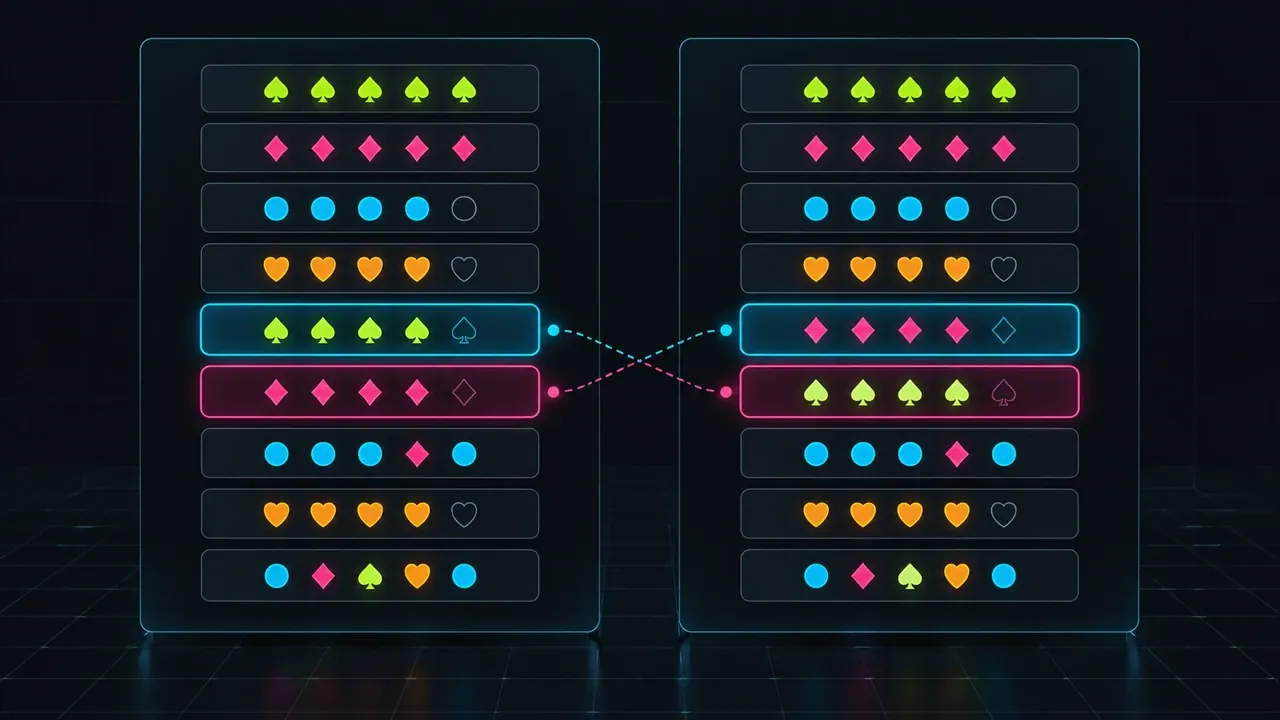
Whether an extension survives the next spin, and why that decides the round
A height gained is either kept or lost, and the three designs are three different machines. One resets every reel to its drawn height each spin. One holds an extension across the cascades inside a spin, then clears it. One holds it for the rest of a feature round. Only the third makes an early extension worth more than a late one.
Put numbers on that, because the effect is larger than it sounds. In a fifteen-spin round, an extension on spin two applies to thirteen further spins; the identical event on spin fourteen applies to one. In a persistent design the same symbol carries thirteen times the exposure, and nothing about how you play decides which you get.
Three further questions belong to the rules rather than to intuition. Whether an extension earned in the base game carries into the feature round or is discarded at the door. Whether a reel at its stated ceiling does anything else on a further extender. And whether a retrigger restarts the heights or inherits them.
One thing the device is not: a lever. Extenders land under the conditions the configuration specifies and no others. Stake size, spin timing, the length of a losing run and autoplay against manual spins change none of it, and a game's designed return is fixed by its configuration rather than by how it is played.
// sponsored · Safe Casino · 18+
+500% + 120 free spins
Safe Casino welcome offer. Check the qualifying deposit and wagering conditions before you claim.
Counting ways when the reel heights move inside one round
Find the panel line saying how wins form: fixed paylines, ways across adjacent reels, or clusters. A payline game pays printed paths. A ways game pays any combination of matching symbols on consecutive reels from the leftmost, and the number of combinations is the product of the active positions per reel. That product is why height matters.
The arithmetic is worth doing in your head, because it drives every enormous figure in marketing material. Six reels at two positions each is two to the sixth, 64. Lift two of them to three and it becomes 2×2×2×2×3×3, or 144. Six reels at seven is 117,649. Those are properties of multiplication, not claims about your build.
Where extenders land matters more than how many, and the same arithmetic shows why. From six reels of two, taking one reel to three gives 96, a second gives 144, a third gives 216. Each extension multiplies by the ratio of new height to old, so two-to-three multiplies by one and a half while six-to-seven multiplies by about one and a sixth.
The consequence for any headline figure is direct. A maximum ways number is the deepest rung the grid reaches with every reel extended at once: a ceiling, not a resting state. The on-screen counter reports this spin's product and nothing else. Count the rows in front of you for the current figure; take the ceiling from the panel.
Figures differ between builds and lobbies. Read the live game's information panel before you rely on any of them.
Play here →Reaching the free-spins round without pressing the button
Ordinary entry is by bonus or scatter symbols, so read the required count and whether exceeding the minimum changes anything. In several of this studio's titles the trigger count sets the round's starting state rather than merely opening the door — more spins, taller starting reels, a device already in play. A minimum and a generous trigger are then not the same round.
Second, the spin awards. The number granted on entry and the number added by each symbol beyond the minimum are two separate paytable figures, routinely not the same. Treating them as interchangeable produces a wrong idea of how long a round runs, and so of how tall the grid can get.
Third, retriggers. Find out whether further bonus symbols add spins, raise a height, or do nothing, and whether heights already earned survive. Both designs exist in this studio's catalogue, and the difference is between a round that compounds and one that restarts.
Keep the game's feature round separate from a casino's promotional bonus; they share a word and nothing else. The feature round sits inside the designed return the panel states. A promotion is an account condition outside the game, with its own eligible-title list, stake cap while wagering and withdrawal cap — pokiesledger.com's subject, operator shortlists and bonus offers, rather than this site's.

The Feature Drop button and what its printed price means
A Feature Drop is a purchase route: a button offering immediate entry to the free-spins round for a stated multiple of the base stake. Whether it exists is decided by the build and the operator's integration, and some markets and operators disable it. Its absence from one lobby is not evidence it exists nowhere; a screenshot is not evidence it will be in yours.
When the button is present, the price printed on it is the only authority on the price. Do not carry a number across from a video, a review or another lobby. Change your stake and watch the figure move with it, because the price is a multiple rather than a cash amount, and the number you glanced at belonged to another stake.
Some releases in this studio's catalogue price a purchase route dynamically rather than at a flat multiple, the figure falling as qualifying progress accumulates on screen. Whether this build does that is answered by watching the button across a few paid spins. A static price and a falling price produce different decisions.
The line that answers the pricing question sits elsewhere in the panel: many builds state a separate return percentage for the purchase route beside the base-game figure. The two can differ in either direction. A route stated below the base game charges a premium for immediate entry; one above it is funded by a much narrower distribution.
Read the purchase terms as well as its price. Settle whether a Drop enters the same round an ordinary trigger does; whether the trigger-count effects above apply to it; whether the maximum-win rule is expressed against the base stake or the purchase amount, because those are very different ceilings; and whether a bought round can retrigger. One caution reaches past the game: whether an account promotion permits a purchase at all, and how the purchase amount is treated against any stake-while-wagering condition, are operator terms rather than game rules, so the panel will not answer them — those belong to pokiesledger.com, not to this page. Settle them at their source before pressing a priced button while a bonus balance is live.
// sponsored · WinCrown · 18+
+500% + 120 free spins
WinCrown welcome offer. Read the current promotion terms, eligibility and withdrawal conditions.
Converting a Drop price into paid spins
A purchase price becomes comparable with ordinary play the moment you express it in spins. Entry priced at fifty times stake costs exactly the turnover of fifty paid spins at that stake. Read your build's own multiple off the button; the figures below are arithmetic rather than quotations, and the method is what transfers.
Work a budget through it. Fifteen hundred times stake buys fifteen hundred paid spins, thirty Drops at fifty times, or any mixture. If the ordinary trigger frequency is such that the feature arrives rarely, thirty Drops may deliver more feature rounds than fifteen hundred base spins would. What that does not change is the designed return of either route.
The variance consequence is the part worth sitting with. Fifteen hundred spins is fifteen hundred samples of a distribution containing many small outcomes. Thirty Drops is thirty samples of a distribution with almost no small outcomes, because you paid to skip the cheap part. The same money resolves in a fiftieth of the events.
A falling price changes the decision rule, and the break-even is arithmetic you can do at the time. Say the button reads fifty times stake now and would read forty after ten more paid spins. Waiting spends ten units of turnover to save ten: break-even before anything those spins pay. The only question is whether the price falls faster than the spins cost.
Two interactions sharpen the comparison. A maximum-win rule expressed against the base stake rather than the purchase amount gives a bought round a proportionally lower ceiling relative to its cost. And splitting a budget into fewer, larger events reduces the number of attempts rather than improving any of them. Payments, withdrawals and KYC are pokiescashout.com's subject, not this page's.
Why one RTP figure is the wrong answer for this title
Search this game's return percentage and you are handed one confident number, repeated across dozens of pages and often carried to a decimal place. It comes from launch material and describes the studio's flagship configuration. It is not automatically the configuration in the lobby you opened, and the pages quoting it cannot know which you have.
Studios of this size routinely license one title at more than one return setting and let the operator choose. Every page quoting the launch figure is then right about the default and wrong about some reader's build, with nothing on the page separating the cases. This site publishes no per-title percentages for that reason.
What to read instead. In the panel inside the game frame, find five things: the base-game return for this build; the separately stated return for the purchase route, where one exists; the maximum win and the stake basis it is expressed against; the volatility rating; and the per-reel height range the extending device operates inside.
Two traps are specific to this engine. The Megaways licence covers reel behaviour, not the paytable, trigger, modifiers or cap, so results mix figures from games sharing nothing but reel geometry — matching on the word is not matching on the game. And a release with a progressive layer holds part of its return in a pool funded from qualifying stakes, so its percentage is not comparable with a non-jackpot figure.
One reading habit matters more here than on most titles: check whether the stated percentage covers the base game alone or includes the feature round. On a game whose return concentrates in a round where heights compound, those are materially different claims, carried by the panel's wording rather than by the number.
High volatility against a stated ceiling
Launch material for this engine pairs a high position on the studio's volatility scale with a headline maximum win as a multiple of stake. Those are not two selling points but one fact stated twice. A high ceiling is funded out of the same designed return as every small win, which pushes the distribution towards long stretches returning nothing.
The maximum win is a termination rule rather than a prize. Read what happens when a round reaches it: whether the round pays and closes immediately, whether remaining spins are forfeited, whether anything still accumulating is settled. On a round whose grid compounds, a cap can bite part-way through, and the rules decide what is credited.
Confirm the cap's stake basis as well as its size. A cap expressed against the base stake behaves one way in ordinary play and quite another in a round bought for a large multiple of that stake. The relationship between what entry cost and what the round can return at most is the most useful figure a purchaser can take from the panel.
The quantity you genuinely control is how many events your budget buys. Decide the budget before the game is open, divide it by the stake — or by the Drop price if you intend to buy — and that count is the shape of the session. The headline multiple is not a target: nothing in the rules makes it likelier after a losing run.
An eight-line panel check before the first paid spin
Eight lines, in order. One, the full title and build string in the header and the panel's first screen. Two, how wins form and how many active positions the resting grid shows. Three, the per-reel height ceiling. Four, the persistence rule for an extension and what resets it. Five, the trigger count and both spin awards. Six, the base-game return. Seven, the purchase-route return and the printed Drop price, where both exist. Eight, the maximum win and its stake basis.
If any of those eight comes back empty, the game is unread rather than fine. All eight are set per release and per integration, which is why the answers do not travel: the same title in a second lobby can carry a different return configuration, a Drop at a different price, a Drop priced on a different rule, or no Drop button at all.
On a handset the panel sits behind a menu inside the game frame rather than on the casino page around it, worth locating once per operator instead of mid-session. The Drop button also sits close to the spin control on small layouts while priced at a large multiple of that stake, so check whether the build offers a confirmation step and leave it on.
On availability, a Big Time Gaming release of this vintage is the kind of title that turns up under a provider filter in the studio's section of large offshore lobbies, and both Safe Casino and WinCrown expose such a filter — a navigational note on where to look rather than a recommendation or a claim about either catalogue today.
What this page does not assert: the release date, grid dimensions, per-reel height range, maximum ways figure, return percentage, maximum-win multiple, volatility rating, trigger counts, spin awards or Drop price for this title, in your build or any other. The mechanical vocabulary above follows the studio's general design language, and every figure attached to it is read from the loaded game's panel. Nothing here is Australian: the ACMA's position is that online casino services cannot lawfully be provided to people in Australia, so any lobby offering this title is offshore and holds no Australian authorisation. This page describes a machine to make its own panel readable, not a recommendation to play it, and no ordering of spins, stakes or purchases produces an edge. If the reason for the next spin has become the last one, read the support guide instead.
Questions people actually ask
What is the RTP of White Rabbit Megaways?
Read it in the information panel inside the game frame, in the lobby you are actually playing in. Aggregator pages quote the studio's launch figure, which describes a flagship configuration; where a title is licensed at more than one return setting the operator chooses which to integrate, so a quoted number can be right about the default and wrong about your build. Check whether the figure covers the base game alone or includes the feature round, and whether a separate percentage is stated for the purchase route.
How does the extending reel device work?
In outline, a designated extender symbol lands and adds a position to the reel it occupies, and the board then resolves on the taller grid. It is not a pay symbol and does not appear in the win it enables. The lines that decide what you are paid are the per-reel height ceiling, whether the new height persists beyond the current spin, and what resets it — all three stated in the loaded build rather than portable from another lobby.
Why does an extension early in a round matter more than a late one?
Only in a design where the height persists for the remainder of the round, and then the reason is exposure. In a fifteen-spin round an extension on spin two applies to thirteen further spins while the identical event on spin fourteen applies to one. Nothing about how you play decides which you get; the point of knowing it is reading your own round correctly, not influencing it.
How many ways does the grid produce?
The count for any spin is the product of the active positions across the reels, and the on-screen counter reports that product. Six reels at two positions each is 64; lifting two of them to three positions gives 144; six reels at seven gives 117,649. Those are arithmetic illustrations rather than figures for your build — take the resting grid from the screen and the ceiling from the panel.
Is the Feature Drop worth the price?
Two lines in the panel answer that rather than an opinion: the price printed on the button as a multiple of your current stake, and the separately stated return for the purchase route where a build provides one. A purchase return stated below the base-game figure is charging a premium for immediate entry. Whichever way it goes, buying changes how a budget is spent and how widely a session can land, not the designed return of the round.
Does the Feature Drop price change during a session?
On some releases in this studio's catalogue a purchase route is priced dynamically against qualifying progress on screen rather than at a flat multiple, so the figure on the button falls as that progress accumulates. Whether this build does that is answered by watching the button across a few paid spins. If it does fall, waiting costs turnover: ten paid spins spent to see the price drop by ten times stake is break-even before anything those spins pay.
How many spins does a Drop cost in turnover terms?
Exactly its multiple. A Drop priced at fifty times stake costs the same turnover as fifty paid spins at that stake, so a budget of fifteen hundred times stake buys either fifteen hundred spins or thirty Drops. Read your build's own multiple off the button. The trade is fewer, larger events from the same money, which widens the spread of plausible outcomes in both directions rather than improving the odds of any single round.
Can I play White Rabbit Megaways at an Australian casino?
No. The ACMA's position is that online casino services cannot lawfully be provided to people in Australia, so any lobby offering this title is offshore and holds no Australian authorisation. Whether a particular offshore lobby carries the release, and whether its build includes a Feature Drop button, are catalogue and integration decisions that change without notice — use the lobby's provider filter and confirm the title from the game header before staking.
// next step
A paytable makes more sense with the game open in front of you.
View current offer