
- Studio
- Pragmatic Play
- Round
- Collect-and-upgrade free spins
- Volatility
- High by construction
- Return
- Multiple settings; read the panel
Five reels, fixed lines and a deliberately plain base game
The base game is ordinary on purpose, and recognising that is the first step to reading the title correctly. Five reels, a fixed set of paylines evaluated from the leftmost reel rightwards, and wins paid when enough matching symbols sit on consecutive reels along a line. The line count is in the game's information panel, not on the lobby tile, and it is the first figure to read: your stake per spin is the per-line amount multiplied by it.
Operators often display only the total stake, which hides that multiplication and makes two differently priced builds look identical. The base game's job is to sell the free-spins round, and the studio has not disguised it: line wins are modest against the stake, the symbol set is shallow, and the design effort sits on the scatter and on what the scatter opens.
A game that puts its return into a progressive bonus has to take it out of the paid spins, because both halves are drawn from one configured percentage. There is no arrangement under which a generous round and a generous base game coexist at the same setting, so long runs of base spins returning a fraction of their cost are the design working as calibrated, not the game going cold.
Four base-game details differ between builds and between the two releases sharing this name, and each is worth confirming before the first spin. Whether paylines are permanently active or selectable. Whether a wild exists in the base game and whether it substitutes for the scatter. Whether lines are evaluated from the left only or both ways. And which symbol is the scatter, easily confused with a high-paying picture symbol on a sea-themed reel set.


18+ · Bonus conditions
Offer information supplied: 2026-10-05.


18+ · Bonus conditions
Offer information supplied: 2026-10-05.
Buying the round: scatters, and what an extra one is worth
Free spins are opened by scatters, which pay from anywhere on the reels rather than along a line and therefore ignore the payline count entirely. The minimum number needed to trigger is stated in the panel. So is the award: how many spins the minimum grants, and whether landing more than the minimum grants extra spins, a better starting position on the ladder, or both.
That second question separates this title from an ordinary free-spins pokie. On a flat design, extra scatters buy extra spins — a linear bonus, easy to price. On a design that starts you somewhere on a ladder, extra scatters can skip you up it, which is worth considerably more than the same value in spins, because every later spin of the round is then taken under better rules.
Retriggering is a third question again. Some builds let scatters inside the round add spins, some let them only advance the level, some do both and some do neither. Those four possibilities are four genuinely different games, and nothing outside the panel distinguishes them, so a review written against one of them is wrong about the other three.
One decision rule follows, the only one here that touches money. If the panel states the round can be bought directly, the purchased round carries its own return figure, printed separately in the same panel, and that figure replaces the base game's for anyone using it. Buying the round is a different bet at a different price with a different percentage, not a shortcut to the same arithmetic.
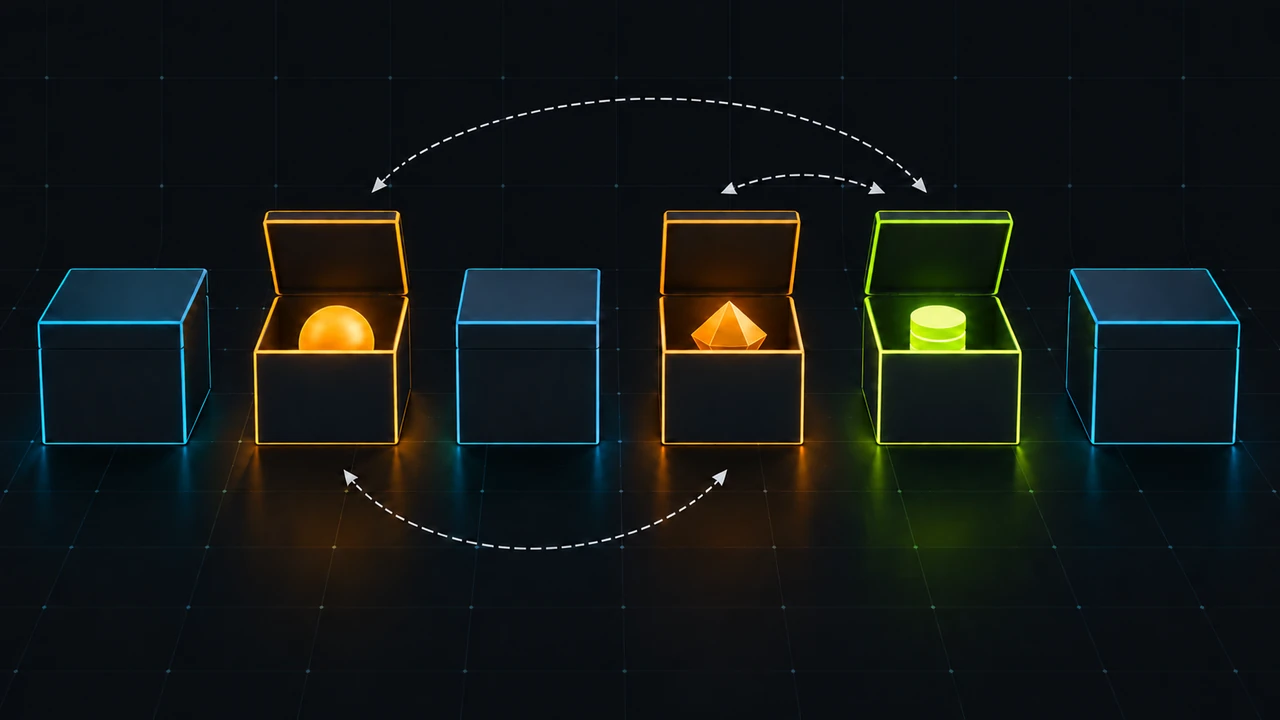
Collect-and-upgrade: the ladder inside the free spins
The round is not a fixed quantity of spins under a fixed set of rules. It is a sequence of spins during which the rules improve as you collect. The provider describes it as progressing through levels: a counter advances when the collecting symbol lands, and when the counter reaches a threshold the round moves up a level and stays there. Collection is cumulative inside the round and resets when it ends.
Three parameters define the ladder completely, and all three live in the panel: how many levels there are, how many collected symbols each step requires, and what each level changes. Alter one and the round becomes a different bet. A ladder with four cheap steps behaves nothing like one with two expensive steps even when the top rung is identical, because the first is usually climbed partway and the second usually not at all.
Progress is one-directional and sticky: you do not drop a level after a poor spin, and a level is not spent when it pays. Every spin taken after an upgrade is taken under the improved rules, so an upgrade's value is its effect multiplied by the spins still remaining when it arrived. That is the whole of the structure, and it produces the game's central asymmetry.
An upgrade earned on the second spin applies to every spin after it; the identical upgrade on the final spin applies to nothing. Same symbol, same counter, same level reached, and a difference amounting to most of the round. It is also the answer to the complaint this family of games attracts — reaching the top level and winning almost nothing. A level is not a prize; it is a set of rules that needs spins to express itself.
// sponsored · Safe Casino · 18+
+500% + 120 free spins
Safe Casino welcome offer. Check the qualifying deposit and wagering conditions before you claim.
What an upgrade actually changes on the reels
What a level does varies by build, and it falls into a small number of recognisable categories. A global multiplier applied to wins. Additional wilds, or wilds covering more positions. Removal of low-paying symbols from the reel strips. Extra rows or extra active ways. Or a combination, with different levels contributing different kinds of improvement at different steps.
The distinction matters more than it sounds. A multiplier upgrade scales whatever the reels produce and leaves win frequency untouched, widening the spread of outcomes without changing how often anything happens. A strip-cleaning upgrade does the reverse: taking low symbols out raises the chance that any given spin lands something worth having, because dead symbols no longer compete for positions.
An added-wild upgrade sits between the two, lifting frequency and size together, which is why it tends to be the step placed furthest up a ladder. So the phrase level four describes different machines in different builds, and knowing which category yours uses tells you what to expect from the spins you have left.
If the top level is a multiplier, the round has become a wide-variance lottery on the remaining spins; if it is symbol removal, a steadier and denser game. Neither is better, and neither changes the configured return — the ladder's contribution is already inside the figure the panel states. A round reaching the top is the rare branch the base spins funded, priced in before you arrived.
Figures differ between builds and lobbies. Read the live game's information panel before you rely on any of them.
Play here →What a ladder does to the shape of your results
Volatility is the dispersion of results around a configured return, and this round raises it through three compounding routes rather than one. The trigger is rare, so the return is already concentrated into a small proportion of spins. The outcome then depends on how far up the ladder a round gets, which is a walk most rounds do not complete. And it depends on when the round climbed.
Multiply three sources of dispersion and you get a long thin tail over a heavy mass close to zero. In practical terms the modal free-spins round on a design like this is disappointing. Not unlucky: modal. The round that gets shared — early upgrades, full ladder, spins left to use them — is a compound of several favourable draws.
The arithmetic of compounding rare things is that the compound is far rarer than any of its parts: if three loosely independent conditions each have to go your way and none is close to certain, the joint event is remote even when no individual condition is. Any volatility label the studio prints will sit at the high end, and it is a label rather than a measurement — there is no standardised scale, and two studios' high are not comparable.
The decision rule is the dull one. Because the return is concentrated into rare rounds, the realistic outcome of a short session is the base game's contribution alone, well below the game's configured figure. Set the stake and the stopping point from what you can afford to lose rather than from what the round might pay, and treat session length as a budget rather than as a wait.

A worked sequence: why timing beats the level reached
Arithmetic makes the timing point concrete. Take a ten-spin round on a ladder whose levels apply a win multiplier, and suppose for the exercise that an average spin at level one returns one unit and each level doubles. Your build's levels, thresholds and multipliers are in the panel; what transfers from this is the shape of the result, not the figures.
Round A climbs early. It reaches level two after spin two and level three after spin four. Spins one and two pay one unit each, spins three and four pay two each, spins five to ten pay four each. Total: 2 + 4 + 24 = 30 units.
Round B climbs late. It reaches level two after spin seven and level three after spin nine. Spins one to seven pay one unit each, spins eight and nine pay two each, spin ten pays four. Total: 7 + 4 + 4 = 15 units.
Both rounds collected the same symbols, both reached level three, both lasted ten spins, and one paid double the other. Neither player did anything differently, because there is nothing to do. Extend it: Round C never passes level one and pays ten units, which is the most common outcome, while Round D reaches level three on spin one and pays roughly forty — the outcome in the clip somebody showed you.
A spread of ten to forty units from identical inputs is this structure's volatility expressed as arithmetic rather than as an adjective. It also shows why how many spins the round awards is a sharper question than it looks: the spin count is the lever that converts an upgrade into money, and a short round makes its own ladder close to worthless above the first step.
// sponsored · WinCrown · 18+
+500% + 120 free spins
WinCrown welcome offer. Read the current promotion terms, eligibility and withdrawal conditions.
Why nobody can quote you an RTP for this title
No return percentage for this game appears on this page, and the reason is structural rather than cautious. Pragmatic Play distributes a number of its titles at more than one configured return, the choice belongs to whoever integrated the game, and nothing on the reels announces which setting you have. A figure correct in one lobby can be wrong in the next lobby showing the identical tile.
One place states the figure for your session: the information panel inside the loaded game, reached through the control in the game window. It is written by the studio and describes the build the operator integrated. The casino's own game description, category page and blog are separate documents by a separate party, and where they disagree, the studio's panel governs.
Read that panel in a fixed order and it answers everything this page leaves open. The configured return, plus the separate figure for any mode you intend to use. The line count and per-line stake. The scatter minimum and what extra scatters buy. The ladder's levels, thresholds and effects. The spin count and whether it retriggers. The maximum win and the rule for reaching it.
Second-hand figures fail in a specific way: a number in a review, a stream overlay or a forum post was read in some lobby at some time, usually unrecorded, so it describes a build without telling you whether it describes yours. Which operator runs which configuration is outside this site's subject — operator shortlists and bonus offers are covered at pokiesledger.com.
The cap, and why a ladder meets it abruptly
Every modern pokie has a maximum win expressed as a multiple of stake, and on a ladder design that cap matters more than on a flat one. Two things need reading: the multiple itself, and the rule for what happens when a round reaches it. Both sit in the same panel, and neither is quoted here, because both move between builds.
A flat game approaches its cap gradually, through an accumulation visible while it happens. A ladder game does not. A round sitting at the top level, with its multiplier applied to a win that would have been large anyway, can cross from an ordinary total into the cap in a single spin. The cap is not a distant ceiling here; it is a live boundary on the exact branch that makes the title worth playing.
The rule attached to it is where money is lost. If a round that hits the cap ends immediately, any spins still owed are forfeited, and a cap reached on spin three of a ten-spin round truncates the round the design was built around. If instead the round continues with wins no longer accruing, the remaining spins return nothing. Both rules exist, and the panel states which one your build uses.
Either way the effect is compression at the top of the distribution: outcomes above the cap are all paid as the cap, so the tail the ladder can produce is cut off at a point fixed in advance. That is a term of the game rather than a complaint about it, and one worth reading before a session rather than discovering during one.
Two releases share this name and they are not the same game
More than one release carries this title, and they are separate games rather than versions of one game. A sequel shares the theme, much of the artwork and most of the lobby-tile vocabulary, and differs in precisely the parts this page is about: the ladder's shape, the trigger table, the cap, and the set of configured returns it ships at. A review of one establishes nothing about the other.
The identification procedure is short and worth doing at every new operator. Load the game. Read the full title where the game itself states it — its own header, or the first screen of its help panel. Not the lobby tile, often truncated to fit; not the browser tab; not the breadcrumb on the casino's page, all written by the operator. Then read the help panel belonging to that exact title.
Shared artwork creates a second trap with nothing to do with the machine. Where an operator restricts which titles count towards a promotional balance, the restriction is a list of exact names, and a list naming one release does not include the other. Two tiles that look alike can sit on opposite sides of an eligibility list, and the help panel will never say so, because eligibility is an account term rather than a rule of the reels.
On availability this page asserts nothing: a Pragmatic title of this vintage is the sort of catalogue entry worth searching for by name in a lobby such as Safe Casino or WinCrown, though whether this exact release is live there, and at which configuration, is a question only that lobby's own game search can answer on the day.
What this page could not verify
What is described here and what is not is worth stating plainly. Described: the structure of a collect-and-upgrade round, the categories of improvement an upgrade can deliver, the arithmetic by which timing dominates a round's value, and the three compounding sources of dispersion. Not asserted: the configured return, the payline count, the scatter minimum, the number of levels, the collection thresholds, the spins awarded, the maximum-win multiple, the price of any purchase, and whether any operator runs the game at all.
Those omissions are house style rather than gaps. Each is a per-build reading, and a figure printed here would describe one lobby on one day. Round history, where a build offers it, is in the same in-game menu as the panel and is the only way to reconstruct which level a round was at when a spin paid. Deposits, withdrawal timing and verification are a separate subject, handled at pokiescashout.com.
The regulatory position belongs in the same list, because it bears on every figure above. Supplying online casino services to people in Australia is prohibited under Australian law, and the ACMA is the body to consult for the current position. Any operator named anywhere on this site sits offshore, which can mean no Australian consumer protection applies to a dispute at all. A studio logo on the reels, pricing shown in Australian dollars and a badge issued by some other jurisdiction are presentation, and none of the three alters that.
Nothing on this page is a method, and no reading order, stake size or stopping rule changes a game's designed return. Set a spending and time boundary before opening the game, never use money needed for essentials, and stop if the point of a session has become recovering a loss. Some links on this site are commercial and can earn this publisher a commission.

Questions people actually ask
What is the RTP of Release the Kraken?
There is no single figure to give. Pragmatic Play ships a number of its titles at more than one configured return and the operator chooses which setting it integrates, so the only percentage that applies to you is the one printed in the game's information panel in the lobby you are playing in, read on the day. Where the build offers a feature purchase or an increased-stake mode, that mode is priced as a distinct bet and the panel prints a distinct percentage beside it, which is the one that applies while you use it.
How do the free spins build up?
The round progresses through levels. A counter advances when the collecting symbol lands, and when it reaches a threshold the round moves up a level and stays there for the rest of the round. How many levels exist, how many collected symbols each step needs and what each level changes are all stated in the loaded game's panel, and they differ between builds and between the two releases sharing this name.
Is Release the Kraken high volatility?
By construction, yes. The return is concentrated into a rare trigger, then into how far the round climbs, then into when it climbed — three compounding sources of dispersion rather than one. Whatever label the studio prints, a design needing a rare trigger plus a successful climb plus spins left to use it produces a long thin tail over a heavy mass near zero.
I reached the top level and still won almost nothing. Why?
Because a level is a set of rules, not a prize. Its value is whatever it produces across the spins remaining after you earned it, so a round that spends most of its spins climbing has nothing left to climb with. The same level reached on spin two and on spin ten are worth wildly different amounts, and nothing in the interface lets you influence which happens.
Are extra scatters at the trigger worth more spins or a higher level?
That depends on the build, and it is one of the more important things to read. On some designs extra scatters buy additional spins; on others they skip you up the ladder, which is worth more because every later spin is then taken under better rules. Some do both. The trigger table in the game's panel is the only place this is settled.
What happens if a round hits the maximum win?
Either the round ends immediately and any spins still owed are forfeited, or it continues with no further wins accruing. Both rules exist in the market and the panel states which one your build uses. It matters more here than on a flat game, because a top-level multiplier can cross into the cap in one spin rather than approaching it gradually.
Is Release the Kraken 2 the same game?
No. It is a separate release with its own help panel, its own ladder, its own trigger table, its own cap and its own set of configured returns, sharing theme and much of the artwork. Read the full title from the game's own header or the first screen of its help panel rather than from the lobby tile, which is often truncated.
Can anything improve the odds in the free-spins round?
No. The collecting symbols land where the game puts them, the level is not steerable, and no stake pattern, timing or stopping rule alters a configured return. The only decisions available are the stake, which mode you play, and when you stop — all of which are better settled before the round than during it.
// next step
A paytable makes more sense with the game open in front of you.
View current offer