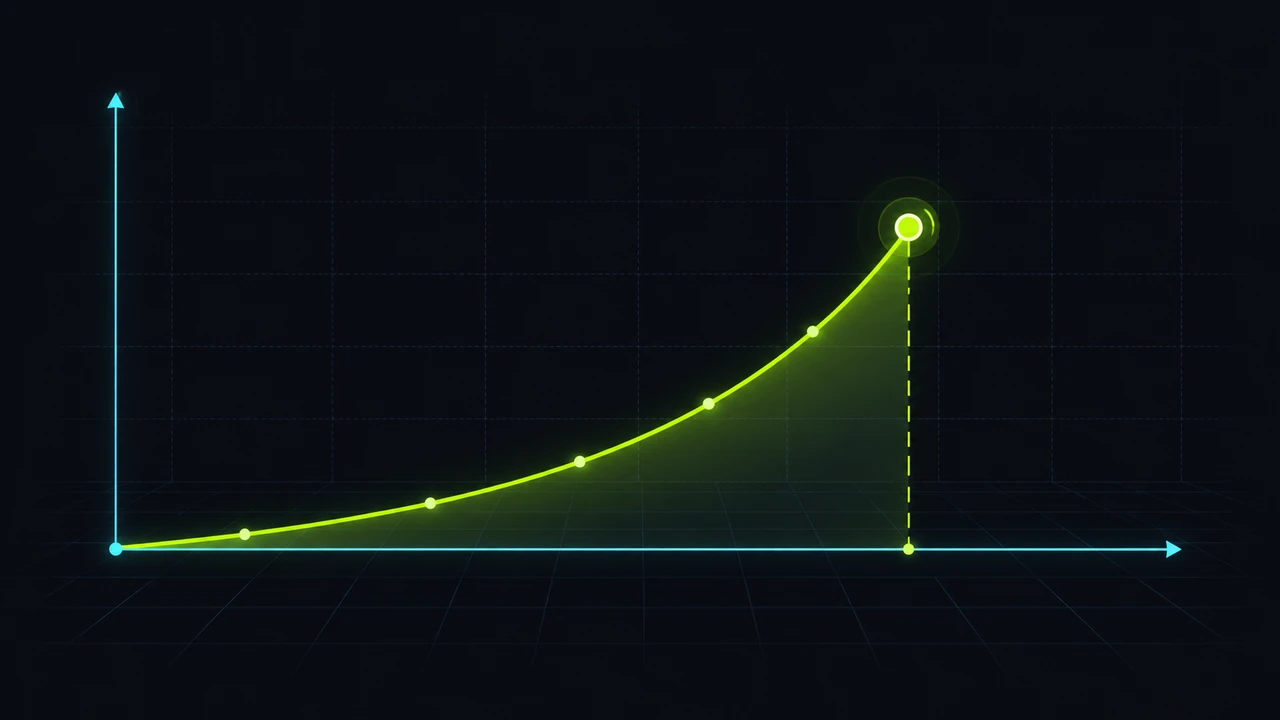
- Round shape
- Rising multiplier, random bust point
- Your decision
- When to cash out, once per bet
- Break-even test
- Target m needs 1 hit in m rounds
- Lobby location
- Crash or instant tab, not the pokies
A round, from betting window to bust
The unit of play is a round, not a spin. A betting window opens for a few seconds, the round launches, a multiplier climbs from 1.00x, and at a point fixed before the climb began the curve stops — the bust — taking every bet still in the round in full. Cash out first and the stake returns multiplied by the figure live when the server accepted it. Nothing is decided during the animation: the bust point exists when the round is created, and the curve is a readout of it.
Most builds run the round as a shared event. One curve serves the whole lobby, a side panel lists other players' stakes and exits, and a history strip records recent bust points. None of it touches your round: two players in the same round bust at the identical figure, so the only differences are stake size and exit timing.
A stake placed inside the window enters the next launch; one placed mid-climb queues for the round after. Autobet automates that queue, running a set number of rounds at a set stake with optional stop conditions on profit or loss. Auto cash-out is the other half of the panel: a target typed in before launch that exits the bet when the curve reaches it.
Instant busts are the part most often misread. Builds commonly reserve a chance that a round ends at or barely above 1.00x, before an auto cash-out at 1.01x can fire, so a very low target is not a near-certain small return. Read the lowest multiplier the game can resolve at off the rules panel. The button only sends a request, and the server decides whether it arrived before the bust, so a confirmation slightly away from the figure you watched is ordinary.


18+ · Bonus conditions
Offer information supplied: 2026-10-05.


18+ · Bonus conditions
Offer information supplied: 2026-10-05.
The cash-out decision, manual and pre-set
One decision exists per bet and it is taken once: press the button while the curve is live, or fix a target before launch and let the game press it. Manual exposes the decision to reaction time and to the network round trip, so the target you intended and the one you achieved can differ. A pre-set auto cash-out removes both, at the cost of fixing the target before you have seen the round — which costs nothing, because a determined curve has nothing to read.
Two bet slots run two targets on one curve, and the arithmetic deserves doing. Put one dollar at 1.50x and one at 5.00x. Bust below 1.50x and both go, costing two dollars. Bust between them and the first returns one dollar fifty while the second is lost, a net loss of fifty cents. Pass 5.00x and you collect one fifty plus five, six fifty on a two dollar outlay. Splitting reshapes the spread of outcomes; it adds the two bets' prices rather than averaging them down.
The exit target controls the shape of your results, not their price. Leaving at 1.20x produces many small returns and occasional total losses of the round's stake; holding for 50x produces long droughts and rare large multiples. What does not move between them is the cost per unit staked, set by the distribution the bust point is drawn from and by the build's margin.
Autobet stop conditions are budget tools: a stop-on-loss figure is a spending limit that executes without you, and a round count is a turnover limit. The stake-adjustment settings beside them are a different thing — doubling after a loss raises the amount at risk exactly when a run of busts has already happened, enlarging the worst single round. If the reason for the next round has become the last one, open the support guide.
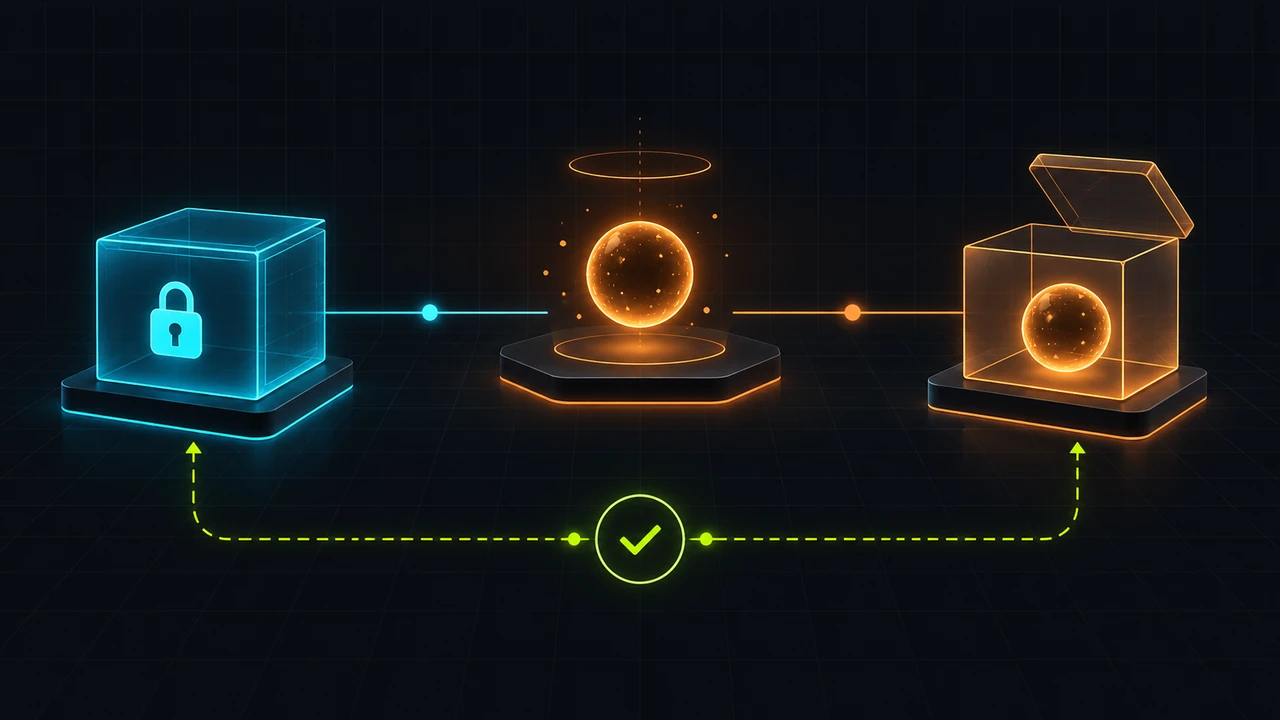
What the game's own rules panel has to tell you
Every figure this page declines to state is printed inside the game you open, behind the question mark or the information tab on the game header. Four fields decide what a session can do. The lowest multiplier a round can resolve at settles whether a 1.01x habit is nearly safe or routinely busted. The maximum multiplier, or the maximum payout per bet, settles the ceiling a long target is actually aiming at. The stake range settles the floor and the roof of a single bet. And a stated return or house edge, where the build prints one, is the price of the whole arrangement. Read all four in the panel of the title you have open, because none of them carries across builds, studios or even versions of the same game.
Read a ceiling as a payout rather than a multiplier wherever the wording allows it, because builds state the cap both ways and the two are not the same constraint. A cap written as a multiplier truncates the curve at the same point whatever you staked. A cap written as a maximum payout per bet moves with the stake: a ten dollar bet and a one dollar bet reach the same money ceiling at wildly different multipliers, so the larger stake is capped far earlier in the climb. A target sitting above whichever ceiling applies cannot pay what the curve displays at the moment you exit, and the difference is not refunded as a higher multiplier.
The fairness section, where one exists, is usually a separate tab and is worth opening before the first bet rather than after a disputed round. What matters in it is whether the current server-seed hash is published, whether the hash function and the mapping algorithm are named, and whether you can set your own client seed. A panel offering only a verify button, or one that publishes the hash after rounds have resolved, cannot support the verification sequence set out above — and discovering that while a complaint is already open is discovering it too late to matter.
Demo mode is the cheapest place to read the lot. A practice round shows the length of the betting window, how fast the curve travels through the low multipliers, whether the cash-out button registers near the figure you intended, and where the autobet stop conditions sit in the panel. None of that costs anything to learn and all of it is build-specific. What a demo cannot show you is the distribution: a few dozen practice rounds is far too small a sample to say anything about where the bust points fall, and reading a short demo run as evidence about a game's generosity is the same error as reading the history strip.
// sponsored · Safe Casino · 18+
+500% + 120 free spins
Safe Casino welcome offer. Check the qualifying deposit and wagering conditions before you claim.
The arithmetic you can do yourself
Crash is unusually transparent, because a cash-out target states its own break-even rate. A bet exiting at m times the stake returns m units for every unit staked, so the profit on a success is m minus one, and the bet breaks even if it succeeds once in every m rounds. The implied hit rate for a target of m is therefore one in m.
As a table of targets: 1.50x must be reached in two rounds out of three, about 66.7 per cent; 2.00x one in two, 50 per cent; 5.00x one in five, 20 per cent; 10.00x one in ten, 10 per cent; 100.00x one in a hundred, 1 per cent. These are break-even thresholds derived from the payout alone, not frequencies any game delivers. A commercial build sits below each by its margin, and that gap is a figure for the game's information panel rather than for this page.
Put money through it. Two dollars a round at a 2.00x target over a hundred rounds stakes two hundred dollars; fifty successes at four dollars each returns exactly two hundred, and every success short of fifty costs four dollars against that turnover. The same hundred rounds at 10.00x needs ten successes to return it, and spreads the results far wider.
Turnover — rounds multiplied by stake — is what a session costs. Autobet at one dollar for five hundred rounds stakes five hundred regardless of what the balance did in between, and rounds resolve in seconds, so turnover per hour runs above a pokie at the same stake. A run of low bust points is not a reason to raise a target, because rounds draw independently. And a cash-out at 1.10x on ten dollars pays eleven, of which ten is your own money — gross return is not profit.
Figures differ between builds and lobbies. Read the live game's information panel before you rely on any of them.
Play here →Provably fair: the mechanism and its limits
The claim rests on a commitment made before you bet. The game generates a server seed, publishes a cryptographic hash of it, and keeps the seed secret while it is in use. A hash is one-way: the published value reveals nothing about the seed, yet no other seed could have produced it, so the operator has locked itself to one secret in advance. The outcome is then derived, not drawn — the secret seed is combined with a client seed you supply and a nonce, the round counter, and a keyed hash of those inputs is mapped onto a bust multiplier.
Verification is a sequence, and the order matters. One: record the published server-seed hash before placing a bet, somewhere the operator cannot edit. Two: set or note the client seed, preferring one you chose. Three: keep the round nonces and bust points as you play. Four: when the seed is rotated or revealed, hash it with the stated function and compare against step one. Five: recompute each round from the revealed seed, your client seed and the nonce. Third-party verifiers run steps four and five; nothing runs step one for you.
What a clean verification establishes is narrow and genuine: for the rounds under that seed, the sequence was fixed before your bets and was not altered in response to them or to your balance. It says nothing about the shape of the distribution, so a game whose bust points cluster far lower than its payouts imply verifies perfectly every round, and nothing about the margin, because the mapping function is the operator's own.
It is also silent on whether a balance is payable and how a bonus condition gets read, and it is not an independent RNG certification: see RNG and certification. The usable test is procedural. If a game publishes its hash function, its algorithm and the current seed hash before play, and lets you recompute outcomes with tools that are not the operator's own calculator, the claim has content. If the panel offers only a button reporting its own verdict, provably fair is a badge.

A live bet, a dropped connection and who settles it
Settlement happens on the server, which is the structural fact worth holding before a connection ever drops. A cash-out is a request; the round resolves from a value fixed when it was created; and whether the request landed before the bust is decided where the round lives rather than on your screen. That is why a confirmed exit figure can sit a little below the number you watched, and why a round that seemed to carry on after you lost signal had in fact already ended at the same point for everyone in it.
A manual bet with no pre-set target is the exposed case. Lose connection mid-climb with nothing queued and there is no instruction for the server to act on, so the bet rides to the bust point and is lost in full. An auto cash-out target entered before launch is the only thing that will exit a bet without you, which makes it a reliability setting at least as much as a tactical one, and it is the argument for entering one even when you fully intend to press the button yourself. A target you then beat manually costs nothing; a target you never set costs the whole stake on the one round your connection chooses to fail.
Autobet compounds the same exposure from the other direction. A queue keeps placing stakes while nobody is watching the screen, so the stop-on-loss figure and the round count are the only brakes anywhere in the system. Set both before the queue starts, treat them as the amount you have already decided to spend, and leave them where they are once rounds are resolving — a limit revised upwards mid-queue was never a limit. The stake-adjustment settings beside them deserve the same suspicion they earned earlier on this page.
Where a round is disputed, the record you can produce is what the operator will read against its own logs: the round identifier, the time, the stake, the target and the bust point. A saved history entry or a screen recording is worth considerably more than a recollection. There is no Australian regulator to escalate to, for the reasons set out further down, so the operator's own complaint channel and then its offshore licensor are the entire ladder, and an orderly record is the only leverage available on it.
// sponsored · WinCrown · 18+
+500% + 120 free spins
WinCrown welcome offer. Read the current promotion terms, eligibility and withdrawal conditions.
How a crash round differs from a pokie spin
A pokie outcome is a reel draw resolved against a fixed paytable, and that paytable is its entire price list. A crash round is a draw of one number from one distribution, with no paytable because there is nothing to enumerate — the price list is the bust distribution on one side and your exit target on the other.
Volatility therefore changes hands. On a pokie the designer sets it through hit frequency, payline count and a win cap. In crash the player sets it every round, because a 1.20x habit and a 50x habit produce different result distributions on the same engine at the same margin — control over spread rather than price, worked through on what volatility means.
Features are absent, which is why return figures do not compare across categories. A pokie's return is spread over base game, free spins and jackpot tiers, which is why one title ships in several return versions — see RTP explained. Caps truncate in both: a pokie's maximum win cuts the top off its paytable (max win caps), while a crash game typically states a maximum multiplier or payout per bet, so a target above the cap cannot pay what the curve shows.
Bonus terms are written around pokies, which matters here. The welcome package recorded for Safe Casino in August 2026 is reported as counting slots at 100 per cent and live casino and table games at 0 per cent towards its 40x wagering, with a €5 maximum bet. Crash and instant games are not specified either way in the material this page works from, so open the game-weighting table in your own account first: a category weighted at zero generates no progress, and autobet travels a long way before anyone notices.
The instant-games family around crash
Crash belongs to a category defined by a shape rather than a theme: the player sets the risk, a single draw resolves, settlement is immediate, and there are no reels. Grid-reveal games — mines and its relatives — are crash with clicks instead of a clock. A grid hides a number of hazards you choose, each safe tile raises a running multiplier, and a cash-out is live after every reveal; more hazards means a higher multiplier per tile and a shorter expected run.
Dice and limbo expose the arithmetic most honestly. You set either a win chance or a target multiplier and the other moves inversely, with the interface normally printing both side by side — the one in m calculation above, done for you on every adjustment. It is the clearest display in the category: a longer payout is bought with a lower chance, not added to it.
Plinko and wheel formats land a ball or pointer on one cell of a printed row of multipliers. The risk presets redistribute values along that row without changing what the game costs per unit staked. Such rows ordinarily include values below 1.00x, so landing on a printed multiplier can still be a net loss.
Scratch cards, hi-lo and instant keno sit at the far end, with no decision beyond the stake and a fixed printed prize table — closer to a lottery ticket than to crash, though the same break-even test applies to each printed prize: see keno rules, odds and prize tables. The two lobbies this page links list these separately: Safe Casino's reported list names crash, instant games, scratch cards, bingo and video poker as distinct sections, while WinCrown's own page describes an Instant category.
Where crash and instant titles sit in a lobby
These games are not in the pokies section. In a lobby of any size crash is either its own tab or a sub-section of instant, arcade or specials, and the way in is the category filter followed by the provider filter — builds differ in whether a fairness panel exists, whether the algorithm is published, and what the multiplier cap is. None of that shows on a lobby tile.
Safe Casino has the larger combined catalogue and is the one with sport attached. It launched around 2025 as a pure casino, and regional reviews report between 13,000 and 16,000-plus titles from more than 100 providers, with crash and instant games named as categories in their own right. Confirmed providers include Pragmatic Play, Playson, BGaming, Nolimit City and Play'n GO, and its live area is reported at more than 1,000 tables from roughly fourteen studios. It now also carries prematch and live sport with boosted odds, though that sportsbook is recent and weaker than a dedicated bookmaker's.
WinCrown is a new 2026 brand and almost entirely a casino: no sportsbook and no live-betting section, with sport appearing only inside seasonal promotions. Its own page states 10,651 games from 113 providers, with 4,712 Bonus Buy titles, 2,010 High Stakes titles and 2,919 in the jackpot category, plus an Instant collection; the home page showed about 1,371 live games. Spribe, Hacksaw Gaming, Evoplay, Evolution and NetEnt appear in its provider list among dozens more.
Both brands' catalogue and promotion figures are reported rather than anything this site measured, and what an offer is worth, or which operator ranks above the other, is a question for Pokies Ledger rather than for this page. One warning does carry over, because it decides whether a crash round counts for anything at all. The wagering window attached to Safe Casino's August 2026 package is reported as seven days by some sources and thirty by others, and WinCrown publishes its welcome percentages at one set of values in its headline and another on its individual deposit cards. Where reported versions disagree, the only authoritative text is the one inside your own account and cashier, so read the eligible-games table and the expiry condition there before a single autobet round runs.
Neither operator is authorised in Australia and neither is endorsed here. Safe Casino holds a Curaçao licence; WinCrown is operated by Novatrix SRL in Costa Rica under Tobique Gaming Commission licence number 0000002. Neither is an Australian authorisation, and the ACMA's position is that online casino services cannot lawfully be provided to people in Australia, so a disputed round escalates to the operator and then to its offshore licensor. Safe Casino's Trustpilot at the time of checking stood at 2.9 out of 5 across 43 reviews, with complaints including reload bonuses not being credited — a small sample, reported rather than measured here. Open Safe Casino for the largest combined regular and live catalogue, or WinCrown for bonus-buy and jackpot depth: a pointer, not a verdict, and nothing here says either is safe, licensed in Australia, better value or certain to pay. How deposits and withdrawals move belongs on Pokies Cashout.
What this page did not verify
What is absent above is deliberate. No house edge percentage, instant-bust probability, stated return, multiplier cap, stake range or hit frequency appears as a fact about a game you can reach, because each is set per build and would be wrong for some title on the day it was read. The break-even formula and the worked dollar arithmetic are fixed; their inputs are not.
Nor does this page assert that either operator has a particular crash or instant title loaded today, from a particular studio, with a fairness panel of any particular design. The game counts, provider counts, live-table counts, category lists and promotion terms above are reported — by regional reviews and by the operators' own pages, dated to August 2026 where the source dates them — not verified here, and the promotion line-ups are dynamic.
Nothing above is a strategy or a claim about winning, and this format invites both. There is no target that beats the distribution, no sequence of targets that changes what a sequence of rounds costs, and no staking escalator that turns a run of losses into a cheaper round. Four levers are yours: the exit target, the stake, the number of rounds, and whether to open the game at all.
Turnover is where the format works on a bankroll, more quietly than a pokie does. Rounds resolve in seconds, autobet removes the pause in which a person might reconsider, and a shared lobby streams other players' large exits with no record of what they staked. Set a spending limit and a round or time limit before the game is open, and read the round counter as a record of what has been staked rather than a run-up to something. Sponsored links on this site can earn the publisher a commission, which changes none of the arithmetic above.

Questions people actually ask
Where can I play crash games online from Australia?
Crash and instant games reach Australian screens from offshore operators only. The ACMA's position is that online casino services cannot lawfully be provided to people in Australia, so any lobby reached from here is licensed elsewhere — Safe Casino in Curaçao, WinCrown under Tobique Gaming Commission licence number 0000002 in Costa Rica — and neither holds Australian authorisation. Safe Casino's reported category list names crash and instant games separately; WinCrown's own page describes an Instant category. This page does not assert which specific titles are loaded on any given day.
What multiplier should I cash out at?
There is no target that beats the game, and this page does not recommend one. What a target does is fix the shape of your results: the break-even rate for a target of m is one success in m rounds, so 2.00x must land in half of all rounds to break even and 10.00x in one in ten. A commercial build sits below each of those thresholds by its margin. Low targets give frequent small returns, high targets rare large ones, and the cost per unit staked is the same either way.
How does the break-even arithmetic on a crash bet work?
A cash-out at m times the stake returns m units for every unit staked, so the profit on a success is m minus one and the bet breaks even if it succeeds once in every m rounds. That gives an implied hit rate of one divided by m: 66.7 per cent at 1.50x, 50 per cent at 2.00x, 33.3 per cent at 3.00x, 20 per cent at 5.00x, 10 per cent at 10.00x and 1 per cent at 100.00x. Those are break-even thresholds derived from the payout, not frequencies any particular game delivers.
Does provably fair mean a crash game cannot cheat me?
It proves one specific thing. The operator publishes a hash of a secret server seed before you bet, so the round sequence under that seed was fixed in advance and cannot have been altered in response to your stake or balance. It does not show the bust distribution is as generous as the payouts imply, does not reveal the margin, and says nothing about whether a balance is payable or how a bonus dispute will be read. It is also not an independent RNG certification by a testing house. Verification only works if you recorded the published hash before playing.
How do I verify a provably fair crash round?
In order: record the published server-seed hash from the fairness panel before placing a bet and store it where the operator cannot edit it; set or note the client seed, preferring one you chose; keep the round nonces and bust points as you play; when the seed is rotated or revealed, hash the revealed seed with the stated function and compare it to the value you recorded; then recompute each round from the revealed seed, your client seed and the nonce using the published algorithm and compare the outputs with your records. A verification begun after the fact proves nothing.
How is a crash game different from a pokie?
A pokie resolves a reel draw against a fixed paytable, and its volatility is set by the designer across base game, free spins and feature rounds, which is why one title ships in several return versions. A crash round draws one number from one distribution and has no paytable, so you set the volatility yourself with the exit target. Crash games also typically state a maximum multiplier or payout per bet, which truncates a high target the same way a pokie's win cap truncates its paytable.
Can I clear a casino bonus by playing crash games?
Check before you try, because the terms are written around pokies. Safe Casino's package recorded in August 2026 is reported as counting slots at 100 per cent and live casino and table games at 0 per cent towards 40x wagering, with a €5 maximum bet while a bonus is live; crash and instant games are not specified either way in the material this page works from. Open the game-weighting table in your own account first — a category weighted at zero generates no progress, and autobet runs a long way before that is noticed. Whether that offer was worth claiming, and how the two operators rank against each other, is a Pokies Ledger question rather than one for a games page.
What other games work the same way as crash?
Grid-reveal games such as mines are crash with clicks instead of a clock — each safe tile raises a multiplier and a cash-out is live after every reveal. Dice and limbo let you set either a win chance or a target multiplier and print the other beside it, which is the same one in m calculation displayed for you. Plinko and wheel formats land on a printed row of multipliers whose risk presets redistribute the values without changing the price, and such rows ordinarily include cells below 1.00x, so a landed multiplier can still be a net loss.
// next step
A paytable makes more sense with the game open in front of you.
View current offer