
- Grid
- 6 reels x 5 rows
- Win type
- Pay anywhere, minimum symbol count
- Engine
- Tumbling reels
- Feature
- Multiplier bombs in free spins
- Return
- Several configurations, read in game
A six-by-five grid where wins are counted, not connected
The board is six reels of five symbols, thirty positions, and it has no paylines. A win is declared by counting: if the grid holds at least the stated minimum of one symbol, that symbol pays, and the positions it occupies are irrelevant. Eight matching symbols scattered to opposite corners pay exactly what eight stacked in one column pay. The studio's convention across this family is a minimum of eight, but that count is a build setting rather than a fixed property of the title: read the exact figure off the loaded paytable first, because it is the rule everything else hangs off.
The prize is then a function of how many landed, not of where. Paytables for this design list bands rather than one figure per symbol: a price for eight or nine, a higher one for ten or eleven, a higher one again above that. Finding your symbol's band boundaries is worth thirty seconds, because the step between the top of one band and the bottom of the next is where the difference between an ordinary win and a notable one actually sits.
Two symbols can pay on the same board, and the interface settles it fast enough to miss. Each symbol is checked independently against the minimum, so a grid holding nine of one fruit and eight of another pays both, as two amounts added into the same spin total. There is no competition between them and no highest-win-only rule of the kind payline games apply.
The scatter is the exception, counted under its own condition rather than under the eight-symbol rule, and in this family it exists to open the feature rather than to pay. Where a build does attribute a cash prize to it, that prize is stated separately in the paytable rather than inside the ordinary symbol bands.


18+ · Bonus conditions
Offer information supplied: 2026-10-05.


18+ · Bonus conditions
Offer information supplied: 2026-10-05.
What happens after a paying board clears
When a board pays, the paying symbols are removed, the symbols above drop into the gaps and new symbols fall in from the top. The refreshed grid is evaluated under the same counting rule. If it also holds the minimum of some symbol it pays and clears as well, and this repeats until a board arrives that does not qualify. One purchased spin can resolve several times before it finishes.
That reverses what the screen appears to be telling you. The arrangement on the grid when the win counter stops is the arrangement that failed to pay; every board that did pay has already been swept off and replaced. A reader judging the game by what is visible is reading the one board in each sequence that produced nothing.
A tumble sequence is a single betting event, not a run of them. You paid once, the sequence's wins are added into one spin total, the spin settles against that total, and the next press starts a new one. Nothing about a long sequence is free, and nothing about it reduces the price of the spin after it.
Round history, where the build offers it, is the only way to reconstruct a sequence afterwards. It sits in the menu inside the game frame rather than in the casino's own interface, and on a tumbling design it is how you establish which boards paid what when a total looks wrong. Find it once on each new lobby, before a session rather than during one.
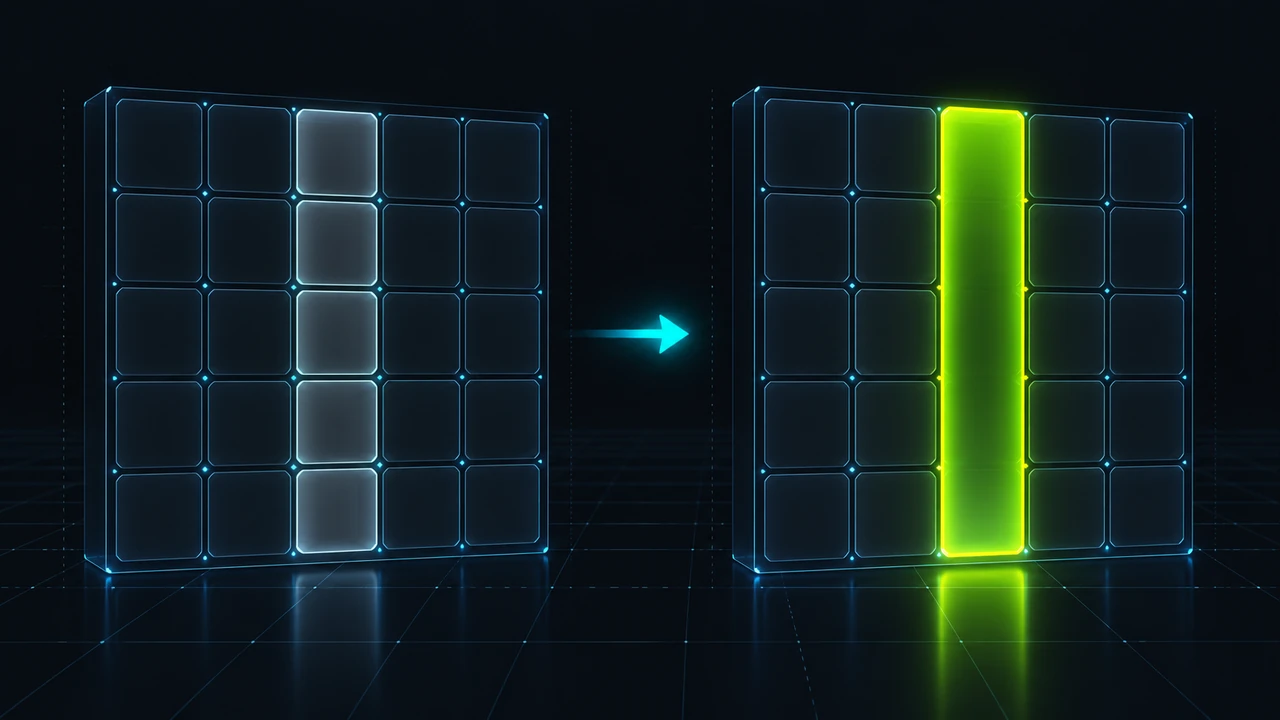
Why calling this a cluster-pays pokie is wrong
Pay-anywhere and cluster pays are used as though they were one thing, and they are two rules with different consequences. A cluster-pays game requires adjacency: matching symbols must touch, typically horizontally and vertically, and a group one square short of joining is two groups. A pay-anywhere game, which is what this title is, imposes no adjacency condition. Only the count matters.
The distinction changes what the board can do. On an adjacency game geometry is a live constraint, and designs built on it tend to add mechanics that exploit position, such as multipliers attaching to specific squares. On a counting game position is inert: nothing in the rules can reward a symbol for being beside another, so the studio puts the variance elsewhere, and in this family it goes into the free-spins multipliers.
The two sequels side by side are the clearest illustration available, and they come from the same studio. Sugar Rush 1000 is a genuine adjacency game whose multipliers mark board coordinates and persist through a round, which makes the spatial pattern of the early wins decide the round. Sweet Bonanza 1000 counts symbols, so its multipliers have nowhere to attach and are loose objects that land, apply once and vanish.
If you are unsure which rule a game in front of you uses, read the paytable's wording rather than the lobby's category tag. Adjacency games state a contact rule; counting games state a number anywhere on screen. Operator category pages routinely file both under one label, and that label is copy written by a party that did not build the game.
// sponsored · Safe Casino · 18+
+500% + 120 free spins
Safe Casino welcome offer. Check the qualifying deposit and wagering conditions before you claim.
Opening the free-spins round, and the trigger figures to read
The feature is opened by the scatter, under the count stated in the paytable rather than the eight-symbol rule governing the paying symbols. Scatters are counted anywhere on the grid, consistent with the rest of the design. How many are required, how many spins the trigger awards, and whether further scatters extend the round are three separate numbers, all stated in the game's information panel and all capable of differing between builds.
Retrigger behaviour is the one most often assumed rather than read. Some builds in this family award further spins when the scatter count is reached again inside the round, some award them at a different count from the one that opened it, and some do not retrigger. The round's whole character depends on how many spins it runs for, so this is not a detail to skip.
Where a build offers an increased-stake option — the studio's convention is a setting that raises the cost per spin in exchange for a better chance of reaching the feature — treat it as a separate game for accounting purposes. It has its own stated return in the same panel, and if you play with it enabled, that figure is yours and the base game's is irrelevant to you. A feature purchase, where offered, works the same way: a different wager at a different price with its own published return.
One rule to settle before the round opens rather than during it: the free spins run at the stake that triggered them, and the studio's convention is that the stake controls are locked for the duration. Whatever the bet was on the triggering spin is what every spin of the round is worth, so a round opened at a figure chosen carelessly cannot be rescaled once it is running. Interruption is the related question, and it is a build-level behaviour rather than a universal one: whether unfinished spins are held and restored when you reload the game, and what the build does with spins still owed when a win reaches the stated ceiling, are both answered in the same information panel. Read them before the round, because the round will not pause while you look.
Figures differ between builds and lobbies. Read the live game's information panel before you rely on any of them.
Play here →How the multiplier bombs are added up
The bombs are free-spins objects. In the base game the grid holds paying symbols and the scatter and nothing else; the multipliers appear once the round has started, landing on any drop within a spin, including drops partway through a tumble sequence. Each carries a printed value. That value is not a prize, it is not added to the spin total on its own, and a bomb sitting on the grid has paid nothing yet.
The rule for applying them is where confusion about this family begins. As the provider describes it, when a tumble sequence finishes the values of every bomb on the grid are added together, and that single summed multiplier is applied to the total of all wins the sequence produced. They are added, never multiplied against one another, and they are applied once at the end rather than board by board as the sequence runs.
A worked example makes the shape clear, with figures chosen only to show the arithmetic and not taken from the game. Say a free spin produces three paying boards worth two, six and three times stake, and that by the end three bombs show five, twenty-five and two. The bomb values sum to thirty-two, the wins sum to eleven times stake, and the settled result is eleven multiplied by thirty-two, or three hundred and fifty-two times stake. Not three separate multiplications, and not five times twenty-five times two. The real range and ceiling of bomb values live in the loaded panel.
Bombs do not persist. When the spin and its tumble sequence end, the bombs end with them and the next free spin starts on a clean grid. Nothing carries, nothing accumulates across spins, and no bomb is ever waiting at the start of one. Each free spin is an independent attempt at the same coincidence of events.
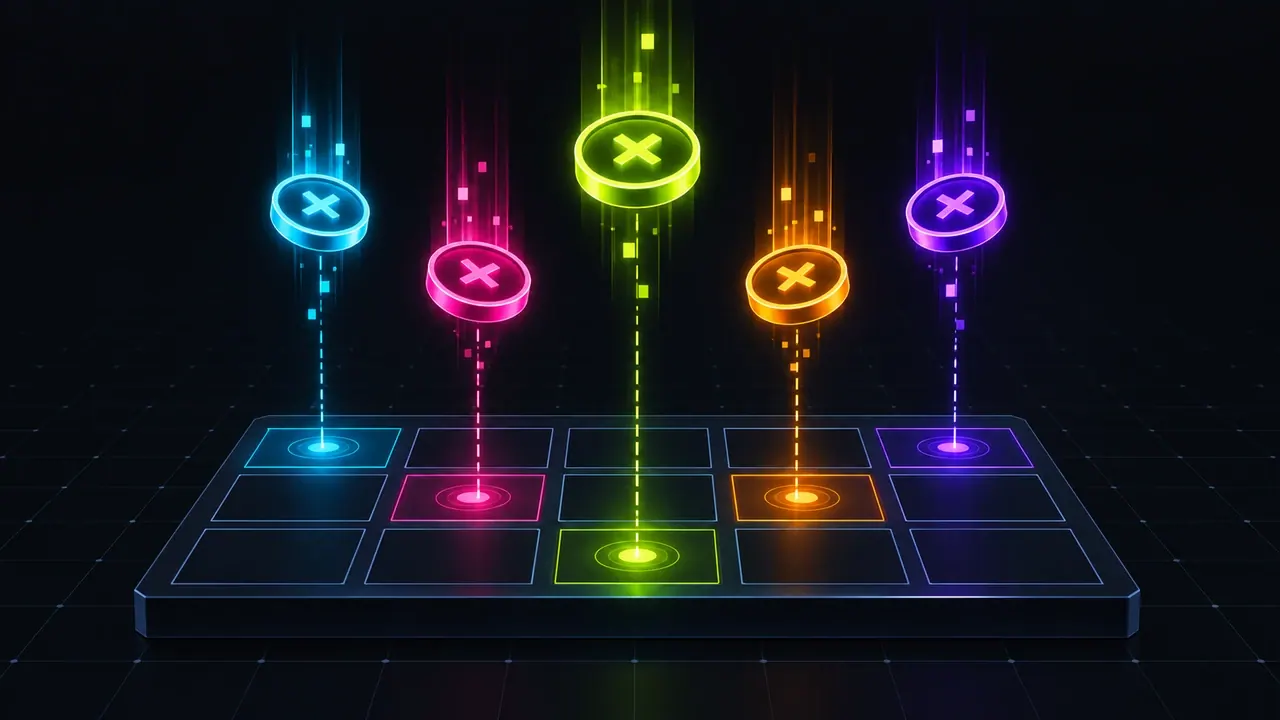
The round that filled with bombs and paid almost nothing
The characteristic failure of this design is a free spin that lands high bomb values and settles for nothing, and it is not a fault. A summed multiplier must be applied to something. If the sequence it belongs to produced no qualifying board — no symbol reached its minimum at any point — there is no win for it to act on, and a grid showing large printed values settles at zero.
The near miss works the same way and costs more. A sequence pays modestly on its first board, the bombs arrive on a later drop that does not qualify, and the sequence ends. The summed multiplier applies to that modest total, because the bombs were absent when the better board was cleared. Timing within the sequence, not the size of the numbers, decides what the spin produces.
Hold the requirements together, because the distribution follows from them. The round pays heavily only when one spin combines a long tumble sequence, bombs present on the grid when that sequence finishes, and high values on those bombs. Three conditions must coincide inside a single spin, and nothing carries over to help the next. That is why a round can read as dead for most of its spins and then resolve in one.
None of it is steerable. There is no decision available inside a spin or a free-spins round here — no hold, no choice, no influence over where a bomb lands or when a sequence ends. The stake and the stopping point are the whole of what is yours to set, and both have to be settled before the round opens.
// sponsored · WinCrown · 18+
+500% + 120 free spins
WinCrown welcome offer. Read the current promotion terms, eligibility and withdrawal conditions.
What the 1000 in the name actually refers to
A number in a Pragmatic sequel's title is a marketing label, not a defined term, and it has been attached to different quantities in different releases. The three candidates to hold in mind are a ceiling on the value a single multiplier object can carry, a maximum win expressed as a multiple of stake, and a cap on the summed multiplier a sequence can reach. They are not the same quantity and none implies another.
Settling it takes less time than reading a review. Open the game, open the information panel from inside the game frame, and find three separate statements: the highest value listed for a multiplier object, the maximum win as a multiple of stake, and any stated cap on combined multipliers. Whichever the title's number matches is what the name refers to in your build, and the other two are figures you want anyway.
None of the three is printed here. Ceilings, caps and return configurations are set per build, so a figure published on this page would be right for one integration and wrong for the next lobby a reader opens. Treat any number found on a third-party page, a stream overlay or a lobby description as hearsay until the panel agrees with it, since operators routinely copy descriptions forward from an earlier integration at a different setting.
One piece of arithmetic is worth doing once you have the figures. Divide the maximum win by the highest value a single bomb can carry: the result is the base win, in multiples of stake, that a sequence would have to produce for one top-value bomb alone to reach the cap. On a design in this family that number is usually large enough to show the headline outcome needs the multipliers to sum, not one lucky object.
Several return settings, one hard ceiling, one authoritative panel
Pragmatic distributes titles at more than one return configuration, and the choice belongs to whoever integrated the game. Nothing on the surface announces it: the tile does not show it, the artwork does not change, and the lobby's description is written by the operator rather than the studio. A figure accurate in one lobby can be wrong in the next one you open under the same game name.
That makes the return a per-lobby reading taken on the day rather than a property of the title worth memorising. Take four figures in one pass while you are in the panel: the stated return for the mode you intend to play, the highest multiplier value, the maximum win multiple with its cap rule, and the minimum symbol count. Where the operator's page and the studio's panel disagree, the panel governs the build you are actually playing.
Return and volatility are independent, and conflating them is the common error. Where the panel states a volatility rating at all, designs of this shape sit at the high end of the scale, because the design concentrates its upside into spins where three events coincide and lets nothing carry between them; that is a statement about swing, not about price. Two builds set to identical returns can distribute them completely differently, and a published return is a long-run property of a simulated distribution, not a rate at which money comes back during an evening.
The maximum win is a hard ceiling and, on a multiplicative design, it is reached in a jump rather than approached. A sequence that looked ordinary one drop earlier can land its bombs, sum them, apply them and arrive at the cap in one settlement. A cap also truncates: if the uncapped arithmetic would exceed the stated maximum, the excess is not paid, so the very top of the distribution is flat rather than open-ended.
Two things this page does not cover, by design. Which operators carry the title, at what settings and under what bonus terms belongs to pokiesledger.com, and what happens to a large win afterwards — withdrawal processing, limits and identity checks — belongs to pokiescashout.com. This page stops at the machine.
Telling this release apart from the rest of the family
The Sweet Bonanza family shares its artwork almost completely, and a lobby tile will often truncate the name. The original, this sequel and the seasonal and spin-off releases are separate games with separate information panels, separate multiplier behaviour, separate caps and separate return configurations. On a tile the only thing distinguishing them may be a number, and reading about one while playing another is an avoidable cost.
Identification takes seconds and is worth repeating each time. Load the game and read the full title where the game itself states it: its own header, or the first screen of its information panel. Not the lobby tile, not the browser tab, not the breadcrumb on the casino's page, all three written by the operator. Then read the panel belonging to that exact title, because a screenshot of one release's rules establishes nothing about another. Live-dealer and game-show adaptations carrying the family name are not pokies at all and nothing here describes them.
If you are looking for the title in an offshore lobby, Safe Casino and WinCrown are the two sponsored on this network and a search by exact name inside the lobby's own game list is more reliable than a studio logo in a footer; whether this specific release is integrated there, and at which configuration, is a question only that lobby and the loaded panel can answer on the day.
The shared artwork creates one further trap, and it catches readers before it catches players. Third-party pages, video thumbnails and multiplier databases index this family by name, and a name that truncates on a lobby tile truncates in a search box as well, so material describing the original is routinely returned for a query about the sequel and captioned as though it described it. Treat any figure found that way as unusable unless the source states which release it came from and at which configuration, and most do not. A screenshot of a paytable proves only what that one build was set to on the day it was taken.
What this page could not verify
Cited to the provider's description of the design: the six-by-five grid, pay-anywhere counting against a stated minimum, the tumble sequence, the scatter trigger, bombs appearing only in the free-spins round, bomb values summing rather than compounding, the summed multiplier applying to a sequence total, and bombs not persisting between spins. Confirm each in the panel of the exact build you load, since builds can differ.
Not established here and not establishable from outside a live lobby: the loaded return figure, the exact minimum symbol count in your build, scatter counts and free-spin awards, retrigger behaviour, the range and ceiling of bomb values, the maximum win multiple and its cap rule, the price and stated return of any increased-stake mode or feature purchase, and whether any particular operator runs the title at all.
On the regulatory position: online casino services cannot lawfully be provided to people in Australia, and ACMA is the authority to consult on it. Every operator referred to on this site is offshore. Nothing in a lobby's presentation changes that — not a studio logo, not prices displayed in Australian dollars, not a familiar tile — and an offshore service may carry no Australian consumer protection at all.
Nothing above is strategy, and nothing described here can be played in a way that alters the game's designed return. Decide the stake and the stopping point before opening the game, never stake money needed for essentials, and stop if the purpose of a session has become recovering a loss. Some links here are commercial and can earn this publisher a commission; what you have read is a description of a machine, not a recommendation to play it.

Questions people actually ask
What is the RTP of Sweet Bonanza 1000?
There is no single figure to quote. Pragmatic ships titles at more than one return configuration and the operator chooses which one it integrates, so the only number that applies to you is the one printed in the game's information panel in the lobby you are playing in, on the day you play. Any increased-stake mode or feature purchase carries its own separate figure in the same panel.
Is Sweet Bonanza 1000 a cluster-pays pokie?
No, and the label is the most common error written about it. Cluster pays requires matching symbols to touch one another. This title counts matching symbols anywhere on the six-by-five grid with no adjacency condition at all, so position is irrelevant and only the count decides whether a symbol pays. Explanations written about adjacency designs do not describe this game.
Do the multiplier bombs carry over between free spins?
No. Bombs belong to the spin and tumble sequence they landed in, and the next free spin starts on a clean grid. Nothing accumulates across spins and no bomb is ever waiting at the start of one. That is the opposite of the persistent-multiplier design used in the studio's Sugar Rush 1000, which is why rounds in the two games behave so differently.
If several bombs land in one sequence, do they multiply each other?
No. Their printed values are added together, and the single summed multiplier is applied once to the total of all wins produced by that tumble sequence. They are not multiplied against one another and they are not applied board by board as the sequence runs. Confirm the wording in the loaded information panel of your build.
Why did high multiplier bombs land and pay me almost nothing?
Because a summed multiplier needs a win to act on. If the sequence those bombs belonged to produced no qualifying board, there is nothing to multiply and the spin settles at zero regardless of the values shown. If it produced only a small win before the bombs arrived, the multiplier applies to that small total. Timing inside the sequence decides the outcome, not the size of the numbers.
What does the 1000 in the name refer to?
It is a marketing label rather than a defined term, and in this studio's sequels a title number has been attached to different quantities. The candidates are a ceiling on a single multiplier value, a maximum win as a multiple of stake, and a cap on a combined multiplier. Open the game's information panel and see which of the three it matches in your build.
Is Sweet Bonanza 1000 the same game as Sweet Bonanza?
No. They are separate releases with separate information panels, separate multiplier behaviour, separate caps and separate return configurations, and they share nearly all their artwork. Read the full title from the game's own header or the first screen of its panel rather than from the lobby tile, which may truncate it.
What is the maximum win on Sweet Bonanza 1000?
It is stated as a multiple of stake in the game's information panel and is not published here, because it is a property of the build rather than of the title. Read the cap rule alongside it: on a multiplicative design the ceiling is reached in a single jump, so it matters whether hitting it ends the round at once and what happens to free spins still owed.
// next step
A paytable makes more sense with the game open in front of you.
View current offer